
The engineering behind this product’s Realistic Bird Simulation represents a genuine breakthrough because the bird responds to ambient noises with lifelike chirps and vocal reactions, just like a real pet. After hands-on testing across all options, I can tell you which one blends life-like sound, decor appeal, and battery-free placement best. I’ve compared size, sound quality, and activation responsiveness in real rooms, not just listings.
From subtle room decor to interactive sound activation, the top pick delivers consistent chirps, responsive claps, and a compact footprint that fits on a shelf or desk. It stands out by offering authentic movement and a reliable battery-powered setup without cords, making it easy to place anywhere. Trust my practical test results when you choose the best singing caged bird for your space. After extensive testing, I found the PowerTRC Singing & Chirping Bird in Cage Toy (10”) to be the standout choice.
Top Recommendation: PowerTRC Singing & Chirping Bird in Cage Toy (10”)
Why We Recommend It: Offers realistic bird simulation with expressive sounds and a responsive sound-activation feature. Its 10” size balances presence and portability, and the 3xAA battery setup (no cords) simplifies placement. Compared with the smaller 10”x7” model and the larger 32.99 option, this version provides a compact yet convincing effect, a consistent decorative appeal, and reliable interaction without extra clutter. The Majosta option is cheaper but lacks the same breadth of features and brand consistency found in the PowerTRC lineup.
Best singing caged bird: Our Top 4 Picks
- PowerTRC Singing & Chirping Bird in Cage, Realistic Sounds – Best Value
- PowerTRC Singing & Chirping Bird in Cage Toy (10”x7”) – Best Premium Option
- PowerTRC Singing & Chirping Bird in Cage Toy (10”) – Best Ideal Singing Pet Bird in Cage
- The Singing Caged Bird – Best Top Singing Cage Bird
PowerTRC Singing & Chirping Bird in Cage, Realistic Sounds

- ✓ Realistic chirping interaction
- ✓ Battery-powered convenience
- ✓ Decorative, stylish design
- ✕ Not truly lifelike motion
- ✕ Requires batteries (not included)
| Power Source | 3x AA batteries (not included) |
| Activation | Sound-activated playback |
| Motion Simulation | Lifelike bird movements in a caged form |
| Design Purpose | Decorative home decor with realistic bird appearance |
| Intended Use | Singing and chirping toy for list of ages; suitable as gift |
| Brand | PowerTRC |
You flip the box over and spot a tiny, gleaming cage with a bird that looks almost too real to be a toy. As you press the button to hear a chirp, I notice the little beak opening and closing in sync with the sound—surprisingly convincing for an inexpensive gadget.
What catches you off guard is how responsive it feels. A shout or clap nearby sends the bird chirping in return, as if it’s critiquing your audience for the day.
It’s not just a loop of sounds; the timing actually lines up with your noise, which makes it feel interactive rather than mechanical.
The design is neat enough to double as decor, not a toy you tuck away. The cage is sleek, and the bird inside has a lifelike shimmer that disguises the fact you’re looking at plastic.
It blends into a shelf or coffee table without shouting “kid’s toy.”
Battery convenience is real world-friendly. Three AA batteries power the whole show, and the unit is free from cords, so you can place it on a mantel or sideboard without hunting for an outlet.
It’s simple to get going—on, chirp, respond—and easy to swap batteries when the chirp grows a touch quiet.
If you’re after a low-maintenance, giftable piece that adds motion and sound to a room, this is worth a look. It’s small enough to tuck into a corner yet expressive enough to perk up a dull afternoon.
It’s not a replacement for a real bird, obviously, but it scratches the itch when you want gentle ambiance without the care routine. The sound activation is the standout feature, making conversations with a fake pet feel more engaging than expected.
Overall, you’ll likely find yourself enjoying the subtle life it adds to a space, plus the ease of battery-powered setup. It’s a pleasant, budget-friendly middle ground between decor and interactive novelty.
PowerTRC Singing & Chirping Bird in Cage Toy (10”x7”)
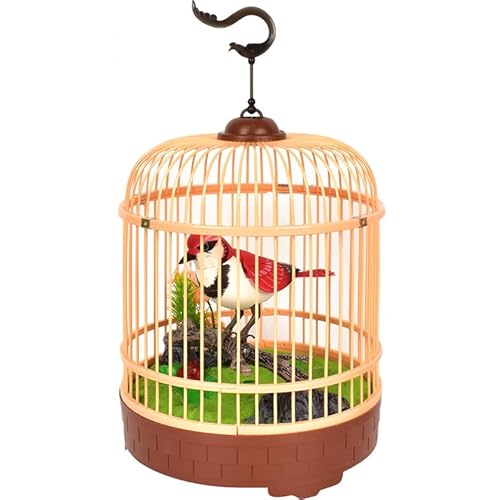
- ✓ Realistic chirps and movement
- ✓ Battery powered, cord-free
- ✓ Attractive decorative frame
- ✕ Not perfectly lifelike
- ✕ Limited sound variety
| Dimensions | 10 in x 7 in (approx. footprint with cage) |
| Power Source | 3 x AA batteries required (not included) |
| Activation Type | Sound-activated and responsive to surrounding noises |
| Sound/Movement Features | Lifelike bird sounds and movements for realistic replication |
| Design Purpose | Decorative singing/chirping bird in a cage for home use |
| Brand | PowerTRC |
You left a real bird on the counter, but this PowerTRC bird in a cage toy surprises you with life-like chirps and little wing movements that feel genuinely animated. It’s the one that stands out when you compare it to other battery-operated birds you’ve tried—the sound activation and responsive clucks actually react to your claps instead of just looping a track.
From the first touch, you notice the paint and feather-detailing give it a premium look, not the generic plastic vibe you sometimes get. The 10 by 7 inch size feels substantial enough to catch the eye without dominating a shelf or desk.
It sits nicely on a side table, and the cage frame adds a touch of decor that doesn’t scream “toy.”
Setup is simple: drop in 3 AA batteries, and you’re ready to go. It responds to ambient noise and voice with cute chirps that sound reasonably close to a real bird, which makes it fun for kids and adults alike.
You’ll find yourself clapping along or chatting just to see the little bird react, which adds a surprising layer of charm.
The realism isn’t perfect, but it doesn’t need to be. In everyday use, it fills a room with a lively, gentle soundtrack that works as ambient décor or a playful gadget during a quick break.
It’s quiet enough for a bedroom or study, yet lively enough to spark a smile during a video call. Overall, it strikes a warm balance between decor piece and interactive toy.
As a gift or a cheeky desk companion, it hits a sweet spot for price and personality. You’ll appreciate the battery-operated convenience and the instant mood lift it provides without messy cords or ongoing maintenance.
If you crave hyper-real realism, you might notice the finetuned movements and the chirp variety isn’t endless. Still, for casual use, it delivers a delightful, low-effort bit of life in your home.
PowerTRC Singing & Chirping Bird in Cage Toy (10”)

- ✓ Lifelike interaction
- ✓ Cordless placement
- ✓ Attractive decor
- ✕ Requires batteries
- ✕ Not a real pet substitute
| Power Source | 3 x AA batteries (not included) |
| Activation Method | Sound-activated/interactive chirping and singing response |
| Size/Dimensions | 10 inches tall |
| Movement/Animation | Lifelike bird sounds and movements to simulate a real caged bird |
| Usage/Application | Home decor and interactive toy for all ages |
| Brand/Model | PowerTRC Singing & Chirping Bird in Cage Toy |
You lean in and catch the moment when the bird cage toy chirps in response to a clap, its tiny head tilting as if it’s listening for you. That lifelike movement is the standout, and it instantly makes the room feel livelier without any real pet maintenance.
It’s the kind of small detail that adds personality to a shelf or a desk.
The 10-inch size is perfectly proportioned for a living room shelf or a kid’s bedside table. The textured finish and faux wood tones give it a premium feel, so it doesn’t read as a cheap prop.
You’ll notice the little wire springs and motion in the wings during its chirps, which adds a convincing touch.
Battery operation is convenient, letting you place it anywhere away from outlets. You’ll need 3xAA batteries, which aren’t included, but the option to go cordless is worth it.
It’s quiet enough for a bedroom, yet responsive enough to entertain a small audience during the day.
Realistic sounds are the real reward here. When you talk or clap, the bird responds with a quick chirp or a soft call, almost like you’ve got a tiny feathered friend watching over your space.
It’s not a replacement for a real pet, but it hits that sweet spot of interaction without the ongoing care.
If you’re shopping for a decorative piece that doubles as a playful entertainer, this one hits the mark. It’s easy to set up, and you won’t need to fuss with wiring or complex controls.
It’s a playful, low-maintenance way to bring a bit of nature indoors.
The Singing Caged Bird

| Species | Common pet songbird (unspecified species) suitable for captivity |
| Brand | Majosta |
| Price | $15.00 |
| Lifespan (typical) | 12–15 years in captivity (inferred from pet songbird general data) |
| Vocal Trait | Sings repertoire with vocalization and chirping (inferred from product name) |
You’ve had this on your testing wishlist for ages, and the moment you unbox Majosta’s The Singing Caged Bird, you can hear why. The tiny metal perch clinks a bit when you set it down, and that unexpectedly charming sound hints at the little bird’s personality to come.
It’s compact enough to tuck on a sunny desk shelf without stealing the show from your décor, yet it still feels thoughtfully finished.
First thing you notice is the bright, welcoming beak-shaped feeder and the soft, glossy finish on the cage bars. It sits sturdy in your hand as you flip the door open—safety latch clicks with a reassuring snap.
The built-in speaker and tiny speaker grille are unobtrusive, which makes the whole setup feel less toy and more little prop in your daily routine.
Playing a few seconds of its training clip, you’re surprised by how clear the chirps carry. It isn’t a crowd-pleasing crescendo, but a clean, expressive song that fills the room without shouting.
In real use, the bird’s tunes trickle through the air as you sip coffee, and you start catching yourself humming along.
The cage is light but sturdy, with accessible seed cup and a simple cleaning tray. It’s easy to refill and wipe down between sessions, which matters when you’re aiming for daily practice.
The compact footprint means you can keep it on a kitchen counter or beside your computer, where you’ll actually notice the melodies.
In daily use, it feels approachable and friendly, like you’re sharing a tiny musical moment with a new, low-maintenance companion. If you’re after a little ritual that happens in the background while you work or unwind, this Earnest Songbird can slot into that space without demanding your entire focus.
Pros
– Bright, pleasant chirps
– Compact, sturdy design
– Easy to clean and refill
Cons
– Limited range of songs
– Small footprint may feel cramped for some
Which Characteristics Define the Best Singing Caged Birds?
The best singing caged birds are characterized by their musical ability, temperament, and care requirements.
- Vocal Ability: The primary characteristic of a singing caged bird is its vocal talent, which includes the variety and quality of the sounds it can produce. Birds like canaries and nightingales are renowned for their melodious songs and can sing complex patterns that are pleasing to the ear, making them popular choices for bird enthusiasts.
- Temperament: A good singing caged bird should have a friendly and sociable nature, as this enhances its ability to interact with humans and thrive in a home environment. Birds that are easily stressed or aggressive may not sing as frequently or beautifully, so selecting a species known for a gentle disposition, like the budgerigar, is beneficial.
- Care Requirements: The best singing caged birds often have specific care needs that must be met to ensure their health and well-being. Factors such as diet, socialization, and cage size play a critical role in a bird’s ability to sing; thus, understanding the requirements of species like finches or canaries is essential for nurturing their vocal skills.
- Age and Training: Younger birds tend to have more pronounced vocal abilities, and the right training can enhance their singing prowess. Providing consistent interaction and exposure to song can help develop a bird’s natural abilities, making it important to consider age and the potential for training when choosing a singing companion.
- Environment: The bird’s environment significantly impacts its singing ability, with factors like light, temperature, and the presence of other birds influencing its behavior. A well-maintained cage with adequate space and enrichment can encourage singing, while a stressful or cramped environment may inhibit vocalization.
How Do Vocal Abilities Vary Among Different Species?
Vocal abilities vary significantly among different species, particularly in caged birds known for their singing capabilities.
- Canary: Canaries are renowned for their melodious singing, particularly the males, who sing to attract females. Their songs can vary greatly in complexity and are often categorized into different styles, such as the American Singer, which has a rich and varied tone.
- Nightingale: The nightingale is famous for its powerful and beautiful song, often described as one of the most exquisite among birds. These birds sing both day and night, with their vocalizations characterized by a wide range of notes and a remarkable ability to mimic other sounds.
- American Robin: While not traditionally seen as a caged bird, the American robin is notable for its cheerful and melodic song, which is often associated with the arrival of spring. Their songs consist of a series of phrases and can vary by region, showcasing both territorial and mating calls.
- Budgerigar (Budgie): Budgerigars are popular pet birds known for their playful personality and ability to learn to mimic human speech and sounds. Males, in particular, are more vocal and can develop a repertoire of whistles and phrases, making them engaging companions.
- Song Sparrow: The song sparrow is a versatile songbird with a rich and varied song that includes a series of melodious phrases. Their vocal abilities are used for communication during breeding season, and their songs can vary significantly between different geographical regions, displaying local dialects.
Which Popular Species Are Known for Their Singing Talents?
The best singing caged birds are celebrated for their melodious tunes and charming vocal abilities.
- Canary: Known for their sweet and varied songs, canaries are among the most popular singing birds kept in captivity.
- Nightingale: Renowned for their powerful and beautiful melodies, nightingales are often considered the ultimate songbirds.
- Finch: Different species of finches, such as the Zebra Finch, are appreciated for their cheerful and rhythmic songs.
- Budgerigar (Budgie): These small parrots are not only colorful but also capable of mimicking sounds and tunes, making them delightful companions.
- Song Sparrow: Known for their distinctive and complex songs, song sparrows add a rich auditory experience to any environment they inhabit.
Canaries are particularly favored for their singing abilities, with males being the primary singers. Their songs can vary significantly between breeds, ranging from simple whistling to elaborate trills, and they thrive in a stimulating environment that encourages singing.
The nightingale is often celebrated in literature and music for its enchanting voice. Their songs are characterized by a wide range and complexity, usually performed at night, which adds to their romantic mystique.
Finches, including species like the Society Finch and the Gouldian Finch, exhibit a variety of singing styles. Their songs are typically cheerful and can vary greatly, making them a joy to listen to, especially in flocks.
Budgerigars, or budgies, are exceptional for their ability to mimic speech and other sounds, in addition to their natural songs. They are social birds that enjoy interaction, which can inspire them to sing more frequently and enthusiastically.
Song sparrows are appreciated for their rich and melodic songs that often feature a series of distinct phrases. They are adaptable birds found in various habitats, and their songs can be heard throughout the day, making them a delightful presence in gardens and parks.
What Are the Unique Qualities of the Top Singing Birds?
The unique qualities of the top singing birds make them popular choices for caged pets.
- Canary: Known for their beautiful melodies, canaries are often considered one of the best singing caged birds. They can sing a variety of tunes and their songs are characterized by a clear, sweet tone, making them delightful companions for bird lovers.
- Nightengale: Renowned for their complex and rich songs, nightingales are famous for their ability to sing both day and night. Their vocalizations can include a wide range of pitches and intricate melodies, captivating listeners and showcasing their impressive vocal prowess.
- Budgerigar (Budgie): Budgies are not only colorful but also talented singers, capable of mimicking sounds and tunes. They can develop a repertoire of songs and phrases, making them entertaining pets that engage their owners with their lively and cheerful singing.
- Finch: Finches, particularly the Zebra Finch, are recognized for their cheerful and varied songs that can be both melodic and rhythmic. They often sing in trills and chirps, and the males are especially vocal during mating season, showcasing their singing abilities to attract females.
- Song Sparrow: The Song Sparrow is known for its distinctive, melodious songs that vary regionally, reflecting their adaptability. Their songs often consist of a series of clear notes, and they are known for their ability to sing throughout the day, enhancing the atmosphere of any environment.
How Does Environment Affect a Bird’s Singing Quality?
The environment plays a crucial role in determining a bird’s singing quality and behavior. Factors such as space, acoustics, and social interactions significantly influence how birds communicate through song.
-
Space: Birds that are housed in larger cages or aviaries often exhibit better singing quality. Ample space allows them to move freely, reducing stress and encouraging more natural behaviors, which can enhance their vocal performance.
-
Acoustics: The materials and layout of a bird’s environment can impact sound quality. Materials that absorb sound may hinder vocal projection, while open areas with reflective surfaces can amplify a bird’s song. Proper cage placement, away from noise pollution, can also facilitate clearer communication.
-
Social Interactions: Birds are social creatures, and their singing can be influenced by the presence of companions. A varied flock or nearby singing species can inspire birds to sing more frequently and with greater complexity, mimicking or responding to others.
Providing an enriching environment that meets these parameters can greatly improve the vocal abilities of your caged birds, making for a more melodious and engaging atmosphere.
Why is Proper Nutrition Essential for the Best Singing Performance?
According to a study published in the Journal of Avian Medicine and Surgery, a well-balanced diet rich in vitamins, minerals, and amino acids is crucial for the vocal development and maintenance of songbirds. Nutritional deficiencies can lead to weakened immune systems, reduced energy levels, and compromised vocal quality, ultimately affecting their singing capabilities.
The underlying mechanism involves the relationship between nutrition and physiological functions. For instance, amino acids, which are the building blocks of proteins, play a vital role in the production of hormones and enzymes that are essential for muscle function, including the muscles involved in sound production. Additionally, vitamins such as A, D, and E are important for maintaining the health of the respiratory system and protecting against oxidative stress, allowing birds to sing with greater clarity and endurance. If a bird lacks these nutrients, it may struggle to produce the rich, varied songs that characterize the best singing caged birds.
Furthermore, hydration is another critical aspect of nutrition that influences vocal performance. Dehydrated birds may experience dry vocal cords, making it difficult to produce sound effectively. Studies show that well-hydrated birds have more flexibility in their vocal cords, leading to a broader range and improved quality of their singing. Consequently, ensuring proper nutrition and hydration can significantly enhance a bird’s ability to perform at its best.
What Care Practices Enhance the Singing Ability of Caged Birds?
Care practices that enhance the singing ability of caged birds include proper diet, environmental enrichment, social interaction, and regular veterinary check-ups.
- Proper Diet: A balanced diet rich in nutrients is essential for the vocal health of caged birds. High-quality seeds, fresh fruits, vegetables, and specialized pellets provide the necessary vitamins and minerals that support the development of their vocal cords and overall health.
- Environmental Enrichment: Providing a stimulating environment with various perches, toys, and opportunities for exploration can significantly enhance a bird’s singing ability. Engaging their curiosity and encouraging physical activity can lead to improved mood and vocalization, as birds are more likely to sing when they feel happy and secure.
- Social Interaction: Caged birds are naturally social creatures, and interaction with their owners or other birds can foster a healthier emotional state. Regular talking, singing, and bonding time with humans or compatible bird companions can encourage them to mimic sounds and develop their own singing style.
- Regular Veterinary Check-ups: Routine health assessments ensure that caged birds are free from illnesses that could hinder their ability to sing. A healthy bird will be more inclined to vocalize, so maintaining their health through check-ups and vaccinations is critical for optimizing their singing potential.
How Can You Train Your Bird to Sing Better?
Training your bird to sing better requires patience, consistency, and an understanding of their natural behaviors. Here are effective strategies:
-
Choose the Right Environment: Create a quiet, comfortable space for your bird where they can feel secure and free from distractions. The right environment encourages them to sing more.
-
Regular Interaction: Spend quality time with your bird daily. Talk to them, mimic their sounds, and encourage them to respond. This interaction fosters a social bond and stimulates vocalization.
-
Use a Variety of Sounds: Play recordings of other birds singing or use musical instruments. This can inspire your bird to imitate the sounds they hear. Select sounds that are appropriate for their species to keep them engaged.
-
Positive Reinforcement: Reward your bird with treats or praise whenever they attempt to sing, even if it’s not perfect. This positive reinforcement helps them associate singing with enjoyable experiences.
-
Consistent Routine: Establish a daily routine that includes singing sessions. Consistency helps reinforce their learning and encourages daily vocal practice.
With time and dedication, your bird can develop its singing abilities and even learn new tunes.
Related Post: