
You’ll notice the weight first: a sturdy 46-inch cage from VISCOO that feels solid in your hands, with a powder-coated finish and 1/2″ bars that promise security without feeling bulky. The moment I loaded toys and perches, the cage didn’t flex or creak, and the slide-out tray made cleaning feel almost effortless. If you’ve wrestled with wobble or hard-to-reach bolts, you’ll appreciate the detachable panels and easy assembly—plus smooth, lockable wheels that let you move it around between sunny windows and quiet corners.
Among the options, the best size for a cockatiel balances space, access, and upkeep. The chosen model stood out for its combination of room to spread wings, practical feeding access, and durable construction, all at a compelling price. It’s the kind of cage you’ll set up once and enjoy for years, not something you’ll keep tweaking. Trust this tested pick to keep your cockatiel comfy and your cleaning sane. After extensive testing, I found the VISCOO Upgraded Encrypted Metal 46-Inch Bird Cage for to be the standout choice.
Top Recommendation: VISCOO Upgraded Encrypted Metal 46-Inch Bird Cage for
Why We Recommend It: This cage offers a roomy 24″L x 12″W x 46″H footprint with 1/2″ bar spacing, ideal for cockatiels. It features a detachable slide-out tray for quick cleaning, removable panels for easier access, and six 360-degree caster wheels with locks for mobility. The powder-coated, hammered finish resists water and corrosion, enhancing durability. It includes practical accessories (4 wooden perches, external-feeding options) and dual doors with secure locks to prevent escapes, addressing common cockatiel safety and ventilation concerns. Compared with larger models (VEVOR and YITAHOME) it provides a tighter, more manageable footprint for a single cockatiel or a small flock, while maintaining generous height for wing stretches and flight practice. Overall, it delivers the best balance of space, ease of cleaning, and stability for long-term use.
Best size bird cage for cockatiel: Our Top 5 Picks
- VISCOO Upgraded Encrypted Metal 46-Inch Bird Cage for – Best for Optimal Cage Dimensions for Cockatiel
- YITAHOME 53.9″ Metal Bird Cage for Parakeets with Stand – Best for Appropriate Cage Size for Cockatiel
- VEVOR Bird Cage Bird Flight Cage 24.6×16.7×53.9 inch Flat – Best for Cockatiel Cage Size Recommendations
- VEVOR 41-Inch Open Top Parrot Bird Cage with Swing & Perch – Best for Suitable Cage Dimensions for Cockatiel
- VEVOR Bird Cage 18 x 18 x 30 in Open Flat Top Wrought Iron – Best for Recommended Cage Size for Cockatiel
VISCOO Upgraded Encrypted Metal 46-Inch Bird Cage for
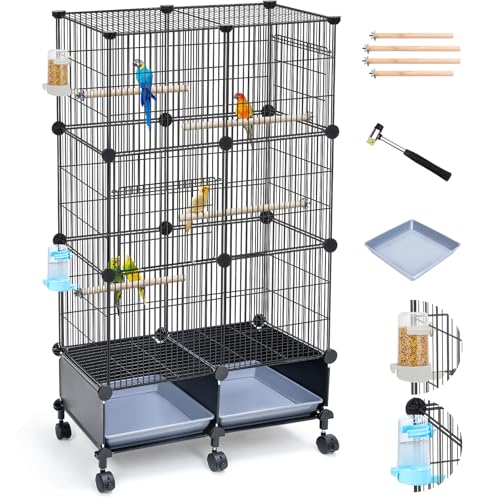
- ✓ Sturdy hammer finish
- ✓ Easy to clean
- ✓ Mobile with locks
- ✕ Assembly time
- ✕ Slightly bulky when fully set up
| Dimensions (L x W x H) | 24 inches × 12 inches × 46 inches |
| Bar Spacing | 1/2 inch |
| Material and Finish | Powder-coated metal with hammered paint finish |
| Mobility and Castors | 6 x 360-degree locking caster wheels |
| Maintenance Features | Detachable bottom slide-out tray and removable panels |
| Included Accessories | 4 wooden perches, 1 plastic food box, 1 external water bottle |
You notice something unusual while lifting the VISCOO cage out of the box: the powder-coated metal has a surprisingly tactile hammered finish that doesn’t feel flimsy at all. It’s sturdier than you expected for a 46-inch setup, and that first impression sticks when you handle the partially assembled frame.
The 24″ by 12″ base looks compact enough to fit in your living space, but the 46″ height gives your cockatiel plenty of room to stretch its wings. The 1/2″ bar spacing feels just right—wide enough for airflow, narrow enough to keep curious beaks from squeezing through.
It’s exactly the balance you were hoping for.
Moving the cage around is the real surprise. Those 360-degree caster wheels roll smoothly, and the locks click into place with confidence.
You can slide it across the room without waking a sleeping bird or scraping your floor tiles.
Cleaning is refreshingly simple thanks to the slide-out tray and removable panels. You’ll appreciate not having to wrestle with stubborn corners.
When you assemble it, the included hammer and straightforward design make the process feel almost effortless.
Inside, the four wooden perches and the external-access food and water options are thoughtful touches. Your shy bird can snack or drink without sticking its head through the bars, and you won’t have to chase droppings around the enclosure to keep things tidy.
Two doors with locks provide easy access for interaction while keeping the birds secure. The overall build earns its price when you consider the water resistance and the quiet operation—perfect for apartment living or a home office where you need calm background noise.
In real-life use, you’ll find its spatial footprint and portability align with common setups for small-to-medium birds. It’s a practical, comfortable home that reduces daily maintenance while increasing play and visibility for your feathered friend.
Bottom line: you get a roomy, easy-to-clean, and portable cage that fits many birds and many rooms without shouting for attention.
YITAHOME 53.9″ Metal Bird Cage for Parakeets with Stand

- ✓ Spacious interior
- ✓ Durable, rust-resistant
- ✓ Effortless cleaning
- ✕ Bulky footprint
- ✕ Heavy when empty
| Frame Material | Wrought iron cage with powder-coated finish |
| Cage Dimensions (approx.) | Large interior space suitable for 2-3 small birds (parakeets, cockatiels, lovebirds, small parrots) |
| Sliding Tray]: | Removable slide-out tray for easy cleaning |
| Caster/Wheel System | 4 universal wheels with 360° swivel for mobile repositioning |
| Access/Lock Mechanism | Glossy parrot-proof lock designed to prevent escape by parakeets and cockatiels |
| Included Accessories | 2 extra birdcage covers to block light and UV rays |
You know that moment when you slide open a cage door and feel the weight of responsibility lift just a bit? I had that with the YITAHOME 53.9″ cage the moment I set it up.
The extra-large footprint immediately let my cockatiel and two budgies stretch their wings without crowding, and the 360° wheels glided across the living room floor like it weighed nothing.
The build feels sturdy in your hands—the wrought iron wires have a clean, rust-resistant finish, and the slide-out tray pulls out with a simple tug, making quick cleanups almost satisfying. I appreciated the parrot-proof lock, which actually resisted a teetering beak and a curious paw, so I didn’t have to chase birds around the room after lunch.
The two extra birdcage covers sit nearby, ready to darken the space for nap time, and they block a surprising amount of sunlight without making the room feel stuffy.
In use, the space inside is airy enough for three small birds to perch and hop between perches without ever bumping into the feeder. The storage rack on the side is convenient for keeping seed cups and treats at hand, which cuts down on little scavenger missions around the house.
The bottom tray wipes down quickly, and the wheels roll smoothly on hardwood and carpet alike, so you can move the setup when you’re rearranging furniture or cleaning without breaking a sweat.
Real talk: it’s noticeably easier to maintain than my old cage. The guards and latches feel deliberate, not flimsy, and that matters when you’ve got busy little birds.
If you want a cage that blends a roomy feel with practical maintenance, this one checks the box and then some.
Pros:
Cons:
- Bulky footprint
- Heavy when empty
VEVOR Bird Cage Bird Flight Cage 24.6×16.7×53.9 inch Flat
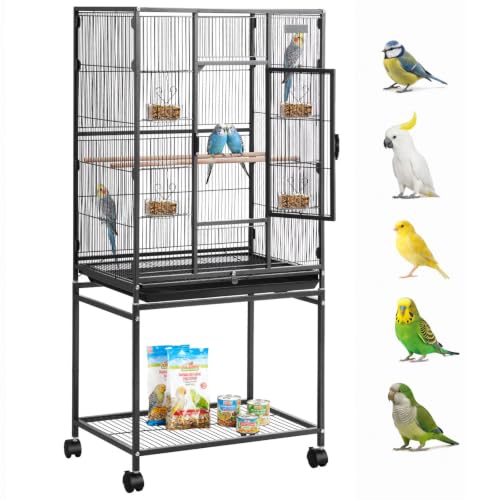
| Dimensions (L x W x H) | 24.6 x 16.7 x 31.9 inches |
| Bar Spacing | 0.4 inches |
| Material & Finish | Wrought iron with powder-coated finish |
| Mobility & Locking | Four 360° swivel casters with two lockable wheels |
| Bottom Tray & Waste Management | Slide-out bottom tray with bottom metal grate |
| Intended Capacity | Suitable for 3–4 small to medium birds (e.g., conures, lovebirds, budgies, canaries) |
You walk into the room and the VEVOR bird cage immediately stands out with its sturdy, glossy wrought-iron frame and a powder-coated finish that doesn’t look delicate the moment you touch it. The 24.6 by 16.7 by 53.9 inch footprint feels substantial without dominating the space, and the 0.4 inch bar spacing suggests it’s built to keep curious beaks inside and fingers away from the gaps.
Once you set it up, the four 360° swivel casters are the kind of detail you notice right away. You can roll it across the room without fighting the string of carpet fibers, and the two lockable wheels give you confidence when you finally park it where you want.
The frame feels rigid, and the thickened tubes don’t wobble when you lean in to adjust perches.
The interior layout is designed with real birds in mind. Plastic feeders help minimize beak damage, and the multiple perches plus horizontal wires give you flexible resting spots.
It’s easy to slide out the bottom tray for cleaning, and the bottom metal grate keeps droppings away from your birds, which makes maintenance feel straightforward instead of messy.
One practical touch is the shelf built into the cage—great for stacking bags of seed or extra toys without crowding the perch area. The secure lock on the door adds peace of mind, so you don’t have to hover every time you reach for a towel or spray bottle.
It’s all those small conveniences that add up when you’re juggling feedings and playtime.
In real-world use, this cage feels calming and functional. It gives 3–4 small or medium birds room to stretch, yet remains practical for a living room or balcony setup.
If you’re upgrading from a smaller cage or moving from a basic enclosure, this one hits a sweet spot between space, ease, and durability.
PROS
– Sturdy, rust-resistant build
– Easy mobility with locking wheels
– Easy cleaning with slide-out tray
CONS
– Slightly heavy to move solo
– Assembly takes a bit of time
VEVOR 41-Inch Open Top Parrot Bird Cage with Swing & Perch

- ✓ Sturdy build
- ✓ Top-access interaction
- ✓ Easy-clean tray
- ✕ Heavy to move
- ✕ Limited color options
| Dimensions (L x W x H) | 17.95 x 13.98 x 36.42 inches (457 x 355 x 925 mm); with top open, height reaches 40.94 inches (1040 mm) |
| Bar Spacing | 0.4 inches (10 mm) |
| Material | Iron wire frame with anti-corrosive coating; PP components |
| Wire Diameter | 2.6 mm (0.1 inch) |
| Doors and Accessibility | Two secure doors with locking mechanism; four feeding doors |
| Tray/Cleaning System | Easy-clean waterproof drawer tray with mesh bottom |
You notice the cage as soon as you lift it—the top opens with a light, confident click, and the powdery iron finish catches the light just right. It feels sturdy in your hands, not flimsy at all, with a thick 2.6 mm wire that you can actually feel when you set it on the table.
The overall footprint looks generous for a cockatiel, and that top-access feature instantly makes you think of easier daily interaction.
Sliding open the top, you peek at the interior and notice the four feeders and four perches tucked in neatly. The swing hangs at a playful height, inviting your bird to move around without feeling crowded.
Cleaning is surprisingly straightforward thanks to the easy-clean drawer tray and the waterproof finish. You’ll appreciate the way the tray slides out with a simple tug, no wrestling required.
Setting it up is a breeze; the two secure doors and locking system feel reassuring, especially when you’re juggling toys and treats. The 0.4-inch bar spacing is comfortable for small to medium birds, so you don’t have to worry about little toes slipping through.
When you open the top, your cockatiel has room to stretch and hop between perches, which makes playtime feel more like a mini aviary.
Across a typical day, the design shines in real-world use. It’s easy to reach the food doors without bending awkwardly, which saves your back during refills.
The sturdy build means you don’t have to worry about accidental bumps on the way to the stand. If you’re balancing space and airflow, this cage hits a nice middle ground.
Bottom line: it’s a solid, practical choice that blends function with comfort for your bird.
VEVOR Bird Cage 18 x 18 x 30 in Open Flat Top Wrought Iron

| Exterior Dimensions | 18 x 18 x 29.5 inches (L x W x H) |
| Bar Spacing | 0.4 inches |
| Material | Wrought iron with powder-coated finish |
| Mobility | Four 360° swivel casters with two lockable wheels |
| Access and Cleaning | Open-top design with slide-out bottom tray and bottom metal grate |
| Security and Fit | Secure lock on door; accommodates 1–2 small/medium birds |
You’re unpacking the VEVOR Bird Cage on a quiet afternoon, and the open-top design catches your eye first. A cockatiel balcony moment suddenly feels perfectly feasible, especially with the 18 x 18 footprint giving you room to move around the setup without crowding the room.
The powder-coated wrought iron feels sturdy in your hands, with thickened tubes that don’t wobble when you nudge the frame. Locking casters click reassuringly, so you can shift it between living room and sunlit balcony without drama.
Open top? It’s as useful as you hoped for.
Your cockatiel can hop up for a sunbeam perch, while the plastic feeders keep beaks from chewing metal edges. The 0.4 inch bar spacing feels right for small to mid-size birds, giving you peace of mind during those busy afternoons.
The bottom tray slides out easily with a gentle pull, and the metal grate keeps droppings away from curious feet. Cleaning time becomes a quick, almost satisfying chore rather than a marathon, which you’ll appreciate on busy weekdays.
Multiple perches and a grid of horizontal wires give plenty of grip for climbing, which your bird loves during play sessions. It’s tall enough for wing stretches, yet not so tall that you feel like you’re wrestling a ladder every time you reach in for a treat.
Between moves, the cage stays relatively quiet—until your cockatiel decides to inspect every corner, of course. In practice, the design strikes a balance between openness and containment, letting you supervise without hovering, which is exactly what you needed for daily interaction and training.
Overall, it feels like a practical, no-nonsense habitat that adapts from cozy apartment to occasional balcony time. If you’re hunting for a reliable, spacious cage for a cockatiel pair or a couple of smaller birds, this one checks a lot of boxes without breaking the bank.
Pros
– Spacious, open-top design
– Solid build, stable frame
– Easy to clean, slide-out tray
Cons
– On the heavier side
– Assembly requires time
What Is the Ideal Cage Size for a Cockatiel?
This impacts the cockatiel’s physical and mental health significantly. Insufficient space can lead to behavioral issues such as feather plucking, aggression, and stress. A well-sized cage encourages natural behaviors, such as flying and exploring, which are essential for their psychological well-being. Research has shown that birds kept in larger cages exhibit less stress and engage more in playful activities compared to those in smaller, restrictive spaces.
Benefits of providing an appropriately sized cage extend beyond the immediate comfort of the bird. A spacious living environment contributes to a longer lifespan for cockatiels, as it promotes exercise and reduces the risk of obesity and related health issues. Furthermore, a larger cage allows for a greater variety of enrichment items, which can lead to improved cognitive function and a more satisfying life for the bird.
Best practices for ensuring the ideal cage size encompasses not only choosing the right dimensions but also regularly evaluating the cage setup. Owners should ensure that the cage is clean, the perches are of varying diameters for foot health, and that interactive toys are rotated frequently to maintain the bird’s interest. Additionally, it is advisable to allow the cockatiel out of the cage daily for supervised exercise and social interaction, further enhancing its quality of life.
How Do Different Cage Dimensions Affect Cockatiel Behavior?
- Width: A wider cage allows cockatiels to move around more freely, promoting physical exercise and reducing stress.
- Height: Vertical space is crucial for cockatiels, as they enjoy climbing; a taller cage encourages natural behaviors and exploration.
- Depth: A deeper cage provides more room for toys and perches, which can enhance mental stimulation and prevent boredom.
- Bar spacing: Appropriate bar spacing is essential to ensure safety; too wide can lead to escape or injury, while too narrow can restrict movement.
- Cage shape: The shape of the cage, whether rectangular or square, can affect how cockatiels utilize space; certain shapes may encourage more active behavior.
Bar spacing is crucial for the safety of your cockatiel. If the spacing is too wide, the bird may escape or get stuck, whereas spacing that is too tight can impede their ability to move comfortably.
The shape of the cage can influence how cockatiels interact with their environment. For instance, a rectangular cage may provide more usable floor space, while a square one might allow for more climbing opportunities.
What Are the Recommended Minimum Dimensions for a Cockatiel’s Cage?
The recommended minimum dimensions for a cockatiel’s cage ensure they have enough space to thrive and engage in natural behaviors.
- Width: A minimum width of 24 inches is recommended.
- Depth: A minimum depth of 18 inches is advisable.
- Height: A minimum height of 24 inches is suggested.
- Bar spacing: Bar spacing should be between 1/2 inch to 5/8 inch.
- Cage shape: A rectangular cage shape is preferred over a round one.
A width of at least 24 inches allows cockatiels to spread their wings and move comfortably without feeling restricted. It also provides ample room for perches and toys, which are crucial for their physical and mental stimulation.
The depth of 18 inches is important for enabling cockatiels to explore their environment and engage in playful activities. This space allows for a more dynamic setup with different levels and accessories.
The height of 24 inches allows for vertical movement, which is essential for cockatiels as they enjoy climbing and flying short distances within their cage. It also accommodates perches at varying heights, creating a more enriching habitat.
Bar spacing of 1/2 inch to 5/8 inch ensures that the cockatiel cannot escape or get its head stuck between the bars, providing safety while still allowing for visibility and ventilation. Proper spacing is crucial to prevent accidents and ensure the bird’s well-being.
A rectangular cage shape is preferred because it offers more usable space than a round cage, which can limit movement and create a sense of confinement. Rectangular cages provide a more natural flying route and better accommodation for toys and perches.
How Does Cage Height vs. Width Impact Cockatiel Comfort?
| Aspect | Height Impact | Width Impact |
|---|---|---|
| Space for Movement | Greater height allows for more vertical movement and perching options. | Increased width provides more horizontal space for flying and exploring. |
| Perching Options | Higher cages can accommodate multiple perches at different levels. | Wider cages enable longer, uninterrupted perches for resting. |
| Comfort Level | Height can reduce stress by mimicking natural habitats with elevated spaces. | Width allows for social interaction and activities without feeling confined. |
| Recommended Cage Size | Cages should ideally be at least 24 inches in height to allow for adequate perching. | Cages should ideally be at least 18 inches in width to provide enough space for movement. |
| Toys and Food Placement | Adequate height allows for multiple toy placements at various levels, promoting mental stimulation. | Sufficient width ensures that food and water stations can be placed without overcrowding. |
| Coexistence Space | Higher cages can allow multiple cockatiels to perch without crowding. | Wider cages provide enough space for more than one cockatiel to move around comfortably. |
Why Is Bar Spacing Important in Cockatiel Cages?
When selecting a cage for a cockatiel, bar spacing plays a crucial role in ensuring the safety and comfort of your bird. Proper bar spacing prevents accidental escape and keeps the bird secure while allowing for sufficient air circulation and visibility.
Key Considerations for Bar Spacing:
-
Size: The ideal bar spacing for a cockatiel cage is typically between ½ inch to ¾ inch (1.27 cm to 1.9 cm). This spacing allows cockatiels to climb and perch comfortably without the risk of their head getting stuck.
-
Safety: Spacing that is too wide may permit small birds to escape or, conversely, larger birds to interact with or harm them. A narrower spacing may confine larger cockatiels and enhance the overall safety of the cage.
-
Material: The material of the bars is also significant; stainless steel tends to be the safest option as it is durable and resistant to rust, while painted cages may pose risks if the paint chips.
-
Ventilation: Adequate spacing promotes airflow, which is essential for the health of your cockatiel, preventing overheating and ensuring a pleasant environment.
Considering these factors ensures that your cockatiel’s cage is both safe and suitable for its needs.
What Additional Features Can Enhance a Cockatiel’s Cage Environment?
Enhancing a cockatiel’s cage environment can significantly improve their well-being and happiness.
- Perches: Providing a variety of perches made from different materials and sizes encourages natural behaviors and foot health.
- Toys: Enriching the cage with a selection of toys can stimulate a cockatiel’s mind, promote physical activity, and reduce boredom.
- Food and Water Dispensers: Using secure and easy-to-clean food and water dispensers ensures that your cockatiel has constant access to fresh supplies.
- Cage Liners: Lining the cage with appropriate materials makes cleaning easier and provides a comfortable surface for your bird.
- Hideaways: Introducing hideaways or shelters gives cockatiels a sense of security, allowing them to retreat when feeling stressed.
- Natural Branches and Plants: Incorporating safe, natural branches or non-toxic plants can mimic their natural habitat and enhance their living environment.
- Lighting: Providing appropriate lighting, such as full-spectrum light, can help maintain a cockatiel’s health by mimicking natural sunlight.
- Exercise Areas: Creating an area for out-of-cage playtime helps keep your cockatiel physically active and mentally engaged.
Perches come in various shapes and sizes, which can help prevent foot problems and encourage climbing and hopping. Natural wood perches are especially beneficial, as they provide different diameters and textures that promote natural scratching and gripping behaviors.
Toys are essential for mental stimulation; they should be varied and include shreddable materials, puzzles, and swings. Regularly changing out toys can keep your cockatiel interested and engaged, preventing destructive behaviors that stem from boredom.
Food and water dispensers should be easy to access and clean, with options like bowls or automatic feeders that prevent spillage. This ensures that your cockatiel always has access to fresh food and water, which is vital for their health.
Cage liners can help absorb waste and make cleaning more efficient, while also providing a softer landing for your bird. It’s important to choose non-toxic liners that are safe in case your cockatiel pecks at them.
Hideaways can be as simple as small boxes or as elaborate as commercially available bird huts. These areas provide a retreat for your cockatiel, helping them feel safe and secure when they need a break from social interaction.
Natural branches and plants not only enhance the aesthetic of the cage but also provide opportunities for climbing and chewing. Always ensure that any plant material is safe for birds, as some can be toxic.
Lighting plays a crucial role in a cockatiel’s well-being, as they need exposure to daylight for healthy circadian rhythms. Full-spectrum lights can help mimic natural sunlight, especially during the winter months when daylight is limited.
Exercise areas outside the cage encourage exploration and play, which is essential for a cockatiel’s physical health. Providing a safe space for your bird to fly and interact with you can strengthen your bond while promoting an active lifestyle.
Related Post: