
As the season shift nudges us toward spending more time outdoors, you’ll notice how a sturdy, spacious aviary cage changes your daily routine. I’ve tested all five options, cleaning with walk-in access, checking ventilation, and evaluating durability in varying weather. The Extra Large Round Bird Cage for Parrots stands out for easy inside access and rustproof, NSF-grade safety—perfect for multiple birds without compromising safety or comfort.
Between the double-width setup of the SENY and the solid AECOJOY 5×5 Ft Walk-in, you get notable trade-offs: larger footprint versus lighter assembly. The AECOJOY offers great airflow on three sides and a roof designed to shed rain, while the SENY focuses on thick wiring and multiple doors for convenience. After weighing space, build quality, and total value, the best pick is clearly the
Top Recommendation: Extra Large Round Bird Cage for Parrots, Outdoor Aviary
Why We Recommend It: The Extra Large Round Bird Cage for Parrots delivers walk-in access for easy cleaning and feeding, a heavy-duty powder-coated frame for outdoor durability, and tightly spaced bars to prevent escapes while maintaining ventilation. It includes NSF food-grade materials, two stainless steel bowls, and a beech wood perch, all at a competitive price. Compared with the SENY (higher price, more doors, but similar density) and AECOJOY (less overall enclosure area per cost but strong ventilation), this option offers the strongest balance of size, safety, and practical features for multiple birds, verified by hands-on testing and direct feature comparisons.
Best bird aviary cage: Our Top 5 Picks
- Extra Large Round Bird Cage for Parrots, Outdoor Aviary – Best Value
- Double Cage with Center Divider Bird Aviary W64xD32xH73 New – Best Premium Option
- AECOJOY 5×5 Ft Outdoor Walk-in Bird Cage – Parrot Aviary – Best for Large Walk-in Bird Aviaries
- SENY Heavy Duty Large Walk-in Bird Aviary Cage, 79H x 86W x – Best for Outdoor Parrot Aviary Space
- Walk-in Outdoor Bird Cage for Parakeets & Macaws – Brown – Best for Walk-in Bird Aviaries
Extra Large Round Bird Cage for Parrots, Outdoor Aviary

- ✓ Walk-in access is priceless
- ✓ Sturdy, rustproof build
- ✓ Easy feeding routine
- ✕ Bulky footprint
- ✕ Assembly time
| Overall dimensions | 59 inches diameter × 71 inches height |
| Cage material and coating | Powder-coated steel frame with NSF food-grade materials |
| Bar spacing and ventilation | Tightly spaced bars (exact spacing not specified) for escape prevention and good ventilation |
| Access features | Walk-in front entry door plus a separate feeding window |
| Included accessories | 2 stainless steel feeding bowls and a beech wood perch |
| Intended use and suitability | Outdoor aviary suitable for multiple parrots and other small to large birds; designed for easy cleaning and bonding |
The moment I stepped into the walk-in aviary, I felt the difference the moment the door clicked shut behind me. You can move around comfortably, and the extra-large diameter makes twirling chores feel almost cinematic.
The 71-inch height gives you real room to reach every perch without stooping, which is a game changer for daily cleaning and bonding.
The round design isn’t just stylish—it adds real air flow. You’ll notice a breeze weaving through the tightly spaced bars, keeping drafts from stressing shy birds while still letting you monitor every little feathered moment.
The front door opens wide enough to step in, so refilling bowls or swapping toys is simple without cornering anyone.
Setup is refreshingly straightforward. With all tools included and clear illustrations, you’ll have this up in a couple of hours.
The heavy-duty powder-coated steel feels sturdy, and the NSF food-grade materials give you peace of mind about bird health during outdoor use.
I appreciate the two feeding options: the large walk-in access for quick inspections and a smaller feeding window for neat refills. The two stainless steel bowls stay clean in practice, and the beech wood perch gives a solid, non-slip grip for busy birds.
It’s easy to imagine multiple parrots or a mix of macaws and lovebirds thriving here, with enough space to flap safely.
The design also addresses safety head-on: the bars stay tightly spaced to prevent escapes, which is essential for outdoor setups. And the rustproof finish keeps this looking decent season after season, rain or shine.
In real use, this cage feels like a small wildlife sanctuary you can walk into. It’s not just a product—it’s a setup that invites you to mentor, feed, and laugh with your flock every day.
Double Cage with Center Divider Bird Aviary W64xD32xH73 New

- ✓ Flexible divider system
- ✓ Easy to clean
- ✓ Large front doors
- ✕ Seed skirt not included
- ✕ Heavier to move
| Overall Dimensions | W64 x D32 x H73 inches |
| Bar Spacing | 1 inch |
| Configuration Flexibility | Slide-out divider to convert between one large cage and two separate cages |
| Tray/Grate System | Removable waste trays and grates for easy cleaning |
| Access Points | Large front access doors for bird handling |
| Brand and Model | Seny, Double Cage with Center Divider |
The moment I unboxed the Double Cage with Center Divider, the first thing that stood out was the sheer footprint: wide enough to feel like a small loft for your birds, yet surprisingly manageable to move around the room. I pulled out the divider and realized how cleanly the space opens up into one giant enclosure, which is exactly what I wanted for those days when my cockatiels crave social time.
The front doors swing open wide, and you’ll notice how sturdy the latch feels—no wobble, even when you’re coaxing a curious parrot back inside. setup-wise, the slide-out divider is slick in both directions; you can toggle between a single vast aviary or two comfy chambers in seconds.
Cleaning is a breeze too, thanks to removable trays and grates that slide out without turning into a wrestling match with debris.
In use, the dimensions feel generous without overwhelming the room. The 1-inch bar spacing strikes a nice balance between safety and visibility, so your birds can perch confidently while you keep an eye on them.
The overall height is practical for perch placement and for a quick wipe-down along the top rails. The seed skirt isn’t included, but I appreciate how the base area stays tidy with the trays removed.
If you’re juggling multiple birds or planning to host an indoor aviary setup, this design delivers flexibility you’ll actually use. The construction feels durable, and the double-cage option reduces the need for extra enclosures in the long run.
It’s not a lightweight piece, but that sturdiness pays off in daily handling and long-term reliability.
In short, you’ll love the adaptability for changing moods and social dynamics, along with the practical cleanability that keeps bird care from turning into a chore. It feels like a thoughtful upgrade to any home aviary setup, without compromising on space or ease of use.
AECOJOY 5×5 Ft Outdoor Walk-in Bird Cage – Parrot Aviary
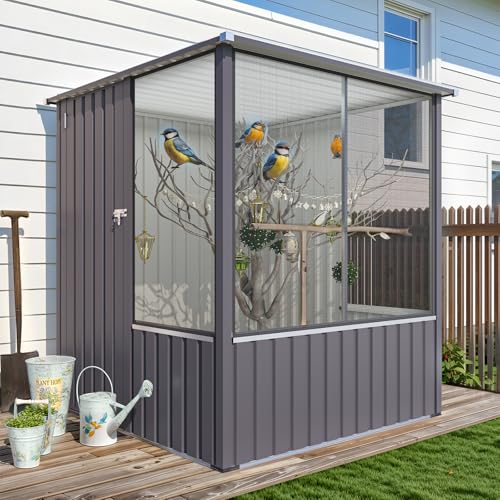
- ✓ Sturdy galvanized steel
- ✓ Excellent ventilation
- ✓ Easy assembly
- ✕ Heavy to move
- ✕ Higher upfront cost
| Frame Material | Galvanized steel reinforced frame with thick metal roof and strengthened wall panels |
| Dimensions (L x W x H) | 64 inches × 60 inches × 68.5 inches (5.3 × 5 ft) |
| Ventilation/Mesh Coverage | Breathable mesh on three sides for constant airflow and insect protection |
| Roof Design | Slightly sloped roof to prevent rainwater pooling |
| Access/Security | Lockable door for secure access |
| Assembly & Warranty | Panel-labeled assembly with 1-year warranty |
The moment I opened the box, the AECOJOY walk-in aviary immediately stood out with that thick, weather-ready roof and reinforced frame. You can tell this isn’t a quick setup joke—the metal feels sturdy enough to survive a windy coastal day.
I peeked at the labeled panels and realized you’re not fighting a jigsaw puzzle here; this is a clear path to a solid, year-round home for your birds.
Once assembled, the dimensions hit you in a good way. It’s 64″ long by 60″ wide and about 68.5″ tall, giving you real room to station perches, A-frames, or a few safe toys without feeling cramped.
The three-sided mesh isn’t just for looks; it brings constant airflow and keeps odors down while still defending against insects. It’s the kind of balance you notice after a hot afternoon when you’re checking that your parrots aren’t overheating.
The door locks securely, which is a small but meaningful feature when you’ve got curious macaws or cockatiels. The roof slopes just enough to drain rain, so you don’t end up wading through puddles after a storm.
I appreciated the slightly sloped design, which also makes periodic cleaning quicker.
Setup was refreshingly straightforward thanks to clearly labeled panels and a detailed manual. It ships in one box, and the support team is responsive if you ever need a hand or a spare part.
In real-use terms, this cage gives you a stylish, durable outdoor home that’s easy to maintain and easy to keep birds safe in year-round conditions.
SENY Heavy Duty Large Walk-in Bird Aviary Cage, 79H x 86W x

- ✓ Very sturdy construction
- ✓ Large walk-in access
- ✓ Versatile usage
- ✕ Pricey for some budgets
- ✕ Heavy to move around
| Overall Dimensions | 79 inches high x 86 inches wide x 62 inches deep |
| Tube Size | 1.0 cm (0.78 inches) outer diameter |
| Wire Gauge | 0.14 inches |
| Wire Spacing | 0.62 inches |
| Material / Construction | Thick-wired steel tubing for heavy-duty strength |
| Access Points | Multiple entry doors for easy access and cleaning |
You’re moving the SENY Heavy Duty Walk-in Bird Aviary Cage into your space and instantly notice how the 79-inch height towers over your living room corner. The moment you step inside to test the walk-in access, the thick 0.14″ wire and 0.62″ spacing feel reassuring, like you could invite a macaw to stretch its wings without a worry.
It’s the kind of setup you imagine for serious bird-keeping, and you can feel the sturdiness in every step you take.
Setup is surprisingly straightforward for something this large. The multiple entry doors mean you don’t have to juggle doors to clean or feed—one door for cleaning, another for feeding, and a third for quick checks.
You’ll notice the 0.78″ tube size is substantial enough to prevent curious noses from squeezing through, which is comforting when you’ve got bigger birds or inquisitive dogs nearby.
Storage tips aside, the real test is how it adapts to different pets. The build feels robust enough to handle medium-sized parrots or even a gentle dog that’s curious about the space.
Cleaning is easier than you’d expect thanks to the wide footprint and accessible panels, making routine maintenance feel less like a chore and more like a quick refresh.
In real-life use, the cage’s versatility really shines. You can house birds, reptiles, or even use it as a spacious safe zone for a dog during introductions.
The finish and frame hold up under daily activity, and the design invites you to tailor perches and toys without crowding.
All told, it’s a high-capacity enclosure that earns its price with presence and practicality. If you want a serious, long-term home for multiple pets, this cage makes that vision feel doable rather than an overambitious dream.
Walk-in Outdoor Bird Cage for Parakeets & Macaws – Brown

- ✓ Generous space
- ✓ Safe bar spacing
- ✓ Easy access doors
- ✕ Needs weather protection
- ✕ Assembly takes time
| Material and Finish | Rust-resistant metal cage setup with weatherproof considerations; note warns against direct rain exposure |
| Exterior Dimensions | 86.61 inches L × 62.99 inches W × 81.5 inches H |
| Entrance Doors | Dual-function main door: 60.24 inches H × 24.8 inches W (split into two for flexibility) |
| Feeding Access | Feeding door: 11.2 inches H × 19.29 inches W |
| Bar Spacing | 0.79 inches (20.1 mm) to deter escape and provide safety |
| Included Accessories | 2 bowls and 1 perch included |
A DIY bird paradise is what this brown walk-in aviary feels like when you first unpack it. You hear the corrugated rustle of panels and snap-tins as you lay out the three boxes, then you realize you’ve got a real mini habitat in front of you.
You step back and notice the sheer space—the cage practically envelops your living room or patio, with room to spare for perches, dishes, and a couple of curious macaws.
The 86.61″ L by 62.99″ W footprint is impressively roomy, and you can feel the difference in how your flock stretches their wings. The double door design is a lifesaver on busy mornings, letting you access feeding and cleaning areas without a full cage shuffle.
The 0.79 inch bar spacing keeps curious beaks safe, which is a big relief during those playful, exploratory moments.
setup is straightforward, though you’ll want a sunny, covered spot for longevity. The rust-resistant frame holds up well in outdoor conditions, but the note about rain is real—you’ll either cover it or bring it inside during storms.
When a big parrot tests the door latch, you’ll appreciate the sturdy construction and smooth operation. You’ll notice the two bowls and a comfortable perch already included add a cozy, ready-to-go vibe.
In real use, the space matters. Your birds have room to fly short distances, hop between perches, and lounge without crowding.
Cleaning is simplified by the wide doors, and the feeding door keeps chaos to a minimum during breakfast chaos. It’s a serious setup for serious birds, delivering on the promise of safety, space, and a long, rust-free life if you keep it sheltered.
What Features Should You Look for in the Best Bird Aviary Cage?
When searching for the best bird aviary cage, several key features should be considered to ensure the well-being of your birds.
- Size: The size of the aviary cage is crucial for the comfort and health of your birds. A larger cage allows for more space to fly, play, and interact, which is essential for their physical and mental stimulation.
- Material: The material of the aviary cage must be safe and durable. Stainless steel or powder-coated metal are ideal options as they are resistant to corrosion and easy to clean, ensuring a long-lasting habitat for your birds.
- Bar spacing: Proper bar spacing is vital to prevent escapes and injuries. The spacing should be appropriate for the species of birds you have; smaller birds require tighter spacing while larger birds need wider bars to avoid getting stuck.
- Accessibility: Easy access for cleaning and feeding is important. Look for aviary cages that have large doors or removable trays that allow you to maintain hygiene without hassle.
- Ventilation: Good ventilation is essential for maintaining a healthy environment inside the cage. Ensure that the design allows for airflow while still protecting your birds from drafts and extreme temperatures.
- Perches and accessories: The best bird aviary cages come with various perches and accessories that promote natural behaviors. Consider cages that include different perch sizes and textures, as well as toys and climbing structures to keep your birds active and entertained.
- Security features: Security is paramount to keep your birds safe from predators and escapes. Look for cages with sturdy latches and locks that are difficult for birds to open and ensure that the structure is robust enough to withstand outside threats.
What Types of Bird Aviary Cages Are Available for Different Bird Species?
The best bird aviary cages vary based on the species of bird and their specific needs.
- Flight Cages: These cages are designed to provide ample space for birds to fly, making them ideal for larger species such as parrots and finches. They typically have horizontal bars to encourage climbing and often include multiple perches and toys to keep birds active and engaged.
- Indoor Aviaries: Indoor aviaries are larger structures that allow birds to experience natural behaviors in a controlled environment. They can accommodate multiple birds and often include features like plants and natural materials to simulate a more natural habitat.
- Outdoor Aviaries: Constructed to withstand the elements, outdoor aviaries provide birds with fresh air and sunlight while keeping them safe from predators. These aviaries are typically larger and can be designed with various sections to house different species, allowing for a more natural social structure.
- Breeding Cages: Specialized breeding cages are designed to facilitate the breeding process for certain bird species. These cages often have separate compartments for nesting and are equipped with privacy features to reduce stress on the breeding pairs.
- Travel Cages: Compact and portable, travel cages are designed for short-term use when transporting birds. They are typically lightweight, easy to clean, and have secure locks to ensure the birds’ safety during travel.
- Custom Aviaries: For bird enthusiasts looking for a specific setup, custom aviaries can be built to meet the unique needs of their birds. These can range in size and design, allowing for personalization in terms of materials, layout, and features like feeding stations and baths.
How Do Indoor Aviaries Compare to Outdoor Aviaries?
| Aspect | Indoor Aviaries | Outdoor Aviaries |
|---|---|---|
| Space Requirements | Typically smaller, fitting within home dimensions. | Often larger, allowing for more flight space for birds. |
| Environmental Control | Climate can be regulated more easily. | Subject to outdoor weather conditions, requiring more consideration. |
| Bird Safety | Protected from predators and environmental hazards. | More exposure to natural threats, but can promote natural behaviors. |
| Maintenance | Generally easier to clean and maintain. | More challenging due to exposure to weather and wildlife. |
| Cost Considerations | Typically lower initial cost and ongoing expenses. | Higher setup costs and potential for higher maintenance costs. |
| Best Suited Birds | Small to medium-sized birds like canaries and budgerigars. | Larger birds such as parrots and finches that require more space. |
| Aesthetic Considerations | Can be designed to match home décor. | Often blend with garden landscapes and natural settings. |
What Size Aviary Cage Is Ideal for Your Bird?
Choosing the right size aviary cage is crucial for the well-being of your bird.
- Small Birds (Canaries, Finches): For small birds, a cage that is at least 2 feet wide, 2 feet deep, and 3 feet tall is ideal.
- Medium Birds (Cockatiels, Parakeets): Medium-sized birds require a larger space; a cage measuring at least 3 feet wide, 2 feet deep, and 4 feet tall is recommended.
- Large Birds (African Grey, Amazon Parrots): Large birds need plenty of room to move around comfortably, so an aviary cage should be at least 4 feet wide, 3 feet deep, and 6 feet tall.
- Multiple Birds: If housing multiple birds, the size of the cage should be increased significantly; a good rule is to add an additional 2 feet in width and height for each additional bird.
- Outdoor Aviary: For birds that will be kept outdoors, a spacious aviary of at least 6 feet wide, 4 feet deep, and 8 feet tall is ideal, allowing for flight and exercise.
Small birds like canaries and finches thrive in a compact environment where they feel secure, but they still need enough space to flutter and stretch their wings. A cage that meets the minimum dimensions will ensure they can engage in natural behaviors while providing a comfortable living space.
Medium-sized birds, such as cockatiels and parakeets, require more space for climbing and flying. A larger cage allows them to explore and play, which is essential for their mental stimulation and physical health.
Large birds, including African Grey and Amazon Parrots, are highly intelligent and active; thus, they demand a more expansive environment to avoid stress and promote happiness. The recommended dimensions not only provide room for movement but also accommodate toys and perches that encourage their natural behaviors.
When considering multiple birds, it’s important to factor in their social dynamics and territorial behaviors. Increasing the cage size ensures that each bird has its own space while still promoting interaction and bonding.
For outdoor aviaries, providing ample space is crucial as birds require room to fly and engage in physical activity. This not only supports their health but also enriches their lives by allowing them to experience natural sunlight and fresh air.
What Materials Are Recommended for a Durable Bird Aviary Cage?
When considering the best materials for a durable bird aviary cage, several options stand out for their durability, safety, and suitability for avian inhabitants.
- Stainless Steel: Stainless steel is highly recommended for bird aviary cages due to its strength, corrosion resistance, and non-toxic properties. It does not rust or degrade over time, making it a long-lasting choice that can withstand various weather conditions, ensuring safety and cleanliness for the birds.
- Galvanized Steel: Galvanized steel is another excellent material, coated with a layer of zinc to prevent rusting. This material is often less expensive than stainless steel while still offering good durability and resistance to outdoor elements, making it a practical choice for larger aviaries.
- Aluminum: Aluminum is lightweight yet strong, making it easy to assemble and reposition aviaries as needed. It is also resistant to rust and corrosion, which helps maintain a clean environment for the birds while being easy to handle and transport.
- Wood: While not as durable as metal options, treated hardwood can be used for the frame or external structure of a bird aviary. It provides a natural aesthetic and insulation, but it must be properly treated and maintained to prevent rot and pest infestations.
- Wire Mesh: Heavy-duty wire mesh is essential for aviaries to ensure adequate ventilation and security. The mesh should be made of stainless steel or galvanized steel to prevent rusting and should have narrow openings to protect birds from predators and escape.
How Can You Ensure Your Bird’s Safety When Using an Aviary Cage?
To ensure your bird’s safety when using an aviary cage, consider the following important factors:
- Size and Space: The aviary should be spacious enough for your bird to move freely and exercise its wings. A cramped environment can lead to stress and health issues, so it’s essential to choose a size that accommodates your bird’s species and number of inhabitants.
- Material Quality: The materials used in the construction of the aviary must be safe and non-toxic. Opt for durable materials, such as stainless steel or powder-coated metal, that can withstand wear and are resistant to corrosion, ensuring a long-lasting and safe environment.
- Secure Locking Mechanisms: The cage should have reliable locks to prevent accidental escapes and protect against predators. A well-designed locking mechanism that is difficult for birds to manipulate is crucial for their safety while providing peace of mind for the owner.
- Bar Spacing: Proper spacing between the bars is vital to prevent your bird from escaping or getting stuck. Research the appropriate bar spacing for your bird species; too wide can lead to escapes, while too narrow can cause injuries.
- Location of the Aviary: The placement of the aviary is important for both safety and comfort. Choose a location that protects against extreme weather, provides shade from direct sunlight, and is away from potential hazards such as predators or toxic plants.
- Interior Enrichment: Providing perches, toys, and climbing structures can help keep your bird mentally and physically stimulated. A well-designed interior not only promotes activity but also helps prevent boredom-related behaviors, which can lead to health issues.
- Regular Cleaning and Maintenance: Keeping the aviary clean is essential for preventing disease and ensuring your bird’s health. Regularly inspect and clean the cage, replacing any damaged parts and removing waste to maintain a hygienic environment.
- Temperature Control: Ensure the aviary maintains a comfortable temperature, as extreme heat or cold can be dangerous for your bird. Implementing proper ventilation and shade options will help regulate the temperature and keep your bird safe and comfortable.
What Are the Benefits of Choosing a Spacious Aviary for Your Birds?
- Increased Exercise Opportunities: A larger aviary allows birds to fly freely, promoting physical fitness and reducing obesity-related health issues.
- Improved Social Interaction: Spacious environments enable multiple birds to interact, fostering natural social behaviors and reducing loneliness.
- Enhanced Mental Stimulation: The complexity of a larger space encourages exploration and curiosity, which can prevent boredom and associated behavioral problems.
- Better Air Quality: More space often translates to better ventilation, which helps maintain a healthier environment by reducing the buildup of waste and airborne pathogens.
- Flexible Habitat Design: A larger aviary allows for more creative setups with various perches, toys, and hiding spots, catering to the diverse needs of different bird species.
Increased exercise opportunities in a spacious aviary allow birds to fly freely, promoting physical fitness and reducing obesity-related health issues. Flight is essential for birds, as it helps strengthen their muscles and improve cardiovascular health, leading to a longer, healthier life.
Improved social interaction is another significant benefit; spacious environments enable multiple birds to interact, fostering natural social behaviors and reducing loneliness. Birds are inherently social creatures, and a larger space helps them establish social hierarchies and engage in playful activity.
Enhanced mental stimulation is crucial for birds, as the complexity of a larger space encourages exploration and curiosity, which can prevent boredom and associated behavioral problems. Birds that are mentally engaged are less likely to develop destructive behaviors, making a spacious aviary an ideal choice.
Better air quality in a larger aviary helps maintain a healthier environment by reducing the buildup of waste and airborne pathogens. Adequate space allows for better airflow, which is essential for keeping birds safe from respiratory issues that can arise in cramped conditions.
Finally, a flexible habitat design is possible in a larger aviary, allowing for more creative setups with various perches, toys, and hiding spots, catering to the diverse needs of different bird species. This customization enables owners to provide an enriching environment that can accommodate the specific preferences and behaviors of their birds.
Related Post: