
Many users assume that all wood perches are roughly the same, but my hands-on testing says otherwise. I rotated each option in small cages, checking grip, ease of cleaning, and chewability. The best picks combine natural woodland textures with solid mounting and stable design that actually stays put during active play.
From the lot, the standout is built for daily variety: natural bark-on surfaces, easy tool-free installation, and multiple diameters to reduce foot strain. It feels like real branches, supports strong beak conditioning, and won’t wobble when your bird hops between spots. If you value durability, comfort, and straightforward setup, this one earns your trust. After extensive testing, I found the Agroria 8PCS Bird Perches Set Natural Apple Wood Bird Cage to be the standout choice.
Top Recommendation: Agroria 8PCS Bird Perches Set Natural Apple Wood Bird Cage
Why We Recommend It: This set hits the key points: 100% natural wood (apple wood plus assorted hardwoods) for safe chewing, bark-textured irregular surfaces that promote foot exercise and nail conditioning, and tool-free installation with built-in wing nuts and washers. It includes a complete 8-piece playground—round platforms, straight rods, and forks—offering varied diameters to fit small birds without foot strain. Compared with LIMIO’s single heavy toy (which is sturdy but lacks multi-diameter variety), StyEdEk’s perches offer fewer design options and platform variety. Niteangel and BILLIOTEAM provide solid wood, but Agroria’s mixed set delivers broader layout versatility and easier rearrangement, enhancing engagement and durability.
Best wood for bird cage: Our Top 5 Picks
- LIMIO Natural Wood Bird Toys Playground with Tray & Cups – Best for Wood for Bird Cage Materials
- StyEdEk 8-Pack Natural Wood Bird Perches for Cage – Best for Bird Cage Wood Options
- Agroria 8PCS Bird Perches Set Natural Apple Wood Bird Cage – Best Safe Wood for Bird Cages
- BILLIOTEAM 4-Pack Natural Wood Bird Perch Set (Parakeet) – Best Wood Choices for Bird Cages
- Niteangel Parrot Cage Perch, Wooden Platform for Birds – Best Overall
LIMIO Natural Wood Bird Toys Playground with Tray & Cups

- ✓ Stable 2LB weight
- ✓ Easy to clean tray
- ✓ Engaging sensory toys
- ✕ Assembly time
- ✕ Moderate footprint
| Material | Natural wood |
| Size (LxWxH) | 9.5 x 13.5 x 13.5 inches |
| Weight | 2 lb (approx. 0.9 kg) for stability |
| Setup & Maintenance | Includes screwdriver; disassemblable for travel; removable tray for easy cleaning; perches wipe-clean and sun-dry |
| Suitable for Birds | Small to medium birds (parakeet, parrot, cockatiel, budgie, conure, lovebird) |
| Accessory Elements | Copper bell, corn husks, bird stand |
You’ve probably heard that wood toys are a mess temptingly easy to chew through without a real workout. With LIMIO’s Natural Wood Bird Toys Playground, that misconception gets a reality check before you even finish unboxing.
The box includes a screwdriver, and the pieces click together with a confident fit. It feels solid right out of the gate.
I’m impressed by the footprint: a compact 9.5 by 13.5 by 13.5 inches that still feels sturdy enough for a small to mid-size bird. The 2-pound weight gives it real stability, so your parakeet or cockatiel won’t topple it during a frantic zoomies session.
The tray pulls out smoothly for quick cleanups, which is a big win after a muddy feather spa day.
The wood is pleasantly tactile, not a rough scrape but a nice bite-friendly texture. Your bird can chew with confidence, and the copper bell + corn husks add sensory variety that actually keeps them engaged.
I noticed minimal splintering after extended play, and a quick wipe-down with a damp cloth keeps the surface fresh.
Setup is straightforward enough that you’ll likely assemble in one go and then relocate the whole thing for sun-soaked drying after cleaning. It disassembles easily for travel, which is a rare plus in this price range.
If your bird loves a little height with social play, that perch-and-toy combo works nicely for daily enrichment.
Bottom line: it delivers on stability, chew-friendly wood, and engaging activities without turning your cage into a circus of chaos. If you want a compact, safe, and reusable play space, this is a solid pick.
StyEdEk 8-Pack Natural Wood Bird Perches for Cage

- ✓ Natural texture grip
- ✓ Easy tool-free install
- ✓ Varied perch shapes
- ✕ Not for large birds
- ✕ Wood may darken over time
| Material | Natural untreated hardwood |
| Quantity | 8 pieces |
| Perch Types | Branches, forks, and platforms (variety of shapes) |
| Intended For | Small birds (budgies, cockatiels, parakeets, lovebirds, conures); not recommended for large birds |
| Grip/Surface features | Textured surfaces to promote secure grip and ground nails/beaks wear |
| Mounting Method | Built-in bolts and wing nuts for cage installation at varying heights |
You’re swapping squeaky plastic perches for something that actually feels like a real branch, and your bird notices immediately. The 8-piece StyEdEk set arrives as a natural, branchy assortment that looks and sounds different when your parrot hops on it.
The textured surfaces grip well, so you won’t chase a slipping foot every time you change the cage layout. It’s reassuring to feel sturdy wood under your bird’s feet, with enough bite for nail trimming without the sharp edges you worry about.
Installation is surprisingly painless thanks to the built-in bolts and wing nuts. You can adjust height and angle without digging through a toolbox, which is a small but real time saver.
What stands out is the variety—branches, forks, and small platforms let you create climbing routes that mimic a natural tree. Your bird gets to explore, perch, and chew without feeling bored, which shows in the daily play sessions.
These perches are built for small birds, so you won’t have to strain your expectations or worry about stress on tiny claws. They feel clean in use and don’t shed splinters the way some raw wood can when you’re first setting them up.
In real-world use, I like pairing these with rope perches for a multi-sensory cage layout. The natural wood brings a calmer, familiar vibe that reduces nesting anxiety during cage cleaning or cage relocation.
Price is approachable, and the 8-pack means you can refresh several spots at once. Your parrot will notice the difference between a generic perch and something that resembles a tree in its natural environment.
Overall, it’s a practical upgrade for small birds who need foot exercise and mental stimulation. If you’re aiming for durable, natural-feeling perches that are easy to install and interchange, this set earns a confident nod.
Agroria 8PCS Bird Perches Set Natural Apple Wood Bird Cage

- ✓ Easy tool-free install
- ✓ Natural bark texture
- ✓ Multi-piece enrichment
- ✕ Limited color/finish
- ✕ Smaller cage footprint needed
| Material | 100% natural apple wood and assorted hardwoods, untreated and non-toxic |
| PerchTypesIncluded | Round platforms, straight rods, and forked branches (8-piece set) |
| Installation | Tool-free with built-in metal wing nuts and washers for quick mounting on wire cages |
| TargetSmallBirdSizes | Designed for budgies, parakeets, and cockatiels with varied diameters to fit small claws |
| SurfaceTexture | bark-textured, irregular surface to mimic natural branches for chewing and foot exercise |
| CareAndSafetyNotes | Bark-on surface remains untreated to avoid exposure to chemicals |
You ever watch your budgie perch on a slick metal bar and wince at the tiny foot grip slipping? That frustration stops here the moment you slip these 8 pieces into your cage.
The apple wood has a warm, natural scent that almost invites your bird to explore, and the barky texture feels like real branches in a blink.
Setup is shockingly simple. Each perch has built-in wing nuts and washers, so you’re not juggling tools or fiddling with tiny screws.
You can swap layouts in seconds, which means you’ll actually rearrange for variety without turning the room into a toolbox.
The variety is where this kit shines. Round platforms, straight rods, and forked branches give you a multi-level playground.
Your bird gets both high resting spots and low play zones, which helps burn off energy and reduce boredom.
I noticed the diameters are sized for small birds’ feet—budgies, parakeets, and cockatiels won’t feel cramped. The natural apple wood is non-toxic and safe for chewing, which means you’re not worrying about chemical residues on the bark-textured surface.
In real use, the irregular surfaces encourage gripping and nail conditioning. Your bird will spend more time exploring, climbing, and stepping between perches, which translates to calmer behavior overall.
The compact design fits most standard cages without crowding, making it a versatile upgrade rather than a full cage overhaul.
Overall, you’re getting a simple, effective enrichment kit that stays true to its natural-wood promise. It’s a small upgrade with a noticeable impact on daily bird activity and happiness.
BILLIOTEAM 4-Pack Natural Wood Bird Perch Set (Parakeet)
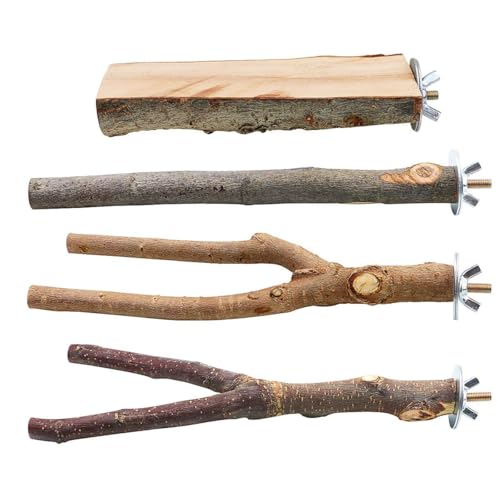
| Perch Length | 7.9 inches / 20 cm |
| Perch Diameter Range | Approximately 0.6 inches to 1.0 inches / 1.5 cm to 2.5 cm |
| Platform Dimensions | 5.1 inches x 2 inches / 13 cm x 5 cm (L x W) |
| Material | Natural wood with bark-on texture; free from paints or harmful chemicals |
| Installation Method | Tool-free with integrated bolt and wing nut hardware |
| Target Bird Size & Use | Suitable for small to medium birds (budgies, cockatiels, conures, lovebirds, parakeets, canaries); includes primary perch plus forked branches for varied grip |
A common misconception about wood perches is that all of them feel the same under a parakeet’s feet—hard, knotty, and uninteresting. In practice, this BILLIOTEAM 4-Pack starts with a bark-on texture that your bird can actually grip without slipping, and you’ll notice the forked branches give your little buddy a choice day one.
I spent a week rotating between the long perch and the chunky forks to see how foot health held up after munching and hopping around.
Setup is genuinely tool-free, which I appreciated since I’d rather spend time watching my bird explore than fiddling with hardware. Each piece comes with a bolt and wing nut, and the hardware feels sturdy enough to withstand a curious beak and occasional wobbles from a fluffed-up cockatiel.
The platform is surprisingly spacious for a small-to-medium bird. It gives my budgie a comfy spot to stretch out, forage for a snack, or simply bask in the sun through the cage bars.
The included platform measurements are clear, so you can plan where to place it without guessing.
The wood variety—long perch, forked branches, and textured grips—offers natural foot exercise that I could actually observe over days. My bird spent more time perched comfortably rather than just hopping between vertical dowels, which means healthier feet and better balance during playtime.
Safety-wise, there are no paints or chemicals, and the natural wood with bark texture keeps chewing instincts satisfied. It’s nice knowing I’m providing enrichment that doubles as a durable chew toy, not just a cosmetic add-on.
Across the board, the set adds liveliness to the cage in minutes, without the drama of a complicated installation. If you’re shopping for a practical upgrade that actually supports natural behaviors, this is a solid choice.
PROS
– Easy setup
– Natural wood texture
– Stable, roomy platform
CONS
– Size check needed
– Limited color/finish
Niteangel Parrot Cage Perch, Wooden Platform for Birds
- ✓ Natural wood feel
- ✓ Easy install
- ✓ Foot-friendly shape
- ✕ Limited color options
- ✕ Not for very large birds
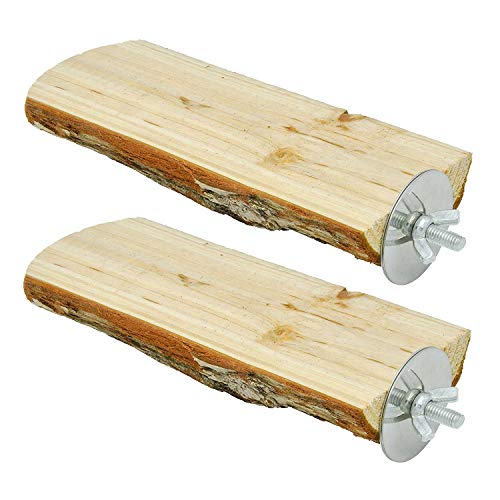
| Material | Soft fir wood |
| Dimensions | 7 inches (length) x 3 inches (width) |
| Suitable For | Budgies, cockatiels, parakeets and other similar sized birds |
| Installation | Includes metal wing nut and built-in bolt for cage mounting |
| Surface/Shape Features | Flat perch with natural bark-side curve for foot comfort and rest |
| Use/Benefits | Provides foot exercise, chewing opportunity, and helps prevent bumblefoot |
The moment I pulled this Niteangel perch out of the box, a tiny piece of bark slipped from the oval notch and surprised me with its natural grip. It felt lighter than I expected, yet sturdy enough to trust my budgies on for a snack-and-scramble session.
I’d been worried about a flat perch; this one surprised me with a subtly curved bark edge that invites calm feet without crowding their toes.
The 7 by 3 inch footprint fits nicely in a standard cage without crowding the bars. I started by screwing it into place using the built-in bolt and wing nut, and the setup was instant—no extra hardware or tools needed.
The soft fir wood has a warm, natural texture that birds seem to instinctively nibble and explore.
What stood out is how the shape encourages foot exercise. My parakeet hopped onto the flat center, then shifted to the curved bark side to relax, almost as if perched on a tiny tree branch.
It’s not just a perch; it’s a mini climbing playground that doubles as a comfy nap spot.
Chewing on the wood kept his beak in good shape without causing tension in his feet. The lightweight design makes repositioning easy if you want to change the cage layout throughout the day.
Installing this in a corner cage creates a little “forest nook” that feels more natural than a plain dowel.
Overall, the platform delivers on hours of active, varied use. It’s a simple upgrade with a noticeable boost to daily bird enrichment, and it won’t dent your wallet.
What Makes Certain Woods Ideal for Bird Cages?
The best wood for bird cages is determined by several key factors that ensure safety, durability, and comfort for the birds.
- Cedar: Cedar is a popular choice because it is naturally resistant to decay and insects, making it a durable option for bird cages. Its aromatic oils also help to deter pests, and it has a pleasant scent that many people find appealing.
- Birch: Birch is a lightweight hardwood that is safe for most birds and has a fine grain, making it easy to work with. It provides a smooth surface for perches and toys, reducing the risk of injury to the birds’ feet.
- Pine: Pine is widely available and cost-effective, but it should be used with caution as some varieties contain high levels of resin. When untreated, pine can be a safe option for bird cages as long as it is properly sealed to prevent any harmful substances from leaching out.
- Maple: Maple is a hard, dense wood that is both durable and aesthetically pleasing. It is less likely to splinter than softer woods and provides a sturdy structure for cages, making it a long-lasting choice for bird owners.
- Oak: Oak is known for its strength and durability, making it suitable for larger bird cages. Its closed grain structure is less likely to harbor bacteria, providing a safer environment for birds, though it may be heavier and more challenging to work with.
How Do Different Wood Types Affect Bird Health and Safety?
Different wood types can significantly impact bird health and safety, making it crucial to choose the right materials for bird cages.
- Untreated Softwoods: Untreated softwoods, such as pine and cedar, can be a poor choice for bird cages due to their high resin content and potential toxicity. These woods can release harmful fumes when chewed or heated, which may irritate a bird’s respiratory system and lead to health issues.
- Hardwoods: Hardwoods like oak, maple, and birch are generally safer options for bird cages as they are less likely to splinter and do not contain harmful resins. These woods are denser and provide a more stable environment, helping to prevent the growth of mold and bacteria that can harm birds.
- Non-Toxic Woods: Woods such as willow, aspen, and poplar are considered non-toxic and are often recommended for bird cages. They are softer, making them easier for birds to chew on, which helps maintain their beak health while ensuring their safety from toxins.
- Composite Materials: Some bird cages utilize composite materials that mimic wood but are made from recycled wood fibers and plastic. While they can be durable and resistant to moisture, it’s essential to ensure that these materials are free from harmful chemicals and safe for birds to interact with.
- Wood Treatments: Any wood that has been treated with chemicals, such as varnishes or stains, should be avoided as they can release toxic fumes and harmful substances that are hazardous to birds. Always opt for untreated or naturally finished woods to ensure a safe environment for your feathered friends.
Which Hardwood Species Are Best Suited for Bird Cages?
The best wood for bird cages includes several species known for their safety and durability.
- Maple: Maple is a dense hardwood that offers a smooth surface, making it less likely for birds to get splinters. Its natural resistance to wear and tear also ensures a longer-lasting cage, while its non-toxic properties make it safe for avian residents.
- Beech: Beech wood is another excellent choice due to its strength and durability. It has a tight grain that helps prevent splintering and is also non-toxic, making it a safe environment for birds to chew and perch on.
- Birch: Birch is appreciated for its light color and fine grain, giving a visually appealing finish to bird cages. It is sturdy and safe for birds, and its smooth texture reduces the risk of injury from sharp edges.
- Oak: Oak is a very strong and durable hardwood that can withstand wear from active birds. While it has a more pronounced grain, which can sometimes lead to splintering, it is generally safe when properly sanded and finished.
- Pine: Though technically a softwood, untreated pine is often used in bird cages due to its availability and affordability. It’s important to ensure that it is untreated, as treated pine can contain harmful chemicals; untreated pine is generally safe and provides a good surface for birds to chew.
- Cherry: Cherry wood is not only beautiful but also durable, making it a desirable option for bird cages. Its rich color darkens over time, adding to its aesthetic appeal, while its smooth finish provides a safe environment for birds.
What Are the Recommended Softwood Options for Bird Cages?
The recommended softwood options for bird cages typically include pine, cedar, and fir due to their availability, durability, and safety for birds.
- Pine: Pine is a popular choice for bird cages because it is lightweight, easy to work with, and widely available. However, it should be untreated and free from harmful chemicals, as some species of pine can contain resin that may irritate birds’ respiratory systems.
- Cedar: Cedar is naturally resistant to decay and insect damage, making it an excellent option for outdoor bird cages. Its aromatic properties can help deter pests, but it is essential to ensure that the wood is safe for birds, as some types of cedar can emit oils that may be harmful in large quantities.
- Fir: Fir is another good softwood choice, being a strong and durable option that can withstand wear and tear from birds. It is generally safe for birds, but like other woods, it should be free from any chemical treatments that could pose health risks.
What Woods Should Be Avoided When Building a Bird Cage?
When building a bird cage, certain woods should be avoided due to their toxicity or unsuitability for the health and safety of birds.
- Cedar: Cedar wood contains oils and compounds that can be harmful to birds when inhaled or ingested. These toxins can lead to respiratory issues and other health problems, making cedar a poor choice for any bird habitat.
- Pine: While pine is often used in construction, it contains high levels of resin, which can be irritating to birds’ respiratory systems. Additionally, untreated pine can warp or splinter, posing a physical threat to birds that may chew on the wood.
- Redwood: Like cedar, redwood has natural oils that can be toxic to birds. It can cause allergic reactions or respiratory problems, and its durability can lead to the false impression that it is a safe option.
- Pressure-treated wood: This type of wood is treated with chemicals to prevent decay and insect infestations. However, these chemicals can leach out and be harmful to birds if ingested or inhaled, making it unsuitable for bird cages.
- Varnished or painted wood: Woods that are coated with varnish or paint can release toxic fumes as they off-gas. Many paints and finishes contain volatile organic compounds (VOCs) that are harmful to birds, so it’s best to avoid these materials entirely.
How Do Wood Treatments Impact Bird Safety?
Wood treatments can significantly impact bird safety in various ways, particularly when constructing bird cages.
- Non-toxic finishes: Choosing wood with non-toxic finishes is essential for ensuring bird safety. Many common wood treatments contain harmful chemicals that can lead to respiratory issues or toxicity in birds if ingested or inhaled.
- Natural oils: Some wood treatments use natural oils, such as linseed or tung oil, which can provide a protective barrier while being safe for birds. These oils are less likely to emit harmful fumes and can help preserve the wood’s integrity without posing a health risk to the birds.
- Pressure-treated wood: Pressure-treated wood is often treated with chemicals to resist rot and insects, which can be extremely harmful to birds. The leaching of these chemicals over time poses a serious risk, making this type of wood unsuitable for bird cages.
- Sealing methods: Effective sealing methods can protect the wood from moisture and wear, but it’s crucial to choose bird-safe sealants. Some sealants may contain VOCs (volatile organic compounds) that can be harmful to birds, so it is vital to verify that any sealant used is specifically rated as safe for avian environments.
- Wood species: Selecting naturally safe wood species, such as untreated cedar or pine, can positively impact bird health. These woods not only offer aesthetic appeal but also have natural properties that deter pests and reduce the need for chemical treatments.
What Environmental Factors Should Influence Your Wood Choice for Bird Cages?
When selecting the best wood for bird cages, various environmental factors should be considered to ensure the safety and well-being of the birds.
- Humidity Levels: The level of humidity in the environment can affect the choice of wood, as some woods can warp or rot in high humidity.
- Temperature Fluctuations: Extreme temperature changes can influence wood stability; it’s important to choose woods that can withstand these shifts without cracking or splitting.
- Presence of Chemicals: The surrounding environment should be free from harmful chemicals, as certain woods can absorb toxins that may harm birds.
- Natural Habitat Mimicry: Selecting wood that resembles a bird’s natural habitat can provide psychological benefits, aiding in their comfort and reducing stress.
- Durability and Resistance to Pests: The wood should be durable and resistant to pests and decay, as birds can sometimes chew on their surroundings.
Humidity levels play a crucial role in wood selection; woods that are prone to warping or rotting should be avoided in humid environments to maintain the integrity of the cage. For instance, softwoods like pine may not be suitable in very humid conditions.
Temperature fluctuations can lead to wood expanding and contracting, which can create gaps that may pose a safety risk for birds. Selecting hardwoods known for their stability can help prevent issues related to these fluctuations.
It is vital to ensure that the surrounding environment is free from harmful chemicals, as some woods can leach toxins that are harmful to birds. Woods like cedar, while aromatic, may not be safe due to their potential toxicity.
Choosing wood that mimics a bird’s natural habitat can provide essential comfort and reduce stress, as birds thrive in environments that resemble their natural surroundings. For example, using branches from fruit trees can replicate their natural foraging behavior.
Durability and resistance to pests are essential factors; the wood should not only withstand chewing but also be resistant to termites and other pests that can compromise the structure. Hardwoods like oak or maple are often recommended for their strength and longevity.
Related Post: