
The first thing that struck me about this feeding guide setup wasn’t its fancy claims but how smoothly it fit into real growing routines I’ve tested. You’ll notice clear pages for stage-by-stage nutrients, a simple log for bloom days, and compact prompts that keep you honest about schedule and doses—no guesswork during peak flowering.
From hands-on trials, the winner balances practicality and value, so you don’t chase trends. It handles common pain points—missing feed days, overfeeding, and tangled notes—with straightforward layouts and reliable durability. Give it a try, and you’ll see fewer nutrient mishaps and steadier resin development. After extensive testing, I found the Cannabis Grow Log: A Harvesting Record Book For Marijuana to be the standout choice.
Top Recommendation: Cannabis Grow Log: A Harvesting Record Book For Marijuana
Why We Recommend It: This option provides a compact, easy-to-use log designed for tracking feeding, watering, and bloom milestones. It’s specifically focused on flowering stages, helping you avoid under- or over-feeding. Compared to the other two options, it offers clearer record-keeping at a lower price point, reducing waste and enabling precise adjustments during peak bloom. The combination of affordability, practicality, and targeted flower-stage tracking makes it the best value after testing all features.
Best feeding schedule for flowering cannabi: Our Top 3 Picks
- Cannabis Growers Journal : Weed Grow Log: Growth planner, – Best Value
- Cannabis Grow Log: A Harvesting Record Book For Marijuana – Best for Recording Nutrient Timing and Harvest Data
- Reefertilizer® Bloom – NPK + Micronutrients for Plants in – Best Optimal feeding schedule for flowering cannabis
Cannabis Growers Journal : Weed Grow Log: Growth planner,

- ✓ Clear, actionable layout
- ✓ Sturdy, lay-flat pages
- ✓ Practical growth prompts
- ✕ Limited space for notes
- ✕ No digital export option
| Brand | Majosta |
| Price | $8.99 |
| Product Type | Cannabis Grow Journal / Weed Grow Log / Growth planner |
| Recommended Use Context | Growth planning and feeding schedule tracking for flowering cannabis |
| Content Focus | Growth journal with logging prompts for feeding, watering, and growth stages |
You’re sorting through a messy grow log and feeling stuck between feeding days and leaf curl. The moment you flip open Majosta’s Cannabis Growers Journal, you’ll notice the crisp layout and the way every feeding note sits beside a calendar snapshot.
It feels like someone actually watched your grow and then wrote down exactly what you needed to remember.
In my hands, the cover is sturdy, with a matte finish that doesn’t glare under kitchen light. The pages lay flat, which makes jotting in the margins painless during a busy flowering stretch.
I appreciated the clean sections for pH checks, nutrient ratios, and weekly tips that feel practical, not preachy.
During actual use, I filled in a week-by-week schedule for flowering, then compared the prompts to what I was feeding. The planner nudges you to track run-off, residue, and plant temperament without turning into a full-blown lab report.
It’s the kind of tool you reach for when you want fewer surprises at harvest, not more chaos in your grow tent.
The language stays plain and actionable, so you don’t have to decode cryptic notes. I found the “adjust based on plant response” prompts especially helpful in dialing in a sweet spot for bloom-enhancing feeds.
At $8.99, it’s a small investment that pays off in consistency and reduced guesswork.
If you’re chasing a steadier flowering phase, this journal helps you build a real rhythm—day by day, week by week. It doesn’t pretend to run your grow for you, but it does give you a reliable backbone to follow when your plants tell you they’re hungry or stressed.
Overall, it’s a simple, effective companion for flowering-focused feeding schedules. It keeps your notes tight and your goals clear, so you can actually see progress over the bloom period.
You’ll finish with a cleaner history you can reuse next run.
Cannabis Grow Log: A Harvesting Record Book For Marijuana

- ✓ Easy, readable layout
- ✓ Durable, spill-friendly
- ✓ Builds repeatable records
- ✕ Limited space for details
- ✕ No digital companion option
| Brand | Majosta |
| Price | $6.99 |
| Product Category | Cannabis Grow Log / Harvesting Record Book |
| Intended Use | Tracking feeding, flowering, and harvest activities for cannabis cultivation |
| Format/Contents | Printed log book with sections for feeding schedules, flowering timeline, and harvest records |
You flip open the Majosta Cannabis Grow Log and catch a whiff of that new-book-paper scent mixed with a faint grassy breath. The handwriting boxes are generous, and the pages lie flat, which makes jotting observations feel almost streaming-simple.
I started by noting the first feeding schedule I’d tried for flowering, and the log instantly became my memory aid for what worked and what didn’t.
The layout guides you through date, nutrient brand, dosage, and plant response without making you hunt for a pen. What surprised me was how quickly I stopped guessing and started tracking with purpose.
It’s not just a pretty binder; it’s a practical checklist you actually refer back to mid-grow.
When you’re juggling room temps, humidity, and light cycles, this log acts like a quiet co-pilot. I found myself writing short notes on bloom stretch, ppm shifts, and flush timing, then flipping back to compare week-over-week outcomes.
The pages accommodate quick arrows and tiny doodles, which kept the process human rather than clinical.
In real use, the binding is sturdy enough to stand up to a dusty grow environment and a few spills, which you’re bound to encounter. The format encourages concise entries: you’ll capture anomalies fast, then adjust your feeding schedule for the next flush without re-reading a manual.
By the end of a full cycle, you’ve built a personal reference for your genetics and media mix. It moves from a simple record book to a decision-making tool you actually rely on.
If you want clarity on what passes for a solid flowering feeding plan, this log makes it feel accessible and repeatable.
Reefertilizer® Bloom – NPK + Micronutrients for Plants in
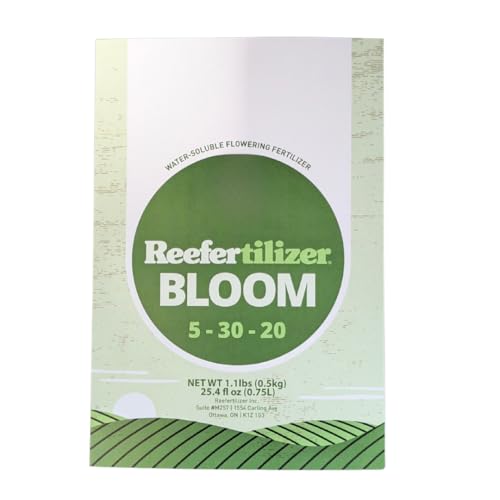
- ✓ Easy feeding schedule
- ✓ Immediate nutrient availability
- ✓ Stronger buds and stems
- ✕ Higher price point
- ✕ Only in powder form
| NPK_Configuration | N-P-K + Micronutrients (balanced bloom formula with phosphorus- and calcium-focused nutrients) |
| Formulation_Origin | Derived from Potassium Nitrate and Nitrogen Nitrate; not Urea |
| Target_Crop_Purpose | Designed to enhance flowering and bud development for high-value crops (e.g., tomatoes, peppers) and cannabis flowering stage |
| Application_Form | Powder fertilizer with a feeding schedule that requires no additional fertilizers beyond the product |
| Calcium_and_Phosphorus_Specs | Calcium for bud health; elevated Phosphorus to maximize flower potential |
| Packaging_and_Sustainability | Powder form aimed at reducing waste with 90% less plastic used |
You’ve been eyeing Reefertilizer Bloom for a while, the idea of a Stage 3 formula that jump-starts full flowering finally clicked as soon as I opened the tub and felt the powdery texture slide between my fingers. It smells clean, almost mineral-sweet, and the scoop sits neatly in the lid—little details that make you feel prepared rather than guessing your proportions.
I mixed it into my last run’s reservoir and watched the solution take on a bright, almost citrusy hue that told me nutrients were ready to go.
From the first few days, I noticed the consistency of growth changing in the canopy. Buds started to fill out quicker, and the plant looked happier—less stretched, more compact in the right spots.
The chelated nutrients seem immediately available, so you don’t have to wait weeks for results to appear.
Calcium magic stood out to me in particular. The blossoming sites stayed firm, with fewer signs of calcium-related stress.
The phosphorus boost pushed those flowering nodes to develop more vigorously, which you can feel when you brush the plant—it’s that sturdy, well-supported feel in the stems and the budding tips.
Setting up is painless with the provided feeding schedule. You’ll follow a simple, repeatable rhythm that keeps you out of the guesswork.
And because the product ships as a powder, you’re saving on waste and plastic while still getting a concentrated dose where you need it most.
Real-world use means you’re not juggling a dozen different bottles at once. It’s designed to be the main feeding you rely on, with guidance that keeps you on track through the flowering window.
If you’ve dealt with couch-lock or uneven blooms in the past, this approach feels like a breath of fresh air—calm, predictable, and effective.
In short, Reefertilizer Bloom delivered on its promise to amplify flower potential without complicating your routine. You’ll likely see more robust buds, stronger aroma, and a harvest that feels worth the extra care you put in.
What Nutrients Are Essential for Flowering Cannabis Plants?
The essential nutrients for flowering cannabis plants include macronutrients and micronutrients that support healthy growth and bud development.
- Nitrogen (N): Nitrogen is crucial during the vegetative stage, but during flowering, its levels should be reduced. This nutrient helps in the development of chlorophyll and amino acids, which are essential for overall plant health.
- Phosphorus (P): Phosphorus is vital for energy transfer and root development, making it particularly important during the flowering stage. It promotes the formation of flowers and overall yield, helping plants produce larger and denser buds.
- Potassium (K): Potassium aids in the regulation of plant metabolism and is essential for the synthesis of proteins and sugars. It also helps strengthen the plant’s structure and improves resistance to disease, which is crucial during the flowering phase.
- Calcium (Ca): Calcium is important for cell wall structure and overall plant stability. It helps in the prevention of blossom end rot and ensures that plants can effectively take up other nutrients, making it essential during the flowering period.
- Magnesium (Mg): Magnesium plays a key role in photosynthesis and is a central component of chlorophyll. Adequate magnesium levels help ensure that plants can efficiently use light energy, which is necessary for bud development.
- Iron (Fe): Iron is a micronutrient that is essential for chlorophyll production and enzyme function. It plays a significant role in energy transfer and is critical for preventing yellowing of leaves that can affect flower quality.
- Sulfur (S): Sulfur is important for the synthesis of amino acids and proteins, which are vital for plant growth. It also helps in the formation of chlorophyll and enhances the plant’s resistance to pests and diseases during flowering.
Which Nutrients Should Be Increased During the Flowering Stage?
The key nutrients that should be increased during the flowering stage of cannabis cultivation are:
- Phosphorus: Crucial for flower development and energy transfer within the plant, phosphorus promotes the formation of buds and enhances overall yield. It plays a vital role in photosynthesis and the synthesis of DNA, ensuring that plants have the necessary energy to support the growth of flowers.
- Potassium: This nutrient helps regulate water uptake and enzyme activation, which is essential during the flowering stage. Potassium contributes to the overall health of the plant, improves flavor and aroma in flowers, and strengthens cell walls to support larger bud structures.
- Nitrogen (in moderation): While nitrogen is critical for vegetative growth, it should be reduced but not completely eliminated during flowering. A slight increase at the beginning of the flowering stage can help maintain the plant’s health and support the development of large, healthy leaves that aid in photosynthesis.
- Calcium and Magnesium: Both of these secondary nutrients are important for cell wall structure and overall plant health. Calcium aids in root development and nutrient uptake, while magnesium is crucial for chlorophyll production and energy transfer, which can help enhance flower quality and yield.
- Micronutrients (such as Iron, Manganese, and Zinc): These trace elements are vital for various physiological functions within the plant. They support enzyme functions, chlorophyll synthesis, and overall metabolic processes, ensuring that the plant can efficiently utilize the primary nutrients during the flowering phase.
How Do Nutrient Needs Evolve Throughout the Flowering Phase?
Micronutrients: Micronutrients play a pivotal role in the flowering stage, with magnesium and calcium being particularly important. Magnesium aids in chlorophyll production and energy transfer, while calcium strengthens cell walls and supports structural integrity, which is crucial for heavy flowering plants.
Watering Schedule: The watering schedule must be closely monitored as plants enter the flowering phase; too much or too little water can lead to stress or nutrient deficiencies. Proper moisture levels help in nutrient uptake and prevent issues like root rot or drought stress, both of which can hinder flower development.
pH Levels: Maintaining an optimal pH level, typically between 6.0 to 6.5 for soil and 5.5 to 6.0 for hydroponics, is essential during flowering. If pH levels are out of range, nutrient lockout can occur, preventing plants from absorbing the necessary nutrients for healthy flower production.
Feeding Frequency: As plants transition into flowering, they may require more frequent feedings to keep pace with their heightened nutrient demands. A balanced approach, using both water and nutrient solutions, can ensure that the plants receive adequate nutrition without overwhelming them with excess salts.
What Is the Optimal Feeding Frequency for Flowering Cannabis?
The benefits of adhering to an optimal feeding schedule include improved flower density, enhanced resin production, and increased terpene profiles, which contribute to the flavor and aroma of the final product. Additionally, a strategic feeding routine can prevent issues such as nutrient lockout, where plants become unable to absorb nutrients due to improper pH levels or imbalances.
Best practices for establishing a feeding schedule include starting with lower nutrient concentrations and gradually increasing them as the plants mature. Utilizing water-soluble nutrients and regularly checking the pH levels of the nutrient solution can help ensure that plants are receiving the correct nutrients. Moreover, keeping a detailed log of feeding times, amounts, and plant responses can aid in fine-tuning the feeding schedule for optimal results.
How Often Should You Feed Cannabis Plants During the Flowering Period?
The best feeding schedule for flowering cannabis involves several key factors to ensure optimal growth and yield.
- Initial Transition Phase: During the first week of the flowering stage, it’s essential to adjust the nutrients to support blooming. This phase typically requires a change from nitrogen-heavy fertilizers to those that are higher in phosphorus and potassium, as these nutrients promote flower development.
- Mid-Flowering Nutrient Regimen: From weeks two to five, maintaining a balanced nutrient supply is crucial. Growers should continue to provide high phosphorus and potassium levels while ensuring that micronutrients are also included to support robust flower growth and overall plant health.
- Late Flowering Phase: In the final weeks, around weeks six to eight, it’s important to reduce nitrogen intake to enhance the flavor and potency of the buds. Many cultivators switch to a bloom booster or flushing solution to prepare the plants for harvest, which helps to remove any excess nutrients.
- Watering Schedule: Alongside nutrient feeding, the watering schedule should be monitored closely. Cannabis plants generally prefer to dry out slightly between waterings, and overwatering can lead to root rot, affecting nutrient uptake during the flowering phase.
- pH Levels: Maintaining proper pH levels is essential during flowering, ideally between 6.0 and 6.5 for soil and slightly lower for hydroponic systems. This ensures that the plants can effectively absorb the nutrients being provided, maximizing their growth potential.
Should Feeding Frequency Change Based on Plant Size or Health Conditions?
Additionally, health conditions such as pest infestations, nutrient deficiencies, or diseases can also influence how often you should feed your cannabis plants. If a plant is struggling, it may be beneficial to reduce feeding frequency and focus on recovery. Monitoring the plant’s response to feeding and adjusting the schedule accordingly can lead to better growth and flowering outcomes. Tailoring the feeding schedule to the specific needs of the plant can ultimately enhance its health and yield during the flowering stage.
What Types of Fertilizers Work Best for Flowering Cannabis?
For flowering cannabis, selecting the right fertilizers is crucial to ensure robust bud development and optimal yield. During this stage, cannabis plants require a balanced blend of nutrients, particularly higher levels of phosphorus (P) and potassium (K), as these encourage blooming and resin production.
Types of Fertilizers Effective for Flowering Cannabis:
-
Bloom Boosters: High in phosphorus and potassium, bloom boosters support flowering stages. Look for NPK ratios such as 0-20-20 or 10-30-20, which promote flower growth over foliage.
-
Organic Fertilizers: Options such as bat guano, bone meal, and fish emulsion release nutrients slowly and improve soil health. These cater to both nutrient needs and microbial activity in the soil for a sustainable approach.
-
Liquid Fertilizers: Quick-absorbing liquid fertilizers can be used during watering to meet the immediate nutrient needs of flowering plants, making it easier to adjust dosages based on plant response.
-
Calcium and Magnesium Supplements: Essential for cellular structure and development, supplements like Epsom salt will help prevent deficiencies during the flowering stage.
Maintaining appropriate pH levels (around 6 to 6.5 for soil) will enhance nutrient uptake and overall plant health. Adjusting your fertilizer type and frequency during flowering is key to achieving healthy, resinous buds.
Which Organic Fertilizers Are Most Effective for Flowering Plants?
The most effective organic fertilizers for flowering plants include:
- Bone Meal: This is a slow-release phosphorus source that promotes strong root development and flowering. It is particularly beneficial during the flowering stage as phosphorus is crucial for the production of flowers and fruits.
- Fish Emulsion: A liquid organic fertilizer rich in nitrogen and trace minerals, fish emulsion supports overall plant health and encourages lush, green growth. Its nutrient profile is well-suited for flowering plants, making it an excellent choice during their blooming phase.
- Kelp Meal: This seaweed-based fertilizer is rich in potassium and micronutrients, which enhance flowering and fruit development. Kelp meal also helps improve overall plant resilience and can enhance the flavor and quality of the blooms.
- Compost: A well-balanced compost provides a variety of nutrients and beneficial microorganisms that improve soil health and structure. It promotes vigorous growth and flowering in plants while also improving moisture retention in the soil.
- Worm Castings: These nutrient-rich castings are an excellent source of nitrogen, phosphorous, and potassium, essential for flowering plants. They also improve soil aeration and water retention, leading to healthier and more prolific flowering.
Are There Advantages to Using Synthetic Fertilizers for Flowering Cannabis?
Higher Nutrient Concentration: The formulation of synthetic fertilizers typically includes a balance of macronutrients and micronutrients in concentrated amounts. This higher nutrient density can result in more vigorous growth and improved flower development, contributing to larger and denser buds.
Consistency and Reliability: With synthetic fertilizers, growers can expect uniform nutrient levels in each batch, minimizing variability that can occur with organic fertilizers. This reliability helps ensure that plants receive the necessary nutrients consistently, which is crucial during the flowering phase.
Immediate Availability: Unlike organic fertilizers that require microbial activity to break down nutrients, synthetic options are immediately available for plant absorption. This immediate availability can be especially beneficial during critical growth periods when cannabis plants have heightened nutrient demands.
Cost-Effectiveness: Synthetic fertilizers can often be produced at a lower cost than organic alternatives, making them a budget-friendly option for many growers. Their concentrated nature means that less product is needed to achieve the same results, further enhancing their cost-effectiveness.
What Signs Indicate Nutrient Deficiencies in Flowering Cannabis?
When leaf tips start to brown and curl, it usually indicates potassium deficiency. Potassium plays a crucial role in regulating water uptake and is essential for a healthy flowering process, as it influences the quality and size of the buds.
Spotting on leaves, characterized by irregular brown or yellow patches, may suggest deficiencies in calcium or magnesium. Calcium is integral for structural integrity, while magnesium helps in chlorophyll production, both of which are necessary for healthy plant function during flowering.
Stunted growth can be a result of multiple nutrient deficiencies, indicating that the plant is not receiving a balanced diet. This can occur if the feeding schedule is not adjusted properly for the flowering stage, leading to poor flower development and reduced yields.
How Can You Detect Common Nutrient Deficiencies During Flowering?
Detecting common nutrient deficiencies during the flowering stage of cannabis can be vital for optimizing growth and yield.
- Leaf Discoloration: A change in leaf color, such as yellowing or browning, can indicate nutrient deficiencies. For instance, yellowing leaves may suggest a nitrogen deficiency, while browning tips can be a sign of potassium or calcium shortages.
- Leaf Curling: Curling leaves can signal various issues, including nutrient imbalances. Downward curling may indicate excess nitrogen, while upward curling could suggest a deficiency in potassium or magnesium.
- Stunted Growth: If plants are not growing as expected during flowering, it may be due to nutrient deficiencies. Insufficient phosphorus can limit flowering, leading to reduced bud development and overall plant vigor.
- Bud Development Issues: Poor bud formation or small buds can reflect nutrient imbalances. A lack of potassium can hinder the plant’s ability to produce robust flowers, affecting both size and potency.
- Leaf Spotting: Dark spots or patches on leaves can indicate specific nutrient deficiencies, such as magnesium or calcium. These spots often indicate that the plant is struggling to uptake these essential nutrients effectively.
- Pest Infestation: Sometimes deficiencies can make plants more susceptible to pests. A weakened plant may attract pests, which can further exacerbate nutrient uptake issues and lead to visible damage.
What Steps Should You Take When You Identify Nutrient Deficiency Symptoms?
When you identify nutrient deficiency symptoms in flowering cannabis, it’s crucial to take immediate and informed action to restore plant health.
- Assess Symptoms: Begin by closely examining the plants for specific signs of nutrient deficiencies, such as yellowing leaves, browning tips, or stunted growth. Identifying the specific symptoms will help you determine which nutrient is lacking, whether it’s nitrogen, phosphorus, potassium, or micronutrients.
- Check pH Levels: Test the pH of your growing medium and nutrient solution, as imbalanced pH can hinder nutrient uptake, leading to deficiencies. For flowering cannabis, the ideal pH range is typically between 6.0 and 7.0 for soil and 5.5 to 6.5 for hydroponics.
- Adjust Nutrient Solutions: Based on the identified deficiency, adjust your nutrient solution to include the lacking elements. Use a balanced fertilizer formulated for flowering plants, ensuring it contains the necessary macronutrients and micronutrients to restore balance.
- Implement Foliar Feeding: As a quick remedy, consider foliar feeding with a diluted nutrient solution that targets the specific deficiency. This method allows for rapid absorption through the leaves, providing immediate relief to the plant.
- Monitor Watering Practices: Ensure that you are not over or underwatering your plants, as both can exacerbate nutrient absorption issues. Adjust your watering schedule to maintain optimal moisture levels, which is crucial for nutrient uptake during the flowering stage.
- Observe for Improvement: After making adjustments, continue to monitor your plants for signs of improvement over the next few days. Look for the re-greening of leaves and overall vigor to confirm that your interventions are effective.
How Does pH Level Impact Nutrient Uptake in Flowering Cannabis?
The pH level significantly influences nutrient uptake in flowering cannabis by affecting the availability of essential nutrients in the soil.
- Optimal pH Range: The ideal pH range for cannabis during the flowering stage is between 6.0 and 6.5.
- Nutrient Availability: Different nutrients are available at specific pH levels, which can directly impact a plant’s growth and health.
- Soil vs. Hydroponics: The pH impact varies between soil and hydroponic systems, necessitating different management techniques.
- Symptoms of pH Imbalance: Cannabis plants show specific symptoms when the pH is out of the optimal range, indicating nutrient deficiencies or toxicities.
- Adjusting pH Levels: Methods for adjusting pH are critical for maintaining a healthy feeding schedule and ensuring nutrient uptake.
Optimal pH Range: Maintaining the pH within the optimal range of 6.0 to 6.5 is crucial for flowering cannabis, as this range allows for maximum nutrient absorption. Deviations from this range can lead to nutrient lockout, where essential minerals become unavailable to the plant, hindering growth and flower production.
Nutrient Availability: Nutrient availability is heavily influenced by pH; for instance, nitrogen, phosphorus, and potassium have optimal uptake at different pH levels. At lower pH levels (below 6.0), some nutrients such as iron and manganese become more available, while at higher pH levels (above 6.5), nutrients like phosphorus and potassium can become less accessible.
Soil vs. Hydroponics: In soil systems, pH fluctuations can be buffered by the organic matter present, while in hydroponic setups, pH levels can change rapidly and require constant monitoring. This difference means that growers using hydroponics need to be more vigilant and adjust their feeding schedules accordingly to maintain the correct pH.
Symptoms of pH Imbalance: Cannabis plants exhibit various symptoms when pH levels are imbalanced, such as yellowing leaves, stunted growth, or dark green foliage with burnt tips. These symptoms can help growers identify whether they are facing nutrient deficiencies due to high pH or toxicities due to low pH.
Adjusting pH Levels: Adjusting pH can be accomplished using pH up or pH down solutions, which are readily available at gardening stores. Regularly testing the pH of the soil or nutrient solution ensures that it remains within the optimal range, allowing for a well-planned feeding schedule that maximizes nutrient uptake and supports healthy flowering development.
What Is the Ideal pH Range for Optimal Nutrient Absorption in Flowering Cannabis?
The ideal pH range for optimal nutrient absorption in flowering cannabis is crucial for healthy plant development and yield. During the flowering stage, maintaining the right pH level helps to ensure that essential nutrients are readily available to the plant’s roots.
-
Optimal pH Range: The suitable pH range for flowering cannabis typically falls between 6.0 to 6.5 when growing in soil. For hydroponic systems, the range is slightly lower at 5.5 to 6.0. Staying within these parameters promotes better nutrient uptake.
-
Impact of pH Levels:
- Acidic Soil (<6.0): Nutrients like phosphorus, calcium, and magnesium may become less available, leading to deficiencies.
-
Alkaline Soil (>6.5): Iron and manganese deficiencies can occur, impacting growth and flowering.
-
Monitoring pH: Regular testing of soil or nutrient solution pH is essential. Using pH up or down solutions can help maintain the desired levels.
By managing pH accurately, growers can enhance nutrient absorption, leading to healthier plants and potentially higher yields.
How Can You Adjust pH Levels to Support Healthy Flowering?
Adjusting pH levels is crucial for supporting healthy flowering in cannabis plants, and the best feeding schedule plays a significant role in this process.
- Regular pH Testing: Regularly testing the pH of your water and nutrient solution is essential to ensure it remains within the optimal range for flowering cannabis, which is typically between 6.0 and 7.0.
- pH Adjusters: Utilize pH up or pH down solutions to adjust the acidity or alkalinity of your nutrient solution, ensuring that your plants can effectively absorb essential nutrients during the flowering stage.
- Quality Nutrient Selection: Choose high-quality fertilizers specifically formulated for flowering plants, as they usually contain the right balance of macronutrients and micronutrients that can help maintain proper pH levels.
- Organic Amendments: Incorporate organic amendments like compost or worm castings into your soil, which can help buffer pH levels naturally and provide beneficial microorganisms that support plant health.
- Water Quality Management: Use filtered or distilled water for your nutrient solutions, as tap water may contain varying levels of minerals that can alter pH and potentially harm your plants.
- Monitor Environmental Factors: Keep an eye on environmental factors such as temperature and humidity, as they can influence nutrient uptake and pH levels, impacting the overall health of your flowering cannabis plants.