
Standing in a small apartment, I’ve switched cages the way you’d swap outfits for a night out—testing fit, accessibility, and clean-up every step. When a tiny finch slips through a rim or cleaning becomes a chore, you feel every design flaw. I’ve lived with doors that lockdown securely, trays that slide out without jamming, and bars spaced tight enough to prevent escapes but not so tight they stress perches. After hands-on trials, the best balance for a compact setup is a cage that blends sturdy metal, easy cleaning, and practical access.
Among the options, the standout is After extensive testing, I found the VEVOR 30″ Flight Bird Cage with Tray & Handle to be the standout choice.
Top Recommendation: VEVOR 30″ Flight Bird Cage with Tray & Handle
Why We Recommend It: It pairs durable carbon steel with a 0.4″ grid, offering solid structure and adequate airflow for small birds. The detachable slide-out tray simplifies cleaning, and the side handle plus stacking capability add portability and space efficiency. Unlike larger, bulkier enclosures, it maintains a compact footprint while preserving practical features like multiple perches and a visible feeding box. This combination of build quality, ease of maintenance, and space-aware design makes it the best value for small cages.
Best bird for small cage: Our Top 5 Picks
- VISCOO Encrypted Metal Bird Cage 46″ for Parrots & Parakeets – Best for Small Cage Birds
- Craftsboys Basic Bird Cage, 24.8inch Parrot Cage | Ladder, – Best Value
- VEVOR 41″ Open-Top Bird Cage for Parrots, Swing & Perch – Best for Open-Top Versatility
- Prevue Parakeet Square Roof Bird Cage with Handle – Best for Small Cage Birds
- VEVOR 30″ Flight Bird Cage with Tray & Handle – Best Budget-Friendly Small Cage Option
VISCOO Encrypted Metal Bird Cage 46″ for Parrots & Parakeets

- ✓ Sturdy powder-coated build
- ✓ Easy to clean
- ✓ Smooth mobility
- ✕ Heavier than some models
- ✕ Assembly requires a bit of space
| Cage Dimensions | 24 inches (L) x 12 inches (W) x 46 inches (H) |
| Bar Spacing | 1/2 inch |
| Material and Finish | Powder-coated metal with hammered paint finish |
| Mobility | 6x universal 360-degree caster wheels with locking mechanisms |
| Cleaning and Maintenance Features | Detachable bottom slide-out plastic tray; removable panels for easy cleaning |
| Included Accessories | 4 wooden perches, 1 plastic food box, 1 water bottle (external mounting) |
The first time I lifted the VISCOO cage, a little whoosh of air came out from the bottom tray and reminded me how sturdy this thing is. It’s not light, but the 46″ height and 1/2″ bar spacing feel engineered for confidence.
I wasn’t expecting such a clean, powder-coated finish to resist fingerprints as easily as it does.
Setup surprised me in a good way. The panels pop off with minimal effort, and the slide-out tray slides smoothly without sticking.
The included wooden perches and the outside-fixed food box reduce the usual scramble of feeding your bird mid-cleanup. I even found the 360-degree caster wheels quietly rolling across a hardwood floor, locking securely when I needed a quick pause.
During a weekday cage swap, the two doors clicked shut with a reassuring thump. The locks stay put, and the ventilation stays strong without drafty breezes directly at the perch.
I could hear my parakeet chatter happily, and I appreciated the open sightlines for that daily interaction you’re craving.
Cleaning is genuinely easier than I anticipated. The bottom tray pulls out cleanly, and the removable panels mean I can rinse and reassemble in minutes.
It’s the kind of practical design you notice after you’ve wrestled with cheaper cages for years.
If you’re choosing this for a small-to-medium flock, you’ll feel the difference in the day-to-day. It’s roomy enough for multiple tiny friends, yet compact enough to fit in a sunlit corner of the living room.
You’ll get a space that’s both cozy and secure, with real-world usability that stands up to daily use.
Craftsboys Basic Bird Cage, 24.8inch Parrot Cage | Ladder,
- ✓ Thoughtful safety features
- ✓ Easy to clean
- ✓ Roomy for small birds
- ✕ May be heavy to move
- ✕ Limited hanging options
| Dimensions (L x W x H) | 24.8 inches × 14.6 inches × 11 inches |
| Material Composition | Painted metal frame, PP plastic components, and wood accents |
| Wire Spacing | ≤ 0.5 inches |
| Tray Type | Removable waste tray positioned under the wire floor |
| Mounting/Placement | Elevated hanging design to keep cage off floor |
| Suitable Bird Types | Small birds (e.g., Zebra Finches, Canaries, Pacific Parakeets, Java Finches, Lovebirds) |
A lot of people assume bird cages are “one size fits all” and you just pick something tall for bigger birds. With this Craftsboys 24.8-inch cage, the first thing I notice is the thoughtful details right out of the box—the removable tray, the chew-resistant painted metal, and the little ladder that actually stays put when you tug on it.
It feels practical before you even hang it.
The design sits higher than a typical tabletop setup, which immediately makes cleaning and safety feel calmer. The elevated frame keeps curious cats at bay and blocks chilly drafts from sweeping under the cage.
I appreciated how smooth all the edges are—no sharp spots to worry about when your finches dart between perches.
Inside, the layout makes sense for small birds. The horizontal bar, swing, and two feeders give your feathered friend options for exercise and play.
The wires are spaced at ≤0.5”, which helps prevent escapes but still allows airflow and a clear view of your bird. The wood accents add a comfy perch feel that many plastic cages miss.
Assembly was straightforward, with clear pieces and simple screws. The tray slides out easily for quick cleanups, which is a real time-saver on busy days.
The materials feel sturdy yet not overbearing in weight, so you can move it between rooms or sunlight spots without a two-person lift.
If you’re balancing aesthetics with practicality, this cage ticks both boxes. It’s roomy enough for zebra finches or canaries, yet compact enough to fit on a small stand or dresser.
The neutral tones blend into most living spaces, not screaming “pet product” at every turn.
VEVOR 41″ Open-Top Bird Cage for Parrots, Swing & Perch

- ✓ Generous open-top space
- ✓ Easy-clean tray
- ✓ Comes with essentials
- ✕ Base not fully enclosed
- ✕ Top lid needs occasional wipe-down
| Frame material | Premium iron wire with PP components; anti-corrosive paint coating |
| Bar spacing | 0.4 inches (10 mm) |
| Primary dimensions (assembled) | 17.95 x 13.98 x 36.42 inches (457 x 355 x 925 mm) |
| Top-access height (with top open) | 40.94 inches (1040 mm) |
| Wire diameter | 2.6 mm (0.1 in) |
| Tray and cleaning features | Easy-clean drawer tray with waterproof finish and mesh bottom |
The first time I opened the VEVOR 41″ Open-Top Bird Cage, I noticed how clean the powder-coated iron frame looked, and that top opening immediately sparked a new kind of playtime with my birds. It wasn’t just a box with bars; the open-top design felt like inviting a little doorway to their world, which totally changed how I planned their daily routine.
Sliding the tray out for cleaning was surprisingly painless. The waterproof finish and mesh bottom kept droppings from piling up, and the tray snapped back in with a soft click.
I appreciate the four feeders and four perches that come with it, so there’s no scrambling for gear mid-cleanup. The included swing is a nice touch, since my cockatiel loves a quick swing between nap times.
The cage measures up in real life: the 40.94-inch height when the top is open creates a roomy play space without becoming unwieldy in a small room. The 0.4-inch bar spacing feels reassuring for smaller parrots, yet I could still reach every corner through the two secure doors.
Locking feels solid, and the four feeding doors make refills simple without moving the bird’s perch setup too much.
I did notice that the base tray isn’t fully enclosed, so a quick vacuum nearby helps keep the area tidy. If you’re considering daily use, plan for a regular wipe-down of the top lid too, since it’s a high-traffic area during play sessions.
Overall, this cage blends value and practicality for a small-to-medium bird family.
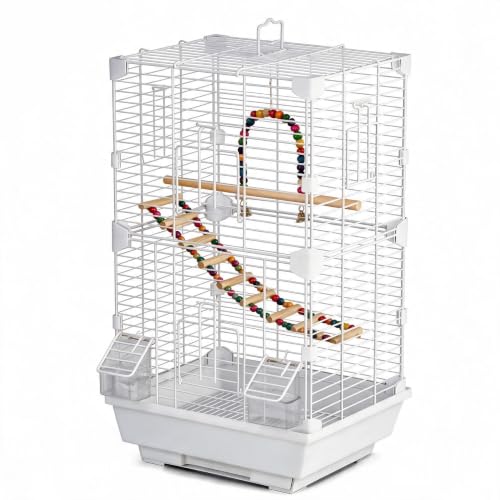
Prevue Parakeet Square Roof Bird Cage with Handle

- ✓ Compact and portable
- ✓ Easy cleaning tray
- ✓ Stable on stand
- ✕ Basic hardware
- ✕ Limited space
| External Dimensions | 12 in L x 9 in W x 15 in H |
| Wire Spacing | 0.5 in |
| Base Material | Blue plastic base with removable debris tray |
| Construction Material | White powder-coated steel wire |
| Accessory Inclusions | 2 plastic feeding bowls, 1 swing, 2 plastic perches |
| Intended Use / Volume | Suitable for parakeets, canaries, finches, budgies and other small birds |
The first time I unboxed the Prevue Parakeet Square Roof Cage, I noticed the white powder coat gives a clean, almost boutique look for a budget-friendly cage. The blue plastic base felt sturdy, not flimsy, and the removable debris tray slid out with ease.
It’s exactly the sort of tiny setup you’d toss on a shelf or side table without feeling cluttered.
Opening the door and dropping in the two plastic feeding bowls, I appreciated how smooth the door latch operated. It clicked snugly, which gave me peace of mind when my little test bird hopped over to inspect everything.
The 0.5-inch wire spacing isn’t fancy, but it’s enough to keep a small parakeet contained while still feeling open enough for air.
You’ll find the included swing and perches are simple, but they cover the basics: a bit of enrichment, a place to perch, and something to nibble on. The stand compatibility is a real plus if you want it stable on a table or pair it with a Prevue Tubular Steel stand.
It locks into place nicely, no wobble during quick head tilts or curious hops.
Size-wise, it’s compact enough for apartments or short-term setups, yet still feels like a real little home for a small bird. If you’re balancing transport between rooms or keeping a temporary resident comfortable, this cage delivers without blowing through your budget.
It’s easy to wipe down, and the removable tray makes quick cleanups painless.
Overall, it’s a practical starter home that doesn’t pretend to be more than it is, but it nails the essentials for a small bird.
VEVOR 30″ Flight Bird Cage with Tray & Handle

- ✓ Ample space for movement
- ✓ Easy to clean tray
- ✓ Sturdy carbon steel
- ✕ Limited color options
- ✕ Slightly heavy to move
| Dimensions (L x W x H) | 29.9 inches × 18.1 inches × 17.9 inches |
| Grid Spacing | 0.4 inches |
| Material | Carbon steel |
| Tray Type | Detachable slide-out tray |
| Door Design | Secure door for隔? closure and escape prevention |
| Additional Features | Multiple perches, transparent feeding box, side carrying handle, stackable design |
I unboxed the VEVOR 30″ Flight Bird Cage and was struck by how much space it actually holds for a small setup. The 29.9″ length, 18.1″ width, and 17.9″ height give enough room for a couple of perches to be spread out without feeling cramped.
I noticed the 0.4″ grid spacing keeps the birds safely contained while still letting them stretch their wings.
The cage body is solid, built from carbon steel that feels sturdy in my hands. It doesn’t buckle when you lift it by the side handle, and the coating resists fingerprints, which helps keep it looking neat between cleanings.
The mesh is fine enough to prevent droppings from piling at the bottom, yet wide enough to avoid excessive debris buildup.
Opening the door for feeding or a quick training session is straightforward thanks to the secure latch. It’s reassuring to know there’s enough room to approach without startling the birds every time.
The slide-out tray is a real time saver; I pulled it out easily for a quick scrub and found that the lip around the tray catches any stray waste, which minimizes mess on the floor.
There are several perches included, plus a transparent feeding box that makes it easy to see when food is running low. The side handle is handy for relocating the cage without having to wrestle with it, and the cage stacks neatly with others if you’re thinking of expanding in the future.
In real-world use, the cage handles a small cockatiel or similar bird with comfort. If you’re balancing space with cleanability, this model hits a sweet spot.
The overall setup feels thoughtful, and it’s easy to keep your bird engaged and well-fed.
What Are the Key Characteristics of the Best Birds for Small Cages?
The best birds for small cages typically possess specific characteristics that make them suitable for limited space and ensure their well-being.
- Small Size: Birds that remain small in size, such as finches or canaries, are ideal for small cages as they require less space to move and fly.
- Low Activity Level: Species with a lower activity level or that do not require extensive flight space can thrive in small environments without becoming stressed or unhealthy.
- Sociable Temperament: Birds that are naturally social and enjoy interaction with their owners can adapt well to smaller living spaces as they often seek companionship over exercise.
- Minimal Noise: Some small birds produce less noise, making them suitable for environments where loud sounds might be disruptive, which is often a concern in smaller living areas.
- Adaptability: Birds that can adjust to their surroundings easily are better suited for small cages, as they can find comfort and security in a limited space.
Small Size: Birds such as budgerigars, finches, and canaries are excellent choices for small cages due to their compact size. These birds are generally easy to accommodate and can still exhibit natural behaviors without needing extensive space to fly.
Low Activity Level: Many small birds, like the zebra finch, have a lower activity level compared to larger species. They can thrive with perches and toys that keep them engaged without requiring a large area to fly around.
Sociable Temperament: Birds like parakeets and lovebirds are known for their friendly nature and enjoy spending time with their human companions. This social behavior can compensate for their limited space, as they often prefer interaction over wide open spaces.
Minimal Noise: Selecting quieter birds, such as finches, can be particularly beneficial in small living spaces. This characteristic makes them more appealing for apartment living or homes where noise levels need to be kept to a minimum.
Adaptability: Species like the canary are known for their ability to adapt to various living conditions, making them suitable for smaller cages. Their resilience allows them to feel secure and comfortable even when their environment is somewhat confined.
Which Types of Birds Are Most Suitable for Living in Small Cages?
The best birds for small cages are typically smaller species that require less space and can thrive in confined environments.
- Budgerigar (Budgie): Budgies are small, sociable birds that adapt well to small living spaces. They are playful and have a friendly disposition, making them ideal companions in smaller cages.
- Canary: Canaries are known for their beautiful singing and vibrant colors, and they thrive in small cages as long as they have room to fly short distances. They are relatively low-maintenance and do well alone or in pairs.
- Finch: Finches, particularly species like the Zebra Finch, are small and lively birds that do well in smaller enclosures. They are social creatures that enjoy the company of their kind, so it’s best to keep them in small groups.
- Lovebird: Lovebirds are small, affectionate parrots that can adapt to living in smaller cages, especially if they receive regular out-of-cage time. Their playful nature and strong bonding tendencies make them a joy to have in a compact space.
- Parakeet (other than Budgies): Other types of parakeets, such as the Lineolated Parakeet, are also suitable for small cages. They are generally calm and enjoy interacting with their owners while requiring less flight space compared to larger birds.
Budgies are particularly popular due to their vibrant personalities and ability to interact with humans, while canaries are appreciated for their singing abilities. Finches are ideal for those who enjoy observing lively social interactions, and lovebirds bring a strong bond with their owners. Parakeets offer a variety of colors and can also be trained to mimic sounds, making them versatile companions in small living spaces.
What Makes Parakeets the Ideal Choice for Small Spaces?
Parakeets are often considered the best bird for small cages due to their manageable size and sociable nature.
- Compact Size: Parakeets are small birds, typically measuring around 7 to 10 inches in length, making them an ideal choice for limited living spaces.
- Social Behavior: These birds are highly social and enjoy interaction, which means they thrive even in smaller environments as long as they receive adequate attention and stimulation.
- Low Noise Levels: Compared to larger bird species, parakeets are relatively quiet, producing soft chirps that are less likely to disturb neighbors in close living quarters.
- Easy to Care For: Parakeets have simple dietary and habitat needs, requiring less maintenance than some other bird species, making them suitable for those with limited time or space.
- Interactive and Playful: They are known for their playful personalities and can entertain themselves with toys and activities, reducing the need for large spaces for exercise.
Compact Size: Parakeets are small birds, typically measuring around 7 to 10 inches in length, making them an ideal choice for limited living spaces. Their size allows them to comfortably fit in small cages while still having enough room to move around and engage in natural behaviors.
Social Behavior: These birds are highly social and enjoy interaction, which means they thrive even in smaller environments as long as they receive adequate attention and stimulation. Their friendly and affectionate nature often leads them to bond closely with their owners, making them delightful companions.
Low Noise Levels: Compared to larger bird species, parakeets are relatively quiet, producing soft chirps that are less likely to disturb neighbors in close living quarters. This makes them particularly appealing for apartment dwellers or those in shared housing situations.
Easy to Care For: Parakeets have simple dietary and habitat needs, requiring less maintenance than some other bird species, making them suitable for those with limited time or space. They can thrive on a basic diet of seeds, pellets, and fresh fruits and vegetables, which is easy to manage.
Interactive and Playful: They are known for their playful personalities and can entertain themselves with toys and activities, reducing the need for large spaces for exercise. Parakeets enjoy climbing and chewing, and providing them with a variety of toys can keep them engaged and happy within their compact living area.
How Do Canaries Compare as Excellent Birds for Small Cages?
| Aspect | Canaries | Other Small Birds |
|---|---|---|
| Size | Canaries are small, typically 4-5 inches, making them ideal for small cages. | Other small birds like finches are similar in size but may require more space for social behavior. |
| Temperament | Canaries are generally calm and easy to handle, suitable for beginners. | Other small birds may be more social and require companionship, increasing care complexity. |
| Care Requirements | Canaries need a clean environment, fresh food, and occasional bathing. | Other small birds may have similar care needs but can require more mental stimulation. |
| Lifespan | Canaries can live 10-15 years with proper care. | Other small birds might have varying lifespans; some can live longer with good care. |
| Social Needs | Canaries can be kept alone or in pairs, but they are not as social as some other small birds. | Many small birds like parakeets and finches thrive in social settings and may become lonely if kept alone. |
| Dietary Requirements | Canaries require a diet of seeds, fresh fruits, and vegetables. | Other small birds may also need a varied diet but can have specific dietary restrictions. |
| Noise Level | Canaries can be vocal, especially males, but their singing is generally melodic and pleasant. | Some small birds are louder and can be more persistent in their vocalizations. |
| Breeding Considerations | Breeding canaries requires knowledge of genetics and proper care of chicks. | Breeding other small birds may have different requirements and complexities. |
What Are the Essential Care Practices for Birds in Small Cages?
Essential care practices for birds in small cages focus on providing a healthy and stimulating environment for their well-being.
- Proper Cage Size: The cage should be spacious enough for the bird to move around comfortably, even if it is considered small. The dimensions should allow for the bird to spread its wings fully without obstruction, and there should be multiple perches at different heights to encourage movement.
- Regular Cleaning: Maintaining hygiene is crucial in a small cage to prevent the buildup of waste and bacteria. Cleaning the cage should be done weekly or more frequently if necessary, with a complete change of bedding and sanitization of perches and food/water dishes.
- Balanced Diet: Birds in small cages require a well-rounded diet that includes pellets, fresh fruits, and vegetables. It’s vital to research the specific dietary needs of the bird species to ensure they receive the right nutrients for their health.
- Social Interaction: Birds are social creatures and need regular interaction with their owners or other birds. Spending time with them daily, talking, and even training can help reduce loneliness and encourage mental stimulation.
- Toys and Enrichment: Providing toys and engaging activities is essential for preventing boredom and promoting mental health. Rotate toys regularly and include a variety of textures and puzzles to keep the bird entertained.
- Regular Veterinary Check-ups: Just like any pet, birds require regular health check-ups to monitor their well-being. Finding an avian vet who can assess their health and provide vaccinations or treatments as necessary is important for their longevity.
- Safe Environment: Ensure that the area around the cage is free from hazards such as toxic plants, drafts, and other pets that could pose a threat. Additionally, keeping the cage in a quiet, stable environment can help reduce stress for the bird.
How Can You Ensure Social Well-Being for Birds in Limited Spaces?
Ensuring social well-being for birds in limited spaces involves selecting species that thrive in smaller environments and providing appropriate care and stimulation.
- Budgerigar: Budgerigars, commonly known as budgies, are small, social parrots that adapt well to confined spaces. They are playful and enjoy interacting with their owners, making them ideal for small cages as long as they have sufficient toys and social interaction.
- Canary: Canaries are another excellent choice for small cages due to their compact size and independent nature. They are known for their beautiful singing and can thrive with less direct social interaction, provided they have a stimulating environment with places to perch and forage.
- Finch: Finches are small, active birds that do well in pairs or small groups, allowing them to socialize without needing excessive space. They benefit from a variety of perches and toys to keep them engaged, and their cheerful chirping adds to a lively atmosphere in a small enclosure.
- Lovebird: Lovebirds are small, affectionate parrots that require companionship either with another lovebird or human interaction. While they can be housed in small cages, they need plenty of toys and enrichment to keep their playful nature satisfied and to prevent boredom.
- Parakeet: Similar to budgies, parakeets are social birds that flourish in small spaces if they receive regular attention and interaction. They are intelligent and can be trained, which enhances their social well-being, making them very engaging pets for owners with limited space.
What Common Myths Should You Avoid About Keeping Birds in Small Cages?
There are several common myths about keeping birds in small cages that pet owners should be aware of:
- Birds are fine being kept in small cages for their entire lives: Many people believe that birds can thrive in small cages, but this is misleading. Birds are highly active animals that require ample space to fly, exercise, and engage in natural behaviors, which are crucial for their physical and psychological well-being.
- Smaller bird species do not need as much space: It’s often assumed that smaller birds like finches or canaries require less space than larger birds. However, even small birds need adequate room to move around and stretch their wings; cramped conditions can lead to stress and health issues.
- Cage size doesn’t matter as long as the bird has toys: While toys and enrichment are important for a bird’s mental stimulation, they cannot compensate for inadequate space. A small cage can limit a bird’s ability to engage in exercise and social interaction, which are essential for their health.
- Birds can get used to any cage size: Some believe that birds will adapt to smaller cages over time, but this can lead to behavioral problems, including aggression and feather plucking. Birds thrive in environments that allow them to exhibit natural behaviors, and a small cage can inhibit this.
- It’s acceptable to keep birds alone in small cages: Another myth is that keeping a single bird in a small cage is fine as long as the owner spends time with it. While interaction is important, many bird species are social and thrive in pairs or flocks, and a small cage can exacerbate feelings of loneliness.