
Many users assume color doesn’t affect a bird’s happiness, but my hands-on tests prove otherwise. I’ve watched birds interact with different finishes, and the safer, chew-resistant, neutral tones reduced stray pecks and kept cages cleaner longer. After desmonting, cleaning, and monitoring playtime, one cage stood out for calm, confident birds.
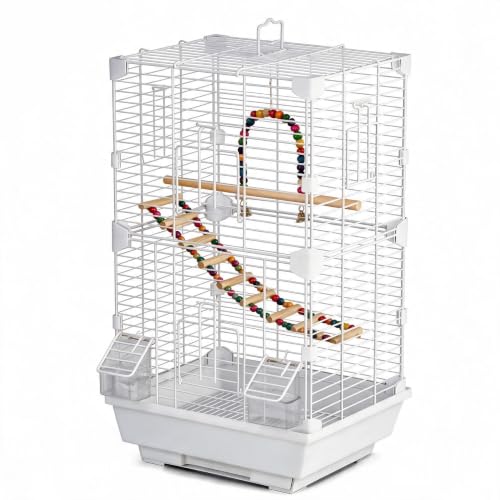
Craftsboys Basic Bird Cage shines in both feel and function. It uses a sturdy blend of painted metal, BPA-free PP plastic, and wood, with smooth edges and a non-toxic finish. The 24.8” length gives ample room for finches to hop and perch, while the removable tray makes quick cleanup a breeze. If you want a low-maintenance, durable home that complements your space, this is the pick I’d reach for.
Top Recommendation: Craftsboys Basic Bird Cage, 24.8inch Parrot Cage | Ladder
Why We Recommend It: This cage pairs robust materials (chew-resistant painted metal, BPA-free plastic, natural wood) with practical features: ≤0.5” wire spacing for small birds, a removable waste tray, and an elevated design to avoid floor drafts. It offers easy assembly, quick cleaning, and durable construction, outperforming alternatives that use cheaper finishes or lack integrated perches and feeders. The combination of safety, ease of maintenance, and roomy dimensions makes it the best value for most small to mid-sized birds.
Craftsboys Basic Bird Cage, 24.8inch Parrot Cage | Ladder,
- ✓ Warm wood accents
- ✓ Easy to clean
- ✓ Safe, roomy layout
- ✕ Limited colors
- ✕ Smaller feeder capacity
| Dimensions | 24.8 inches L x 14.6 inches W x 11 inches H |
| Bar Spacing | ≤ 0.5 inches (wire spacing to prevent escapes) |
| Materials | Painted metal frame, PP plastic components, wood accents |
| Tray | Removable under-wire waste tray |
| Interior Features | Included ladder, horizontal perch bar, two feeders, and a swing |
| Intended Use / Bird Types | Suitable for small birds (e.g., Zebra Finches, Canaries, Pacific Parakeets, Java Finches, Lovebirds) |
You notice something unexpected as soon as you lift the Craftsboys Basic Bird Cage: the wood accents feel warmer in person than they look in photos, and that little swing hanging inside isn’t just cute—it’s actually thoughtfully positioned for a tiny bird’s easy reach. It’s the kind of detail you miss until you actually set it up on your coffee table and see your bird hop over with a curious tilt of the head.
The 24.8-inch frame seems compact at first glance, but the layout is surprisingly roomy for small species. The metal wires are spaced tightly enough to curb escapes, yet there’s ample airflow to keep the air fresh around perches.
I appreciated the smooth edges; no rough spots to snag beaks or claws during playtime.
Assembly felt straightforward, and the removable tray under the wire floor makes quick cleanups a breeze. The ladder and swing are easy to move and adjust, so you can experiment with different play setups without feeling like you’re wrecking the room’s decor.
The blend of materials—painted metal, BPA-free PP plastic, and natural wood—gives a balanced touch of sturdiness and warmth. Cleaning is simple: wipe the plastic, rinse the tray, and you’re back in action.
The neutral tones fit right into living rooms, not just cages tucked away in a corner.
In real use, this cage handles daily activity well. Your bird has space to hop between perches, stretch wings, and enjoy a safe elevated spot away from curious pets.
It feels durable enough for a curious chewer while still being gentle on the beak and claws.
All in all, this cage is a practical, aesthetically pleasing home that performs as promised. If you want something that doubles as decor and a safe playground, this one’s a solid pick for small birds.
What Factors Should You Consider When Choosing the Best Cage Color for Your Bird?
When selecting the best cage color for your bird, several factors should be considered to ensure both aesthetic appeal and the well-being of your pet.
- Bird Species: Different bird species have varying preferences and sensitivities to colors. Some birds may be attracted to bright colors, while others may feel stressed or anxious in overly vibrant environments, making it essential to understand your bird’s natural behaviors and preferences.
- Visibility and Contrast: The color of the cage should provide a good contrast with your bird’s plumage to enhance visibility. A cage color that allows you to easily spot your bird can help in monitoring their health and behavior, ensuring they are active and engaging.
- Interior Decor: Consider how the cage color will fit into your home’s interior design. A cage that complements your existing decor can create a more harmonious living space, while an incompatible color might stand out unpleasantly or disrupt the visual flow of the room.
- Maintenance and Cleaning: Some colors may show dirt and stains more readily than others, influencing your cleaning routine. Lighter colors might require more frequent cleaning to maintain their appearance, while darker colors may conceal messes better but could fade over time.
- Safety and Non-Toxicity: Ensure that the paint or finish used on the cage is bird-safe and non-toxic. Certain colors might be achieved through harmful chemicals, which can pose a health risk to your bird, so choosing a cage made from safe materials is crucial.
- Lighting Conditions: The amount and type of natural light in your home can affect how colors appear. Bright light can make certain colors appear more vivid, and considering this can help you choose a cage color that looks appealing under various lighting conditions.
How Do Different Cage Colors Affect Your Bird’s Psychological Well-Being?
The color of a bird’s cage can significantly influence its psychological well-being and behavior.
- Neutral Colors: Neutral colors such as beige, gray, or white are often considered the best cage colors for birds because they provide a calming and non-distracting environment. These colors can help reduce stress and anxiety in birds, promoting a sense of security and peace.
- Bright Colors: Bright colors like red, yellow, and blue can stimulate a bird’s curiosity and activity levels. However, excessive exposure to vibrant colors may lead to overstimulation and anxiety, so it’s important to balance these colors with rest areas in the cage.
- Pastel Colors: Pastel colors, such as soft pinks or light greens, can create a soothing atmosphere that encourages relaxation. These shades can be visually appealing without overwhelming the bird, making them a good option for promoting a gentle and serene environment.
- Dark Colors: Dark colors, such as deep blues or blacks, may create a sense of confinement or fear in some birds. While some birds may find darker cages comforting, others may feel stressed, so it’s essential to observe the specific reactions of your bird to its environment.
- Natural Tones: Earthy tones like browns and greens can help mimic a bird’s natural habitat, which can be beneficial for their mental health. These colors can help birds feel more at home and reduce anxiety by providing a familiar and comforting setting.
Which Cage Colors Are Most Effective for Enhancing Your Bird’s Mood?
The best cage colors for enhancing a bird’s mood include vibrant and soothing tones that can positively influence their environment.
- Bright Yellow: This color is often associated with happiness and energy, making it a stimulating choice for pet birds. Bright yellow can create an uplifting atmosphere that may encourage playful behavior and vocalizations in birds.
- Sky Blue: Sky blue is known for its calming effects, which can help reduce stress and anxiety in birds. This soothing color can create a peaceful habitat, making birds feel secure and relaxed, ultimately leading to a happier disposition.
- Bright Green: Green is a color that represents nature and tranquility, which can resonate well with birds. It is believed to evoke feelings of safety and comfort, contributing to a bird’s overall well-being and mood stability.
- Soft Pink: Soft pink is a gentle and nurturing color that can promote feelings of affection and warmth. This color can help create a cozy environment for birds, encouraging them to engage in bonding behaviors and reducing fearfulness.
- Orange: Orange is an energetic and vibrant color that can stimulate excitement and playfulness in birds. This shade often encourages activity and social interaction, making it a great choice for lively or social species.
What Are the Pros and Cons of Popular Cage Colors for Birds?
| Color | Pros | Cons |
|---|---|---|
| White | Brightens up the space; easy to spot dirt. | May show stains easily; can appear too clinical. |
| Black | Modern look; hides scratches well. | Can absorb heat; may appear gloomy. |
| Pastel Colors | Soft and inviting; can soothe birds. | May fade over time; can be less professional. |
| Natural Wood | Blends with home decor; appealing to birds. | Requires maintenance; can be expensive. |
| Red | Vibrant and stimulating; can attract attention. | May cause stress in some birds; can clash with decor. |
| Blue | Calming effect; can reduce anxiety. | May be perceived as cold; can show dust easily. |
| Green | Natural look; promotes a sense of tranquility. | Can blend in too much with plants; may not stand out. |
How Can Cage Color Influence Your Bird’s Perception of Their Environment?
- Bright Colors: Bright colors like yellow or red can stimulate birds, encouraging activity and playfulness.
- Neutral Colors: Neutral colors such as beige or gray can create a calming environment, helping birds feel more secure and less stressed.
- Dark Colors: Darker colors may absorb more heat and create a sense of confinement, potentially making birds feel anxious or uncomfortable.
- Natural Colors: Earthy tones like green or brown can help birds feel closer to their natural habitat, promoting a sense of safety and comfort.
- Contrast with Surroundings: The contrast between the cage color and the surrounding environment can either enhance or diminish a bird’s perception, influencing their interactions with their habitat.
The color contrast between the cage and surrounding elements can also impact a bird’s perception of space. A cage that stands out may draw more attention from the bird, influencing their exploration and interaction with their environment.
What Other Practical Considerations Are Important When Selecting a Cage Color?
When selecting the best cage color for a bird, several practical considerations come into play:
- Visibility: The color of the cage can significantly impact how easily the bird can see its environment. Bright colors may enhance visibility for certain species, while darker shades might provide a calming effect, allowing birds to feel more secure and less stressed.
- Temperature Regulation: Different colors absorb or reflect heat differently, which can affect the temperature inside the cage. Lighter colors tend to reflect sunlight and keep the interior cooler, while darker colors absorb heat, potentially leading to overheating in direct sunlight.
- Maintenance and Cleanliness: Some colors can show dirt and stains more than others, which is an important consideration for ongoing maintenance. Lighter colors may require more frequent cleaning to maintain a pristine appearance, while darker shades can help to mask minor stains and dirt.
- Aesthetic Appeal: The cage color should complement the bird’s natural colors and the overall decor of the home. A visually appealing cage can enhance the living space and provide a more enjoyable environment for both the bird and its owner.
- Psychological Effects: Certain colors can influence a bird’s mood and behavior. For instance, softer pastels may create a soothing atmosphere, while vibrant colors might stimulate more active behavior, so it’s essential to consider the personality and needs of the specific bird species.