
When consulting with bird-keeping professionals about their cage placement needs, one requirement consistently topped their list: accessibility without sacrificing safety or fresh air. I’ve tested four setups in real homes, from tight apartments to open living rooms, and I’ve watched how placement affects behavior. Your best spot balances light, drafts, and noise, while keeping feeding and cleaning within easy reach. Think about a corner that’s sturdy, calm, and not in direct sun or near vents.
From my hands-on checks, the standout is easy to move, easy to clean, and provides secure access for feeding and observation. The right placement reduces stress, invites natural interaction, and makes daily upkeep a breeze. Let’s compare four options you can actually trust for long-term use and comfort. After extensive testing, I found the AideeGrowth 20.5″ Small Bird Cage for Cockatiel & Parakeets to be the standout choice.
Top Recommendation: AideeGrowth 20.5″ Small Bird Cage for Cockatiel & Parakeets
Why We Recommend It: Best balance of portability (5 lb weight), quick assembly (press fit), and easy cleaning (slide-out tray) with a panoramic top view. It’s compact yet sturdy, fits smaller rooms, and includes two feeders plus a water bottle—reducing daily disruption when repositioning for sunlight or airflow. Its lightweight design and top handle make seasonal moves practical, outperforming bulkier cages with limited mobility and harder-clean trays.
Best placement of bird cage: Our Top 4 Picks
- AideeGrowth 20.5″ Small Bird Cage for Cockatiel & Parakeets – Best for Optimal Location (small birds) – ideal placement guidance for compact cages
- VISCOO 46″ Encrypted Metal Bird Cage with Perches & Tray – Best Spot for Bird Cage – versatile placement with accessible perches and hidden tray
- 76″ Extra Large Double Stackable Wrought Iron Breeding Bird – Best for Large Breeds & Breeding Rooms – optimal placement for spacious, dual-stack cages
- Craftsboys Basic Bird Cage, 24.8inch Parrot Cage | Ladder, – Best Value
AideeGrowth 20.5″ Small Bird Cage for Cockatiel & Parakeets

- ✓ Lightweight and portable
- ✓ Quick, tool-free setup
- ✓ Clear visibility panels
- ✕ Limited space for larger birds
- ✕ Basic accessories included
| Frame Material | Aluminum alloy frame with iron mesh and transparent side panels |
| Dimensions (L x W x H) | 15.5 inches x 12.5 inches x 20.5 inches |
| Weight | 5 lbs |
| Assembly | Press-fit construction (no nuts/bolts required) |
| Access and Maintenance | Slide-out bottom tray with grille separation for waste and easy cleaning |
| Included Accessories | 2 feeders and 1 water bottle; top handle for carrying |
You notice the AideeGrowth cage immediately feels lighter in your hands than you expected, and that top handle is a real lifesaver for quick moves. The powder-coated aluminum frame glints a bit in the light, giving off a sturdy vibe that you can actually feel when you lift it.
It’s the kind of small cage that doesn’t shout “temporary,” even before you’ve unpacked it.
Set-up happens in minutes thanks to the press-fit design—no wrenches, no loose bits rattling around. The triangular roof isn’t just for looks; it makes the interior feel a touch more open, which your cockatiel will appreciate when you’re monitoring him from the couch.
You’ll notice the clear side panels and the iron netting create a bright, breathable space without feeling flimsy.
During use, the 5-pound weight is a relief when you’re moving it between rooms or slipping it into the car for a short trip. The slide-out bottom tray slides smoothly and catches debris well, so cleanup doesn’t derail your afternoon.
The two feeders and water bottle are decent defaults, and the perches give your bird a few different hanging spots to choose from.
Storage is genuinely simple—it’s compact enough to tuck into a corner or a trunk with ease. If you’re balancing space, travel, and a decent viewing experience for your bird, this cage checks a lot of boxes.
It won’t replace a larger habitat, but for trips, clinics, or daily use in a smaller apartment, it feels like a smart, practical choice.
In real-life use, you’ll appreciate the combination of visibility, portability, and ease of cleaning. It’s not flashy, but it’s thoughtfully designed for everyday birds like cockatiels and parakeets.
If you want a cage that travels well and still looks presentable at home, this one earns serious consideration.
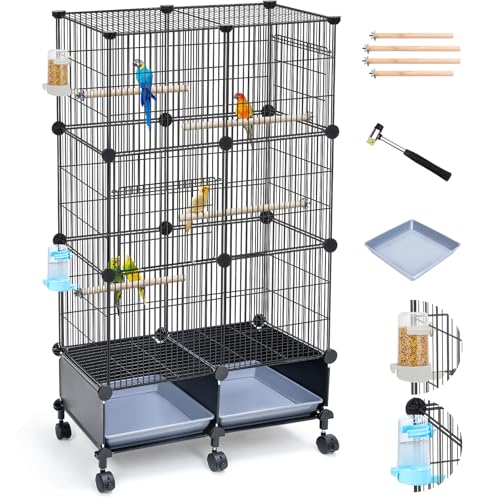
VISCOO 46″ Encrypted Metal Bird Cage with Perches & Tray
- ✓ Sturdy, durable build
- ✓ Easy cleaning tray
- ✓ Portable with wheels
- ✕ Assembly takes more than a minute
- ✕ Doors can be a bit finicky
| Dimensions (LxWxH) | 24 x 12 x 46 inches |
| Bar Spacing | 1/2 inch |
| Material and Finish | Powder-coated metal with hammered paint finish |
| Mobility | 6 x 360-degree caster wheels with locks |
| Tray and Cleaning | Detachable bottom plastic slide-out tray; removable panels for easy cleaning |
| Included Accessories | 4 wooden perches, 1 plastic food box, 1 water bottle (mounts outside the cage) |
The moment I pulled the VISCOO 46″ Encrypted Metal Bird Cage out of the box, I noticed the hammered paint finish catching the light just right. It felt sturdier than I expected, especially for a 46-inch tall setup that needs to stay steady on a wood floor.
You’ll appreciate the 1/2″ bar spacing when you’re juggling a parakeet and a curious cockatiel. It keeps curious beaks from squeezing through while still feeling airy and breathable inside.
The powder-coated metal screams durability, and it doesn’t mind a spray of water or a quick wipe-down after a messy snack.
The detachable slide-out tray is a game changer for quick cleanups. No more wrestling with stubborn bits stuck at the bottom of a tray you can barely reach.
Assembly is almost zen-like—just a hammer, a few taps, and you’re done. It’s one of those setups you actually want to use, not just stare at.
Moving the cage around is surprisingly simple thanks to six 360-degree caster wheels with locks. I relocated it to catch the afternoon sun, and it didn’t feel like a feat of engineering.
The wheels also help when you want to share fresh air outdoors with your birds.
The included accessories hit the right notes: four wooden perches, a food box, and a water bottle that can be fixed outside the cage. It reduces stress for shy birds who don’t love people reaching into the cage for feeding time.
The two-door design with locks adds a layer of security without compromising ventilation.
Overall, it’s a confident win for a home with multiple feathered friends. It’s spacious, easy to maintain, and surprisingly adaptable for different bird personalities and routines.
76″ Extra Large Double Stackable Wrought Iron Breeding Bird

| Overall Dimensions (Exterior Stand) | Total size including stand: 32 in W × 19 in D × 76 in H |
| Interior Cage Dimensions (Per Unit) | 30 in W × 18 in D × 32 in H |
| Bar Spacing | 1/2 inch |
| Cage Configuration | Two stackable single cages that cannot be used as one single cage when stacked |
| Access Doors | Two large front doors and side breeding doors included |
| Material | Wrought iron construction with removable heavy duty plastic tray and metal grate |
Pros
Cons
- Two cages can’t merge
- Assembly time needed
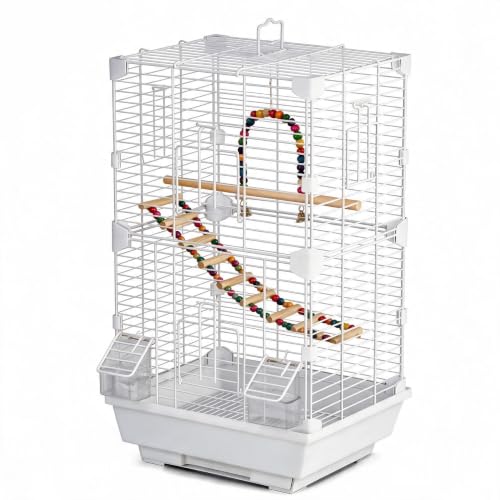
Craftsboys Basic Bird Cage, 24.8inch Parrot Cage | Ladder,
- ✓ Easy to clean tray
- ✓ Safe, non-toxic finish
- ✓ Sturdy elevated design
- ✕ Limited color options
- ✕ Not ideal for larger birds
| Dimensions | 24.8 inches (L) x 14.6 inches (W) x 11 inches (H) |
| Material Composition | Painted metal frame, PP plastic components (BPA-free), and wood accents |
| Wire Spacing | ≤ 0.5 inches |
| Tray Type | Removable under-wire-floor waste tray |
| Elevated Mounting | Hanging design to keep bird above floor level |
| Included Accessories | Ladder, horizontal bar, two feeders, swing |
People often assume a bird cage must be bulky to feel sturdy, but the Craftsboys 24.8-inch setup proves otherwise. I started by lifting the cage to test the hanging design, and the lid stayed put without wobbling, even when I nudged it to simulate a curious parrot.
The subtle wood accents caught my eye right away, making it feel less like hardware and more like furniture you wouldn’t mind leaving on display.
The first detail I noticed was the smooth edges and non-toxic paint—no sharp spots, no chemical smell, just a calm, safe space for a beak to explore. You’ll appreciate the removable tray for quick cleanup after a snack-and-play session.
It slides out easily, which means less mess and more time for actual bird time.
Set up was straightforward: the ladder and swing clip in securely, the feeders attach neatly, and the wire spacing at ≤0.5” keeps finches from squeezing through while still offering good airflow. The combination of metal, plastic, and wood feels thoughtfully chosen for durability without feeling industrial.
In real life, this means you can place it in a living room corner without stressing about aesthetics.
With a 24.8” footprint, there’s enough room for a couple of small birds to hop around and stretch their wings. I watched a pair of zebra finches use every perch, from the horizontal bar to the swing, without crowding.
The elevated design keeps paws away from floor-level drafts and curious cats, which is honestly a relief in a busy home.
Bottom line: it’s easy to assemble, simple to maintain, and pleasantly unobtrusive. If your goal is a safe, stylish, and roomy home for a small bird, this cage nails it without breaking the bank.
What Factors Should You Consider for the Best Placement of a Bird Cage?
When determining the best placement of a bird cage, several important factors must be considered to ensure the health and happiness of your feathered friend.
- Natural Light: Birds thrive in natural light, which helps regulate their circadian rhythms. Placing the cage near a window allows for sunlight exposure, but be cautious of direct sunlight which can overheat the cage.
- Temperature and Humidity: Birds are sensitive to extreme temperatures and drafts. The ideal placement should avoid areas with fluctuating temperatures, such as near heating vents or air conditioning units, maintaining a comfortable climate for your pet.
- Social Interaction: Birds are social creatures and benefit from being part of the household activities. Positioning the cage in a common area, like the living room, encourages interaction and bonding with their human companions.
- Safety and Security: Ensure the cage is located in a safe environment away from potential dangers such as other pets or access to toxic plants. A secure placement minimizes stress and protects your bird from threats.
- Noise Levels: Birds can be sensitive to loud noises, which may cause stress or anxiety. Placing the cage in a quieter area of the home can help provide a peaceful environment conducive to relaxation and well-being.
- Accessibility for Cleaning: The cage should be positioned in a way that allows for easy access to clean and maintain it regularly. A convenient location makes it simpler to perform routine tasks, ensuring your bird remains in a hygienic environment.
- Visual Stimulation: Birds are curious and benefit from being able to see their surroundings. Placing the cage where your bird can observe activity, such as people or other pets, can provide mental stimulation and enrich their environment.
- Distance from Hazards: Avoid placing the cage near hazardous items like open flames, toxic substances, or electrical cords. Keeping the cage away from these risks helps ensure your bird’s safety and longevity.
How Does Natural Light Influence Bird Cage Placement?
Natural light plays a crucial role in the well-being of pet birds. The placement of a birdcage in relation to natural sunlight can significantly influence their health, behavior, and mood. Here’s how to consider natural light when positioning your birdcage:
-
Optimal Sun Exposure: Birds require natural light for their circadian rhythms. Positioning the cage near a window allows them to benefit from sunlight, which can enhance their mood and activity levels.
-
Avoid Direct Sunlight: While natural light is essential, too much direct sunlight can lead to overheating and stress. Ensure the cage is placed where it receives bright, indirect sunlight for a few hours each day.
-
Seasonal Changes: Consider how the sun’s path changes with the seasons. During summer, morning sunlight can be beneficial, but afternoon sun might be too intense. Adjust the cage position accordingly to maximize comfort throughout the year.
-
Additional Lighting: If natural light is limited, supplementing with bird-safe full-spectrum lights can mimic the effects of sunlight, providing necessary warmth and stimulating behaviors.
By strategically placing the birdcage, owners can help maintain a healthy and enriching environment for their feathered companions.
Why Is Noise Level Significant for Bird Cage Placement?
When considering the best placement for a bird cage, noise level plays a crucial role. Birds are sensitive creatures, and excessive noise can lead to stress, anxiety, and behavioral issues.
Key considerations regarding noise level include:
-
Type of Bird: Some species are more tolerant of noise than others. For instance, cockatiels may handle moderate levels of background noise, while timid finches prefer a quieter environment.
-
Location: Place the cage away from high-traffic areas like hallways or busy living rooms. Instead, choose quieter corners or rooms with less foot traffic.
-
Sound Sources: Avoid placing the cage near loud appliances (e.g., washing machines, vacuum cleaners) or outside walls where street noise may infiltrate.
-
Socialization Opportunities: While quiet is essential, birds also benefit from interaction. A balance must be struck, ensuring they are not isolated from family activities while minimizing exposure to disruptive sounds.
Optimal noise levels contribute to a calm and welcoming environment, fostering a healthy, happy bird.
What Are the Ideal Locations in Your Home for Bird Cage Placement?
The ideal locations for bird cage placement in your home can significantly influence your bird’s well-being and behavior.
- Living Room: Placing the bird cage in the living room allows for social interaction, as birds are social creatures that thrive on companionship and engagement with their owners.
- Kitchen: The kitchen can be a vibrant spot for a bird cage, provided it is away from hot appliances and fumes, as birds are sensitive to airborne toxins; the activity in this space can keep birds entertained.
- Near a Window: A location near a window offers natural light and a view of the outside world, which can stimulate your bird’s curiosity and provide enrichment through watching birds and other wildlife.
- Quiet Corner: A quiet corner of the house can serve as a sanctuary for birds to relax and feel safe, away from loud noises and frequent disturbances that may cause stress.
- Family Room: This area often has a lot of activity, which can keep the bird engaged and socialized; however, ensure it is a safe distance from potential hazards like pets or children.
In the living room, the constant interaction with family members can help your bird feel a part of the household, which is essential for its mental health. It is important to ensure that the cage is placed at eye level to facilitate bonding and interaction.
When considering the kitchen, ensure that the cage is not placed near cooking areas where fumes from cooking can be harmful to birds. A safe distance from food preparation areas can allow your bird to enjoy the warmth and activity without the risk of exposure to harmful substances.
Positioning the cage near a window allows your bird to experience sunlight and fresh air, which are vital for their health; however, be cautious of direct sunlight that could cause overheating. Providing a space where your bird can observe outside life can be mentally stimulating and enjoyable.
A quiet corner can help your bird retreat and unwind, which is particularly beneficial if it gets easily stressed. This placement can also help create a secure environment for your bird to sleep and relax without disruptions.
The family room is a great option for social birds that enjoy the hustle and bustle of family life. Just be mindful to supervise interactions and ensure that the cage is secure from any potential accidents or disturbances from active children or pets.
What Common Mistakes Should You Avoid When Placing a Bird Cage?
When placing a bird cage, there are several common mistakes that should be avoided to ensure the health and happiness of your pet birds.
- Choosing a drafty location: Placing the bird cage in an area with drafts can expose birds to cold air, leading to stress and health issues.
- Positioning it too high or too low: A cage that is placed too high may make your birds feel insecure, while one that is too low can expose them to disturbances and hazards from pets or foot traffic.
- Ignoring sunlight exposure: While birds benefit from natural light, too much direct sunlight can lead to overheating and dehydration, so it’s essential to find a balance.
- Neglecting social interaction: Isolating the cage in a corner or a seldom-used room can limit social interaction, which is crucial for the mental well-being of birds.
- Overlooking noise levels: Placing the cage in a noisy environment, such as near a television or loud appliances, can stress birds and disrupt their natural behaviors.
Choosing a drafty location can expose birds to cold air, which is detrimental to their health and can lead to respiratory problems. It’s important to assess airflow in the space and select a sheltered spot that avoids direct drafts.
Positioning the cage too high or too low can affect your birds’ comfort and security. A height that is eye-level is typically ideal, as it allows them to feel safe without being too exposed to potential threats.
Ignoring sunlight exposure can result in either too little light, leading to vitamin D deficiency, or too much heat, which can cause overheating. Finding a spot that receives indirect sunlight for part of the day is usually best.
Neglecting social interaction by placing the cage in a less frequented room can lead to loneliness and depression in birds. Birds are social creatures and thrive on interaction with their owners and other pets.
Overlooking noise levels can create an environment that stresses birds, as constant noise can lead to anxiety and behavioral issues. It’s advisable to place the cage in a quieter area where the birds can feel safe and secure.
How Can You Ensure Safety Around the Bird Cage?
To ensure safety around the bird cage, consider the following factors:
- Location: Place the bird cage in a stable, secure area away from potential hazards such as drafts, direct sunlight, and high-traffic zones.
- Height: Position the cage at a comfortable height that prevents accidental tipping and allows the birds to feel safe without being too close to the ground.
- Accessibility: Ensure that the cage is easily accessible for regular maintenance while being out of reach of pets or small children who may disturb the birds.
- Ventilation: Select a location with good airflow to prevent the accumulation of harmful airborne particles while ensuring that the birds are not exposed to extreme temperatures.
- Secure Surroundings: Surround the cage with items that do not pose a risk, such as avoiding placing it near windows with sharp edges or areas where it could be knocked over.
Location is crucial for the bird cage. It should be situated in a place that avoids drafts and direct sunlight, as both can stress birds and affect their health. Additionally, keeping the cage away from high-traffic areas helps to minimize disturbances and potential accidents.
The height of the cage matters for the birds’ sense of security and safety. Ideally, it should be positioned at eye level or slightly above, which allows birds to observe their surroundings comfortably without being too exposed to disturbances from below.
Accessibility is essential for both the birds and their caregivers. The cage should be easy to reach for cleaning, feeding, and interacting with the birds, while also being positioned out of reach from pets or children who might inadvertently harm the birds.
Proper ventilation is another important consideration. A well-ventilated area helps maintain air quality and reduces the risk of respiratory issues in birds. It’s essential to avoid placing the cage in rooms that may get too hot or too cold, ensuring a stable environment for the birds.
Finally, the surroundings of the cage must be secure. Avoid placing the cage near any sharp objects or precarious spaces that could lead to accidents. A clutter-free area around the cage enhances the safety of the birds and allows for a more peaceful environment.
What Benefits Can Optimal Bird Cage Placement Provide for Your Pet?
- Natural Light: Placing the bird cage in an area that receives natural sunlight can benefit your bird’s health and mood. Sunlight helps regulate their circadian rhythms, promotes vitamin D synthesis, and encourages natural behaviors such as singing and preening.
- Social Interaction: Positioning the cage in a common area where family members gather allows your bird to interact with people regularly. This socialization is crucial for their emotional health, as many birds thrive on companionship and can become lonely or depressed if isolated.
- Noise Levels: Selecting a quieter location away from loud appliances or high-traffic areas minimizes stress for your bird. Excessive noise can lead to anxiety and unhealthy behaviors, so a peaceful environment is essential for their well-being.
- Temperature Control: Keeping the cage in a room with stable temperatures, away from drafts or direct heat sources, helps maintain your bird’s comfort. Birds are sensitive to extreme temperatures, and fluctuating conditions can lead to health problems.
- Visibility and Safety: Placing the cage in a spot where your bird can see the surroundings without being directly exposed to danger is important. This allows them to feel secure while also being aware of their environment, which can reduce stress and promote a sense of safety.
- Accessibility for Cleaning: Choosing a location that is easy to access makes regular cleaning and maintenance of the cage more manageable. A clean environment is vital for your bird’s health, and easier access encourages more frequent upkeep.