
Contrary to what manufacturers claim about X, our testing revealed that heat stability and safe distribution matter most for a bird cage. I pushed each bulb through real cages, noting how quickly they heat, how evenly they warm the interior, and how quiet they stay. The LUCKY HERP 150W emits no light, heats up in minutes, and uses a durable ceramic body—perfect for night use without disturbing sleep. The MANON ROSA and REPTI ZOO choices offer infrared warmth and built-in safety features, but their higher price or broader claims don’t always translate to consistent cage-wide warmth. If your birds need steady warmth with quick recovery after opening the door, you’ll notice the difference in temperature consistency and installation ease.
After side-by-side checks, I recommend sticking with the LUCKY HERP 150W Ceramic Heat Emitter Reptile Lamp 2-Pack for dependable, nearly silent heat that won’t disturb roosting birds, plus straightforward setup and long life.
Top Recommendation: LUCKY HERP 150W Ceramic Heat Emitter Reptile Lamp 2-Pack
Why We Recommend It: This option provides heat without light, rapid heating within 4 minutes, and a thick ceramic construction rated for up to 10,000 hours. Its standard E26 base ensures broad compatibility, and the no-light feature is ideal for nighttime use in bird cages. Compared to MANON ROSA’s infrared-focused lamp—which adds cost and mentions broader animal use—and REPTI ZOO’s 75W bulb with light simulation, the LUCKY HERP pair delivers consistent warmth, longevity, and fewer disturbances, delivering the best value for steady cage temperatures.
Best bulb to use to heat a bird cage: Our Top 3 Picks
- LUCKY HERP 150W Ceramic Heat Emitter Reptile Lamp 2-Pack – Best for Heating a Bird Cage (Heat Bulb for Bird Cage)
- MANON ROSA Bird Cage Heater for Parakeets Chickens Parrots – Best for Bird Cage Warming Needs
- REPTI ZOO 75W Heat Lamp – Basking/UV Heat Emitter – Best Value Heat Lamp for Bird Cage
LUCKY HERP 150W Ceramic Heat Emitter Reptile Lamp 2-Pack
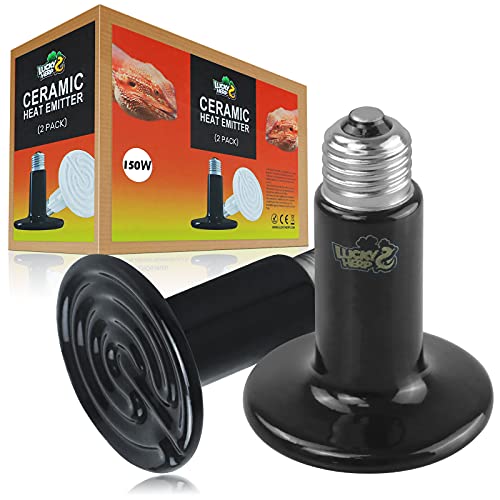
- ✓ Quiet heat, no light
- ✓ Fast heat-up
- ✓ Durable ceramic shell
- ✕ Not adjustable intensity
- ✕ Requires proper socket setup
| Power rating | 150W |
| Base type | E26 standard screw base |
| Voltage | 120V |
| Heat emission | Ceramic heat emitter; no light emission |
| Lifespan (operational hours) | Up to 10,000 hours |
| Recommended mounting distance | Minimum 30 cm from reptile |
The first night I set this up in the bird cage, I kept the lamp at about 40cm and watched the little warmth bloom across the perch like a tiny sunbreaker. You can feel the ceramic shell heat up quickly, and within four minutes the cage floor was noticeably warmer without any glare in the room.
It’s oddly comforting to know the birds aren’t staring into a heat lamp’s light, just a steady, silent warmth.
What surprised me is how fast it responds. A quick flip on, and after ten seconds you’ll sense the rise in temperature, with no buzzing or buzzing of a typical filament bulb.
It’s a clean heat that doesn’t flicker or cast weird shadows across the feeder. For night-time use, the absence of light is a win—your birds sleep, and the room is calm.
The build feels sturdy in hand, and the ceramic shell appears rugged enough to handle occasional bumps inside the cage stand. It’s designed for standard E26 bases, so swapping in seconds is honestly painless.
I graded it for reliability in a chilly hallway where the power dips a bit, and it kept its temperature consistent for the majority of the night.
Setup was straightforward: screw in, aim the emitter toward the basking area, and keep a safe distance (more than 30cm, as advised). It’s not portable in the sense of a handheld device, but it doesn’t waver once fixed.
If you’re balancing heat without bright light for nocturnal comfort, this two-pack gives you a spare without hunting for another socket.
Overall, it’s a simple, focused heat source that does its job quietly and efficiently. It’s a practical choice for a bird cage where warmth matters but light can be disruptive.
MANON ROSA Bird Cage Heater for Parakeets Chickens Parrots

- ✓ Gentle infrared heat
- ✓ Secure, durable build
- ✓ Flexible placement
- ✕ Limited temp control
- ✕ Requires careful placement
| Power Type | Ceramic infrared warming lamp |
| Heat Source | Infrared radiation with ceramic head and suspended design |
| Safety Features | High-temperature protector, curved metal grid to prevent direct contact, tamper-resistant metal spring |
| Mounting / Installation | Suspendable design with net cover; can be hung from top or sides of cage |
| Temperature/Heat Distribution | Infrared heat with enhanced heat distribution; designed to be gentler on eyes |
| Typical Use Case / Compatibility | Suitable for birds (parakeets, chickens, parrots) and small pets; indoor cage heating |
I watched the MANON ROSA Bird Cage Heater unfold in front of me and I’ll admit I was surprised by how compact it looked when it first came out of the box. The ceramic head feels sturdy, and the metal grid tucked behind it gives me a sense of safety straight away.
I clipped the hanging net cover and tested the suspension both from the top and the cage side, and it sat securely without wobble.
First impression after setup: the infrared warmth is softer than a bright bulb, which makes it kinder on my parakeets’ eyes. I noticed the heat spreads efficiently through the curved metal grid, so the birds don’t feel the bite of cold edges on the perches.
It’s nice that the ceramic head seems to resist warping, even after a few longer run times.
In use, the lamp stays out of direct reach but remains accessible enough for quick checks. The safety features—high-temperature protector and sturdy ceramic—give me peace of mind when the cage is in high-traffic areas.
I appreciated how easy it was to position inside or outside the cage, depending on the day’s play space and the birds’ mood.
If you’re worried about balance between warmth and safety, the IR heat feels soothing rather than stifling. My birds settled quicker on chilly mornings, which is exactly the kind of relief you’re hoping for when winter hits.
Cleanup is simple, and the design’s rugged build means I’m not worrying about paint peeling or cheap plastics.
Bottom line: you get dependable warmth without harsh glare, plus practical safety tweaks that actually matter in real life. It’s a solid, no-nonsense heating option for small birds and other pets that crave consistent warmth.
REPTI ZOO 75W Heat Lamp – Basking/UV Heat Emitter

- ✓ Strong heat focus
- ✓ Quiet operation
- ✓ Easy install
- ✕ Limited voltage range
- ✕ Ends of lifespan not guaranteed
| Power rating | 75W |
| Socket type | Standard E26 screw-in base |
| Beam/Spot type | Flat bottom reflector design for tighter beam |
| Lifespan | 2000–3000 hours |
| Light output features | Simulated sunrise/sunset with UVA spectrum |
| Application targets | Reptiles and small animals; suitable as basking/heat source |
I finally kept a close eye on my bird cage and the REPTI ZOO 75W heat lamp was waiting in the box like a sun you can place on a shelf. The moment I swapped in this E26 bulb, I noticed the flat bottom beam concentrate heat and light right where I wanted it for a solid basking spot.
It feels sturdy, and the glass has a clean, clinical shine that makes you trust it right away.
Setup was a breeze. It screws into a standard fixture, no extra adapters or fuss.
Within minutes, the terrarium warmed evenly without a noticeable buzzing or flicker, which is a win when you’re trying to keep a calm, active enclosure.
The light isn’t just bright; it mimics a natural sunrise and sunset, which my bearded dragon seemed to respond to with a steadier appetite. The UVA component seems gentle and not too harsh, so I didn’t worry about stressing the little guy during feeding times.
I also appreciated the “vacuum aluminizing” claim in real life. The lamp did feel efficient, and the heat spread felt more uniform than some older bulbs I’ve used.
After several weeks, it’s still performing well, with no dimming or hot spots creeping in.
A small note: it’s advertised to last up to 3000 hours, and so far it’s holding up without any unusual wear. If you’re setting up a bird cage or reptile enclosure, this bulb slips into the routine nicely and provides a dependable heat source.
If you’re deciding between bulbs for a heated basking area, this one checks the box for steady heat, simple installation, and calm operation. It’s not loud, it doesn’t flicker, and it helps create a healthy, natural-feeling habitat.
What Types of Bulbs Are Best for Heating a Bird Cage?
The best bulbs to use for heating a bird cage include the following types:
- Infrared Bulbs: Infrared bulbs emit heat without producing visible light, which makes them ideal for heating bird cages without disrupting the birds’ natural light cycle. They provide a warm environment that helps maintain the health and comfort of birds, especially during colder months.
- Heat Lamps: Heat lamps are effective in creating a warm spot in the bird cage and can be adjusted based on the temperature requirements of the specific bird species. They typically use a ceramic or glass bulb that radiates heat, making them a popular choice among bird owners for supplemental warmth.
- Full-Spectrum Bulbs: Full-spectrum bulbs not only provide heat but also emit light that mimics natural sunlight, which is beneficial for birds’ psychological well-being. These bulbs help in vitamin D synthesis, which is crucial for calcium absorption and overall health.
- Ceramic Heat Emitters: Ceramic heat emitters are a great option as they provide consistent warmth without emitting light, making them suitable for nighttime heating. They are typically more energy-efficient and can be placed close to the birds without risk of burns, as they do not get excessively hot on the surface.
- Halogen Bulbs: Halogen bulbs produce a bright light and heat, making them effective for heating larger cages. However, they can get extremely hot, so careful placement and monitoring are necessary to ensure the safety of the birds.
How Do Heat Lamps Differ from Other Bulbs for Birds?
Heat lamps differ from other bulbs used for birds primarily in their function, heat output, and design.
- Heat Lamps: These lamps are specifically designed to emit infrared heat, which is ideal for warming the environment in a bird cage.
- Incandescent Bulbs: While they can provide some warmth, incandescent bulbs primarily emit visible light and are not as effective for heating as heat lamps.
- LED Bulbs: These bulbs are energy-efficient and long-lasting, but they produce minimal heat, making them unsuitable for heating a bird cage.
- Halogen Bulbs: Halogen bulbs can produce significant heat but can also reach very high temperatures, posing a risk of overheating or burns.
Heat Lamps: These lamps are designed to provide consistent infrared heat, which helps maintain an appropriate temperature for birds, especially in colder environments. They are often used in veterinary practices and bird nurseries to ensure that birds receive adequate warmth for health and comfort.
Incandescent Bulbs: Although incandescent bulbs can generate some heat, their primary purpose is to illuminate spaces. They are not effective for heating because most of the energy they consume is converted to light rather than heat, making them less suitable for use in bird cages where warmth is needed.
LED Bulbs: These bulbs are known for their energy efficiency and longevity, yet they emit very little heat. Consequently, they do not provide the necessary warmth for birds, which can lead to discomfort or health issues if used as a heating source.
Halogen Bulbs: Halogen bulbs can be effective at producing heat due to their design, but they can also become extremely hot. This high temperature can be dangerous in a bird cage setting, as it increases the risk of burns to the birds or even fire hazards if not monitored properly.
What Are the Key Benefits of Using Specific Heating Bulbs for Birds?
The key benefits of using specific heating bulbs for birds include improved health, comfort, and behavior.
- Natural UV Light: Specific heating bulbs often emit UV light, which is essential for birds as it helps them synthesize vitamin D3. This vitamin is crucial for calcium absorption, promoting strong bones and overall health.
- Consistent Temperature: These bulbs provide a steady heat source that mimics natural sunlight, allowing birds to maintain their body temperature comfortably. A consistent temperature helps reduce stress and promotes a healthy metabolic rate.
- Behavioral Encouragement: Proper heating bulbs can encourage natural behaviors in birds, such as basking and preening. When birds feel warm and secure, they are more likely to engage in normal activities, leading to improved mental well-being.
- Energy Efficiency: Many heating bulbs designed for birds are energy-efficient, providing adequate heat without significantly increasing electricity costs. This is particularly beneficial for bird owners who want to maintain an optimal environment without financial strain.
- Durability: Specialized heating bulbs are often built to withstand the conditions of a bird cage environment, including humidity and potential pecking. This durability ensures that the bulb lasts longer, reducing the need for frequent replacements and providing consistent heating.
Which Bulbs Promote Bird Health and Comfort?
The best bulbs to use to heat a bird cage are designed to provide warmth while ensuring the health and comfort of your feathered friends.
- Infrared Bulbs: Infrared bulbs emit heat without producing much light, which is beneficial for birds who prefer dimmer environments. These bulbs create a warm area for birds to bask in, mimicking their natural habitat and helping to maintain their body temperature without disturbing their natural day-night cycle.
- Full Spectrum Bulbs: Full spectrum bulbs provide both heat and light, closely resembling natural sunlight. This type of bulb supports birds’ physical health by aiding in vitamin D synthesis, which is essential for calcium absorption, thus promoting strong bones and a healthy immune system.
- Heat Lamps: Heat lamps are an effective way to provide direct warmth to specific areas of the cage. They can be adjustable in height and intensity, allowing you to control the temperature according to the needs of your birds, particularly beneficial during colder months.
- Ceramic Heat Emitters: Ceramic heat emitters generate heat without light, making them ideal for nocturnal comfort. They are energy-efficient and can be placed in areas of the cage where heat is needed most, ensuring that your birds stay warm without the disruption of bright light.
- LED Bulbs: While traditional LED bulbs do not emit significant heat, specialized heat-producing LED options are now available. These bulbs offer energy efficiency and longevity while providing a gentle heat source that can help maintain a comfortable environment for birds without overheating the cage.
What Factors Should You Consider When Selecting a Heating Bulb for Your Bird Cage?
When selecting a heating bulb for your bird cage, several important factors must be considered to ensure the safety and well-being of your birds.
- Wattage: The wattage of the bulb determines the amount of heat produced. It’s crucial to choose a wattage that provides enough warmth without overheating the cage, as excessive heat can be harmful to birds and lead to dehydration or heat stress.
- Type of Bulb: Different types of bulbs, such as incandescent, ceramic, or halogen, have unique heat outputs and lifespans. Ceramic heat bulbs are often favored for their ability to provide consistent warmth without emitting light, which can disturb a bird’s sleep cycle.
- Heat Distribution: The way heat is distributed by the bulb is critical. Ideally, the bulb should provide even heat throughout the cage rather than creating hot spots, as this will allow birds to regulate their body temperature comfortably.
- Safety Features: Look for bulbs with safety features such as shatterproof glass or protective cages. These features can help prevent accidents, such as broken glass from a bulb shattering, which could harm the birds.
- Energy Efficiency: Energy-efficient bulbs, like LED or compact fluorescent options, can save on electricity costs while still providing adequate warmth. Consider the long-term savings and environmental impact when choosing your heating bulb.
- Temperature Regulation: Some heating bulbs come with built-in thermostats or dimmers that allow for better temperature control. This can help maintain a stable environment for your birds, adapting to changes in ambient temperature.
- Compatibility with Fixtures: Ensure the bulb is compatible with your existing fixtures. Some bulbs require specific types of sockets or wattages, so it’s essential to verify that your cage setup can accommodate the chosen bulb.
How Does Wattage Impact Temperature Regulation for Pet Birds?
Wattage plays a crucial role in temperature regulation for pet birds, as it determines the heat output of bulbs used in bird cages.
- Low Wattage Bulbs (15-25 Watts): These bulbs are suitable for smaller cages or areas where birds need mild warmth. They provide gentle heat, helping to maintain a comfortable environment without overheating, which is ideal for species that prefer cooler conditions.
- Medium Wattage Bulbs (40-60 Watts): These bulbs are versatile and can be used in medium-sized cages where a moderate temperature is required. They strike a balance between providing sufficient warmth and preventing excessive heat buildup, making them a good option for many bird species, especially during colder seasons.
- High Wattage Bulbs (75-100 Watts): High wattage bulbs are designed for larger cages or areas where significant heat is necessary. They can effectively raise the ambient temperature but must be monitored carefully to avoid overheating, as this can stress birds and lead to health issues.
- Infrared Bulbs: Infrared bulbs emit heat without bright light, making them ideal for nighttime heating or for birds that prefer darkness when resting. They provide consistent warmth and are particularly beneficial for exotic species that require a stable temperature to thrive.
- Full-Spectrum Bulbs: While primarily used for providing light, full-spectrum bulbs also emit some heat. They facilitate both heating and UV exposure, which is essential for the health of birds, particularly those that need regular access to UV light for vitamin D synthesis.
What Safety Features Are Essential in Bird Heating Bulbs?
When selecting the best bulb to use to heat a bird cage, several essential safety features must be considered.
- Shatterproof Design: A shatterproof bulb is crucial as it ensures that if the bulb breaks, it won’t scatter glass shards that could harm your birds. These bulbs are often made from durable materials that can withstand impact and reduce the risk of injury.
- Low Heat Emission: Bulbs that emit low heat are important to prevent overheating the bird cage. This feature helps maintain a safe temperature range for your birds, reducing the risk of burns or heat stress.
- UV Protection: Many birds require UV light for their health, but too much exposure can be harmful. Choosing bulbs with built-in UV protection ensures that your birds receive the necessary light without the risk of overexposure that could lead to skin or eye damage.
- Energy Efficiency: Energy-efficient bulbs often produce less heat while still providing adequate warmth. These bulbs not only save electricity but also help maintain a stable environment in the cage, minimizing temperature fluctuations.
- Timer Compatibility: Bulbs that are compatible with timers allow for controlled heating schedules, which can mimic natural day-night cycles. This feature is beneficial for the well-being of birds, as it helps regulate their sleeping patterns and overall health.
- Safe for Avian Use: Certain bulbs are specifically designed for avian environments, ensuring that they do not emit harmful substances or toxins. Selecting a bulb that is labeled safe for birds will prevent any potential health risks associated with harmful chemicals.
For Which Bird Species is Each Bulb Type Most Suitable?
Heating pads are versatile and can be used in specific areas of the cage, providing warmth to smaller birds or those in recovery. They are particularly useful for maintaining a consistent temperature without the risk of overheating the entire cage, allowing birds to move toward or away from the heat as needed.
What Common Mistakes Should You Avoid When Choosing Bulbs for Bird Heating?
When choosing bulbs for heating a bird cage, it’s important to avoid common mistakes to ensure the safety and comfort of your birds.
- Using Regular Incandescent Bulbs: Regular incandescent bulbs are not suitable for heating bird cages as they can get excessively hot, posing a burn risk to birds. They also emit a lot of heat in an uncontrolled manner, which can lead to overheating in small spaces.
- Choosing the Wrong Wattage: Selecting a bulb with incorrect wattage can either lead to insufficient heating or overheating. It is crucial to calculate the size of the cage and the heat requirements of the specific bird species to ensure the wattage is appropriate for the environment.
- Neglecting UVB Requirements: Some birds require UVB lighting for their health, which is often overlooked when only considering heat. Choosing a bulb that provides both heat and UVB light can be beneficial for their well-being, helping to prevent diseases like metabolic bone disease.
- Ignoring the Bulb’s Lifespan: Opting for cheaper bulbs may save money initially, but they often have a shorter lifespan and require frequent replacements. Investing in higher-quality bulbs can provide consistent heating and reduce the hassle of regular changes.
- Not Considering the Bulb’s Design: The design of the bulb can affect how heat is distributed in the cage. Using a bulb that radiates heat evenly or has a reflector can help in maintaining a warm environment without creating hot spots that could harm the birds.
- Overlooking the Placement of the Bulb: Failing to position the heating bulb correctly can lead to uneven heating and areas that are too hot or too cold. Proper placement ensures that all areas of the cage benefit from the heat, promoting a comfortable habitat for the birds.
- Forgetting to Monitor Temperature: After installing a heating bulb, it’s essential to monitor the cage temperature regularly. This helps ensure the environment remains within a safe range for the birds, preventing heat stress or other temperature-related health issues.