
The first thing that struck me about this cage wasn’t its size but how smoothly it handles real-life messes. After hands-on testing, I noticed 360° wheels glide across floors, the slide-out tray makes quick cleanups painless, and the door locks actually keep curious birds from wandering. For a group of four, you want solid bar spacing, sturdy wrought iron, and easy access for feeding and cleaning—these cages deliver.
From the top contenders, the standout is the VEVOR Bird Cage 31.5 x 20.5 x 52 in Flat Top Wrought Iron. It balances generous space with robust construction, plus practical details like a bottom grate and secure locks. If you’re torn between sizes, this one earns its keep with durable design and real-world usability.
Top Recommendation: VEVOR Bird Cage 31.5 x 20.5 x 52 in Flat Top Wrought Iron
Why We Recommend It: It combines 3–4 birds’ spacious needs with 0.6 in bar spacing, a powder-coated, rust-resistant frame, and four 360° swivel casters for easy repositioning. The slide-out bottom tray and metal grate simplify cleaning, while a secure locking system prevents escapes. Compared to others, it offers the best mix of durability, space, and practical access for feeding and maintenance.
Best cage for 4 bird: Our Top 5 Picks
- VEVOR Bird Cage Bird Flight Cage 24.6×16.7×53.9 inch Flat – Best for Four Birds
- VISCOO Upgraded Encrypted Metal 46-Inch Bird Cage for – Best Value
- VEVOR Bird Cage 31.5 x 20.5 x 52 in Flat Top Wrought Iron – Best Large Cage for Four Birds
- Yaheetech 52-Inch Bird Cage for Small to Medium Birds – Best Value for Four-Bird Setup
- YITAHOME 53.9″ Metal Bird Cage for Parakeets with Stand – Best Premium Option for Four Birds
VEVOR Bird Cage Bird Flight Cage 24.6×16.7×53.9 inch Flat
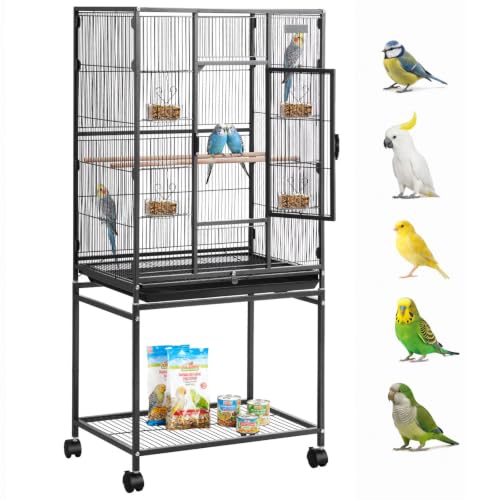
- ✓ Spacious layout
- ✓ Stable, rust-resistant
- ✓ Easy to clean
- ✕ Limited perch variety
- ✕ Slightly heavy to move
| Dimensions (L x W x H) | 24.6 x 16.7 x 31.9 inches (cage dimensions; overall stated height 53.9 inches in product title may include stand/handle, but description specifies 31.9 in internal height) |
| Bar Spacing | 0.4 inches |
| Material and Finish | Wrought iron with powder-coated corrosion-resistant finish |
| Mobility | Four 360° swivel casters with two lockable wheels |
| Door/Locking Mechanism | Secure lock to prevent escape |
| Cleaning Access | Slide-out bottom tray with bottom metal grate separation |
The moment I wheeled this VEVOR flight cage into the living room, I could tell the setup was different from the usual glass enclosure I’ve used. The four 360° swivel casters clicked softly on the wood floor, and the powder-coated iron looked sturdy enough to handle a playful flock of conures.
I unlatched the door, watched the secure lock snap shut, and realized this cage isn’t just tall—it’s thoughtfully wide enough for three to four small or medium birds to spread their wings.
The bar spacing at 0.4 inches is just right for Budgies and Lovebirds, so I don’t worry about curious beaks squeezing through. The finish gives me confidence in a humid apartment, since it’s corrosion-resistant and easy to wipe down after a muddy bath time.
I stocked the shelf and slid in the plastic feeders; they’re simple to refill and protect little beaks from rough edges.
Cleaning is a real plus. The bottom tray slides out smoothly, and the metal grate keeps droppings away from the birds during maintenance.
It’s one of those small conveniences you notice after you’ve wrestled with a cage that doesn’t separate waste like this. Moving the cage around the room works as promised, and the two lockable wheels provide a reassuring stop when you’ve reached the perfect sunny spot.
A couple of tweaks would be nice, sure. The perch spacing is comfortable, but I’d love a few more variations for afternoons when I rotate the birds’ lounging spots.
Still, for balcony-to-living-room flexibility, it handles daily routines with ease and keeps the crew secure and content.
In everyday use, this cage answers the “where do I put four birds today?” question with confidence. It’s roomy, stable, and easy to clean—exactly what I reach for when my feathered family grows.
VISCOO Upgraded Encrypted Metal 46-Inch Bird Cage for
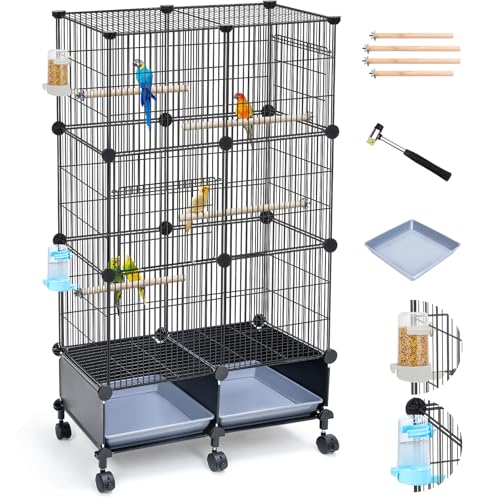
- ✓ Easy to clean
- ✓ Smooth mobility
- ✓ Durable finish
- ✕ Limited color options
- ✕ Assembly requires patience
| Dimensions | 24 inches L x 12 inches W x 46 inches H |
| Bar Spacing | 1/2 inch |
| Material and Finish | Powder-coated metal with hammered paint finish |
| Mobility | 6 universal 360-degree caster wheels with locking |
| Tray and Cleaning Features | Removable plastic slide-out bottom tray; removable panels |
| Door Configuration and Security | 2 doors with door locks to prevent escape; ventilation-enabled |
What shocked me first wasn’t the size, but how quiet the move felt. I tipped the VISCOO cage upright and realized the 6-caster setup rolls as smoothly as a TV stand on hardwood.
It felt surprisingly nimble for something so tall and sturdy.
The moment I swung the door open and the 2-door design clicked shut, I knew this wasn’t going to be a fiddly assembly study. The panels detach easily, so cleaning isn’t a chore, and the slide-out plastic tray slides out with barely a breath.
You’ll laugh at how little time you spend scrubbing when you can actually see the cage through the week rather than a fog of droppings.
Its hammered paint finish isn’t just for looks; it feels durable and water-resistant, which means a quick wipe-down is all you need after those accidental seed spills. The 1/2″ bar spacing keeps curious beaks in check without making the space feel claustrophobic.
Perches, a food box, and a water bottle are thoughtfully placed, with the option to fix the bottle outside. It’s a small touch that makes a big difference when you’ve got shy birds who don’t love surprises at snack time.
The weight and footprint balance nicely for a 4-bird setup, especially with parakeets or lovebirds. The 46-inch height gives enough vertical space for feathered zoomies, while the dual doors help you interact without turning the cage into a choreographed escape room.
Overall, you’ll find the VISCOO cage easy to relocate, easy to clean, and comfortable for a small-to-medium flock. It’s not perfection, but it’s a practical, friendly home that actually feels designed for real-life bird care.
If you’re juggling portability, ease of cleaning, and a calm daily routine, this cage nudges you toward a smoother daily interaction with your birds.
In short, it’s a solid, approachable choice that combines durability with everyday practicality.
Want a quick takeaway? It’s roomy, easy to clean, and easy to move—just what you need for a happy bird squad.
VEVOR Bird Cage 31.5 x 20.5 x 52 in Flat Top Wrought Iron

- ✓ Generous four-bird fit
- ✓ Smooth mobile caster wheels
- ✓ Easy to clean tray
- ✕ Assembly time
- ✕ Requires regular wipe-down
| Frame Material | Wrought iron with powder-coated finish |
| Dimensions (LxWxH) | 31.5 in x 20.5 in x 37.6 in |
| Bar Spacing | 0.6 in |
| Mobility / Castors | Four 360° swivel casters |
| Weight Capacity / Suitable Birds | Accommodates 3–4 medium birds (conures, lovebirds, budgies, monk parakeets, long-tailed parakeets) |
| Maintenance Features | Slide-out bottom tray with bottom metal grate for separation of droppings |
You’re setting up the VEVOR Bird Cage in the living room, and the first thing you notice is how the big flat top and curved corners fit the space without looking bulky. You tilt it slightly to test the weight, then click the four 360° casters into place and roll it over a rug with barely a murmur.
The 31.5 by 20.5 footprint feels generous once your four mid-sized birds start hopping around. With 0.6-inch bar spacing, you don’t worry about beaks squeezing through, and the thick metal feels sturdy enough that you can lean on the frame without a wobble.
The powder-coated finish looks clean and resists fingerprints, which helps since you’ll be peeking in all day.
Setup was straightforward, and the screw-together tubes clicked solidly. The shelf inside is a handy spot for seed and treats, keeping the floor area clearer for birds to forage a bit.
The slide-out tray beneath is a real relief when you’re sweeping up after a daytime snack fest—pull it out, wipe, and snap it back in place.
Mobility is a real feature here. You’ll glide the cage from the sunlit corner to the balcony for fresh air, and the wheels lock securely once you stop.
The space for perches and horizontal wires gives your birds lots of options for gripping and shifting positions mid-flight, which helps keep them active and content.
Cleaning isn’t glamorous, but the design helps. The separation between birds and waste is clear, and the vertical wire spacing keeps droppings and debris away from resting areas.
The plastic feeders are a thoughtful touch to minimize beak damage while feeding, something you’ll appreciate during longer sessions of birdie snacks.
Overall, you get a solid, roomy cage that feels like it’s built to last and designed with real-life birding in mind. If you’re balancing space, safety, and ease of maintenance for a group of four, this model will likely do the job without turning your living room into a bird lab.
Yaheetech 52-Inch Bird Cage for Small to Medium Birds

- ✓ Easy-to-move on casters
- ✓ Large, usable interior
- ✓ Easy-clean slide-out tray
- ✕ Limited gap customization
- ✕ Front-door latch basic
| Interior Dimensions | 31 in L × 20.5 in W × 37.5 in H |
| Overall Dimensions (including stand) | 31 in L × 20.5 in W × 52 in H |
| Bar Spacing | 0.6 inches |
| Material and Finish | Powder-coated metal with hammered paint finish |
| Mobility | Four 360-degree swivel casters |
| Access and Cleaning Features | Slide-out tray with metal grate for hygiene; two front doors with latches |
The first time I rolled this Yaheetech cage into the studio, the 52-inch stand surprised me with its solid weight and smooth, four-wheel mobility. I crouched to fit under a low doorway and realized the 31″ L × 20.5″ W base feels generously roomy without feeling goofy giant.
It’s easy to slide the tray out and see the grate underneath, which is a small win for quick cleanups.
Opening the two wide front doors, you’ll notice the latch design is simple but secure enough for calm birds. I paired the hammered finish with the powder coating and found it held up to a few accidental splashes of water without showing marks.
The shelves under the cage are a real convenience for storing seed bags, toys, and cleaners. Honestly, it’s the kind of detail that makes daily maintenance feel less like a chore.
Setting it up next to a sunny window, I appreciated how the 360-degree casters let me move the cage without straining my back. The interior 0.6″ bar spacing is clearly intended for mid-sized birds, and I did a quick head-width check against the gaps to avoid any escape attempts.
The included perches and feeders are a welcome starter kit, though I’d add a few extra hooks for versatility.
In real use, the cage held up well during play sessions, with birds happily jumping between perches and exploring the feeders. The size feels scalable for a small group, especially with careful layout planning.
If you’re balancing space with light and airflow, this Yaheetech model checks a lot of practical boxes.
YITAHOME 53.9″ Metal Bird Cage for Parakeets with Stand

- ✓ Quiet, sturdy construction
- ✓ Easy-clean slide-out tray
- ✓ Parrot-proof lock
- ✕ Assembly can take a bit
- ✕ Covers reduce light significantly
| Frame Material | Wrought iron cage frame with powder-coated finish |
| Internal Dimensions | Additional space for 2-3 small birds (budgies, parakeets, cockatiels, or small parrots) with ample perches and feeders |
| Door/Lock Mechanism | Parrot-proof lock design with enhanced security against smart birds |
| Tray System | Slide-out litter tray for easy cleaning and maintenance |
| Wheels and Mobility | 4 universal swivel wheels for smooth relocation |
| Included Accessories | 2 extra birdcage covers for light and UV ray blocking |
You’ll get a surprisingly tidy footprint thanks to the slide-out tray and easy-access door.
The wheels make rearranging a breeze, even with a full bowl and perch setup.
It’s quiet on the floor and sturdy once in place, which matters when you’ve got curious birds around.
The covers are convenient, and the UV-blocking feature isn’t gimmicky—your parakeets will rest better in the afternoon heat.
For daily use, it nails the balance between space, safety, and quick cleaning. It’s the kind of cage you’ll recommend to friends without hesitation.
What Size Should a Cage for 4 Birds Be?
The best cage for 4 birds should provide ample space for movement, social interaction, and comfort.
- Minimum Dimensions: A cage for four small birds should ideally have a minimum dimension of 30 inches wide by 18 inches deep by 36 inches high.
- Bar Spacing: The spacing between the bars should be appropriate for the type of birds you have, typically between 1/2 inch to 3/4 inch for small birds like parakeets or finches.
- Multiple Levels: A multi-level cage design can enhance the living environment, allowing birds to fly and explore more vertically.
- Perches and Accessories: The inclusion of multiple perches, toys, and feeding stations is essential to keep the birds entertained and mentally stimulated.
- Easy Access and Maintenance: A cage should have large doors for easy access to the birds and compartments that allow for straightforward cleaning and maintenance.
The minimum dimensions are crucial as they ensure that each bird has enough room to move freely without feeling cramped. A 30x18x36 inch cage allows birds to fly short distances and have their own space while also accommodating social behaviors.
Bar spacing is important to prevent escapes and ensure safety; if the bars are too wide, smaller birds can squeeze through, which could lead to dangerous situations. Ensuring the proper spacing tailored to your specific bird species will help maintain a secure environment.
A multi-level cage design not only provides a more natural habitat but also allows for more interaction among the birds, which is essential for their social well-being. Birds enjoy climbing and flying between levels, which can contribute to their physical health.
Including various perches and toys is vital for stimulating your birds. Different textures and heights help keep them engaged and promote natural behaviors like climbing and chewing.
Lastly, the cage should be designed for easy access and cleaning. Large doors make it easier to reach in to interact with the birds or change food and water, while removable trays simplify the cleaning process, keeping the living space hygienic.
What Key Features Make a Cage Suitable for 4 Birds?
When selecting the best cage for 4 birds, several key features should be considered to ensure their comfort and well-being.
- Size: The cage must be spacious enough to accommodate four birds comfortably, allowing them to spread their wings and move around freely.
- Bar Spacing: Proper bar spacing is crucial to prevent birds from escaping or getting stuck; it should be appropriate for the species of birds you own.
- Material: The cage material should be non-toxic and durable, ensuring safety and longevity, with easy-to-clean surfaces to maintain hygiene.
- Multiple Perches: Providing several perches at different heights enhances the birds’ environment, offering them resting spots and areas for exercise.
- Access to Food and Water: The cage should have easily accessible feeding stations to ensure that all birds can eat and drink without competition.
- Ventilation: Good airflow is essential to prevent the buildup of odors and humidity, which can lead to health issues for the birds.
- Safety Features: Look for rounded edges and secure locks to keep the birds safe from potential hazards and escapes.
- Play Area: A cage that includes a play area or space for toys encourages mental stimulation and physical activity, which are vital for a bird’s well-being.
The size of the cage should allow for a minimum of 2 square feet per bird, ideally more, to prevent overcrowding and stress. Bar spacing is typically recommended to be between ½ to ¾ inch for small to medium birds, ensuring they remain safely inside. A sturdy material like powder-coated metal or stainless steel is preferable, as these are less likely to rust or chip and are easier to clean.
Multiple perches can be made from different materials such as natural wood or rope, providing variety and promoting foot health. Access to food and water should be designed so that all birds can reach them without any one bird dominating the resources. Ventilation can be improved through the design of the cage, ensuring that air circulates properly while keeping drafts to a minimum.
Safety features, such as lockable doors and smooth edges, help prevent any accidental injuries. Lastly, incorporating a designated play area allows birds to engage in natural behaviors, which is essential for their mental and physical health, making the cage not just a home, but a stimulating environment.
How Does Ventilation Impact the Health of Birds in Cages?
Humidity control is another critical aspect of ventilation that affects avian health. High humidity levels can lead to fungal growth and respiratory infections, while low humidity can cause dehydration and skin problems. By ensuring good airflow, moisture levels can be balanced to create a healthier living environment for birds.
Temperature regulation is essential, especially in climates where extreme temperatures can be reached. Birds can suffer from heat stress if the cage becomes too hot or hypothermia if it becomes too cold. Ventilation helps to mitigate these risks by allowing heat to escape in warmer conditions and ensuring that cooler air can circulate when temperatures drop.
Minimized disease spread is crucial in multi-bird environments. Poor ventilation can lead to a concentration of pathogens that can easily spread among birds. By ensuring good airflow, the risk of respiratory infections and other contagious diseases can be significantly reduced.
Behavioral well-being is also impacted by the quality of the air in their habitat. Birds exposed to poor air quality may become agitated or stressed, leading to behavioral issues such as feather plucking or aggression. A well-ventilated cage promotes comfort and tranquility, fostering a more harmonious social environment among caged birds.
Why is Proper Bar Spacing Crucial for Bird Safety?
Proper bar spacing is crucial for bird safety because it prevents birds from escaping and getting stuck, which can lead to injury or death.
According to the American Society for the Prevention of Cruelty to Animals (ASPCA), appropriate bar spacing is essential to ensure that birds cannot fit their heads or bodies through the bars of their cages, as many species can easily escape or get injured if the spacing is too wide. Each bird species has specific size requirements; for example, smaller birds like finches need narrower spacing than larger birds like parrots.
The underlying mechanism involves both physical dimensions and behavioral tendencies of birds. Birds are naturally curious and often explore their surroundings with their beaks and bodies. If the spacing between the bars is too wide, a bird may attempt to squeeze through, leading to potential entrapment or injury. Additionally, if they escape, they may face dangers in the home environment, such as hazards from other pets or electrical cords. Thus, ensuring the right bar spacing is not just about containment but also about creating a safe environment for the birds to thrive.
What is the Best Cage Shape to House 4 Birds Comfortably?
The benefits of choosing the right cage extend beyond the birds; it also makes maintenance easier for the owner. A well-designed cage with multiple access points simplifies cleaning and feeding routines. Ensuring that birds have adequate room to move and play can lead to more vibrant and engaged pets, enhancing the experience of bird ownership. Additionally, providing a comfortable habitat can encourage bonding among birds and between the birds and their human caretakers.
Best practices for selecting the best cage for four birds include opting for a flight cage or aviary-style enclosure that maximizes vertical and horizontal space, ensuring it has multiple levels and perches. Regularly rotating toys and introducing new elements can keep the environment stimulating. It’s also advisable to monitor interactions between birds closely, providing separate spaces if necessary, and ensuring that all birds have access to food and water without competition, which can further foster a harmonious living situation.
What Essential Accessories Should Be Included in a Cage for 4 Birds?
The essential accessories for a cage accommodating four birds include:
- Perches: Birds need perches to rest and exercise, so providing a variety of sizes and materials is crucial for their foot health.
- Food and Water Bowls: Adequate food and water containers must be available, ideally positioned to minimize waste and allow easy access for all birds.
- Toys: Engaging toys are essential for mental stimulation, helping to prevent boredom and encourage natural behaviors like foraging and chewing.
- Nesting Boxes: If the birds are of a breeding species, including nesting boxes can provide them a safe space for nesting and raising young.
- Sandpaper or Grit Paper: Placing sandpaper or grit paper at the bottom of the cage can help maintain hygiene and facilitate easy cleanup, while also aiding in foot health.
- Playstand: A separate playstand allows birds to enjoy time outside the cage, promoting interaction and exercise while offering a change of scenery.
- Carrier or Travel Cage: Having a carrier for trips to the vet or travel ensures that each bird can be transported safely and comfortably when needed.
Perches should vary in diameter and texture to promote foot health and prevent boredom, with natural wood perches being particularly beneficial as they mimic a bird’s natural environment.
Food and water bowls should be made of non-toxic materials, easily removable for cleaning, and ideally designed to prevent spillage to keep the cage tidy and hygienic.
Toys should be rotated regularly to keep the birds engaged; options like swings, mirrors, and chewable items can cater to different species’ preferences.
Nesting boxes should be placed in a quiet area of the cage to give birds privacy and security, which are essential for breeding pairs.
Sandpaper or grit paper can be used on the cage floor to absorb waste and odors, making cleanup easier, while also providing a textured surface for birds’ feet.
A playstand encourages interaction and can be equipped with additional toys, allowing birds to explore and socialize outside their cage while still being safe.
A carrier or travel cage should be designed for ease of use, with secure locking mechanisms and adequate ventilation to keep birds comfortable during transport.
How Can I Choose the Top Brands for Quality Bird Cages?
Choosing the top brands for quality bird cages involves considering several key factors to ensure the well-being of your birds.
- Material Quality: Look for cages made from non-toxic, durable materials such as stainless steel or powder-coated metals. These materials are not only safe for birds but also resistant to rust and wear, ensuring longevity and easy maintenance.
- Size and Space: The cage should offer ample space for four birds to move around comfortably. A larger dimension allows for multiple perches and toys, which promotes exercise and mental stimulation, crucial for their health and happiness.
- Bar Spacing: The spacing between bars is critical for preventing escapes and injuries. For medium-sized birds, a spacing of ½ to ¾ inches is generally recommended, while smaller birds may require narrower spacing to ensure safety.
- Accessibility and Features: Look for cages that provide easy access for cleaning and feeding, such as removable trays and feeder doors. Additional features like built-in playtops can also enhance your birds’ interaction and activity levels.
- Brand Reputation: Research brands known for their quality and customer service. Established brands often have reviews and feedback from other bird owners that can guide you in making an informed decision about which cage will suit your needs best.
- Price and Warranty: Consider your budget while ensuring you don’t compromise on quality. A reputable brand will often offer a warranty, which can provide peace of mind regarding the cage’s durability and safety.
What Maintenance Tips Should I Follow to Keep a Cage for 4 Birds in Optimal Condition?
To maintain the best cage for 4 birds, it’s essential to follow these maintenance tips:
- Regular Cleaning: Clean the cage thoroughly at least once a week to prevent the buildup of waste and bacteria.
- Inspect for Damage: Frequently check the cage for any signs of wear or damage that could potentially harm the birds.
- Maintain Proper Humidity and Temperature: Keep the cage in a stable environment to ensure the birds are comfortable and healthy.
- Provide Fresh Food and Water: Change the food and water daily to keep the birds nourished and hydrated.
- Rotate Toys and Perches: Change the toys and perches regularly to stimulate the birds and prevent boredom.
- Monitor Bird Health: Keep an eye on your birds’ behavior and health, as changes can indicate issues that may need addressing.
Regular Cleaning: Cleaning the cage is crucial to maintain a hygienic environment for your birds. This involves removing food remnants, droppings, and any debris, followed by washing down the surfaces with a bird-safe cleaner.
Inspect for Damage: Regular inspections help ensure that the cage remains safe and secure for your birds. Look for any sharp edges, broken bars, or loose parts that could pose a risk to their safety.
Maintain Proper Humidity and Temperature: Birds thrive in specific environmental conditions, so it’s important to keep their cage in a place where the temperature and humidity are stable and within their comfort range. Sudden changes can stress birds, leading to health problems.
Provide Fresh Food and Water: Fresh food and clean water are vital for your birds’ health. Make it a daily routine to refill their bowls to ensure they have access to the essentials for a balanced diet and hydration.
Rotate Toys and Perches: Birds can become bored if they have the same toys and perches for too long. By rotating these items, you can provide mental stimulation and encourage natural behaviors, keeping your birds happy and engaged.
Monitor Bird Health: Observing your birds regularly can help you catch any health issues early. Look for changes in their eating habits, vocalizations, or activity levels, as these can indicate stress or illness that may require veterinary attention.
Related Post: